

Cointime

Download App
iOS & Android

The Most Common Trading Patterns in Crypto

Validated Media

The Double Bottom

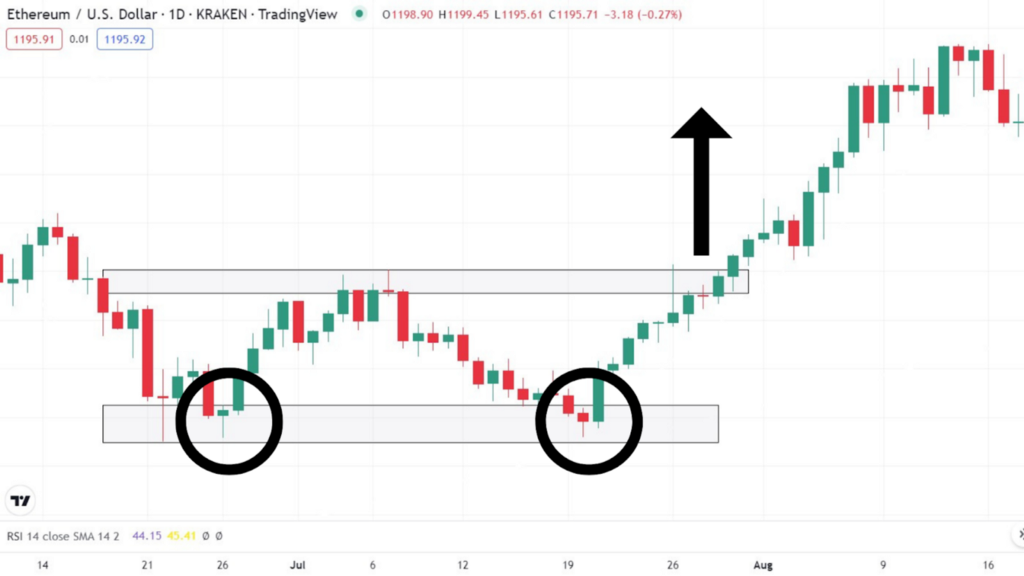
A double bottom pattern occurs when there are two bounces off of the same level of support, as shown below. This pattern typically occurs after a bearish period and signals a reversal in favour of the bulls. This pattern is viewed so bullishly because two bounces off the same level confirm that level as support, meaning the price can increase. The big move associated with this pattern comes after breaking the “neckline”, shown by the top rectangle zone.
The Double Top

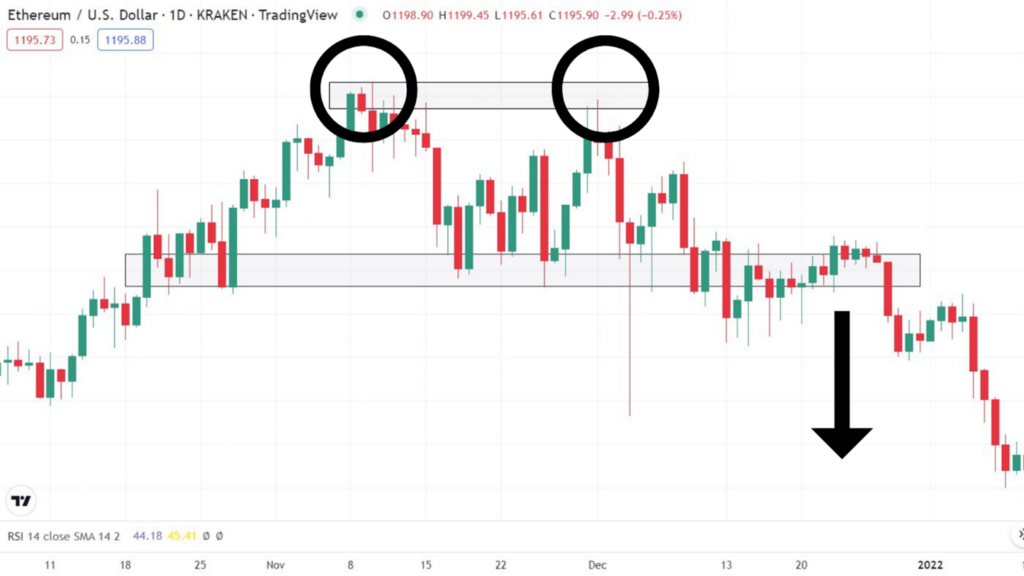
A double-top pattern is the opposite of the previously mentioned pattern. It is marked by two rejections off of the same resistance area. This pattern is a bearish reversal pattern, meaning that the price enters this pattern bullish and leaves this pattern bearish. One reason this pattern occurs is that often at resistance levels, traders will buy in with hopes of a breakout to further levels. When this breakout fails to appear, and the price falls, their trade is now in a loss. When the price returns to this same level, traders will often cut their losses and sell in the area where they opened the trade, again pushing the price further down. Typically this pattern is confirmed after seeing the two rejections and then a neckline break.
Head and Shoulders Pattern

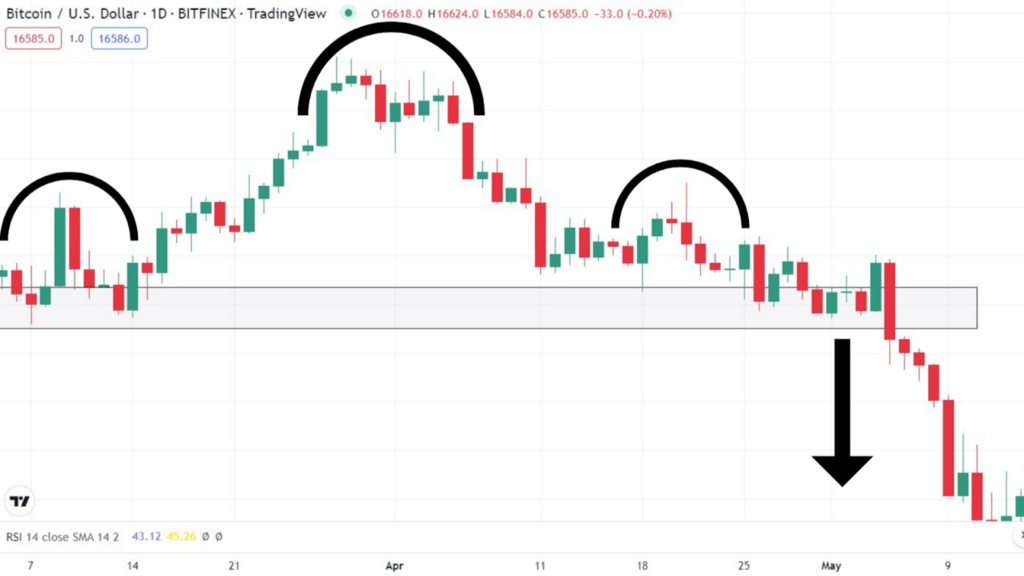
The head and shoulders pattern is an infamous trading pattern named after its similarities with a person’s silhouette. This is a bearish reversal pattern that signifies bearish price action in the near term. It is identified by two lower peaks (the shoulders) and one higher central peak (the head). Much like the double bottom and double top, the pattern is confirmed by the break of the neckline.
Inverse Head and Shoulders Pattern

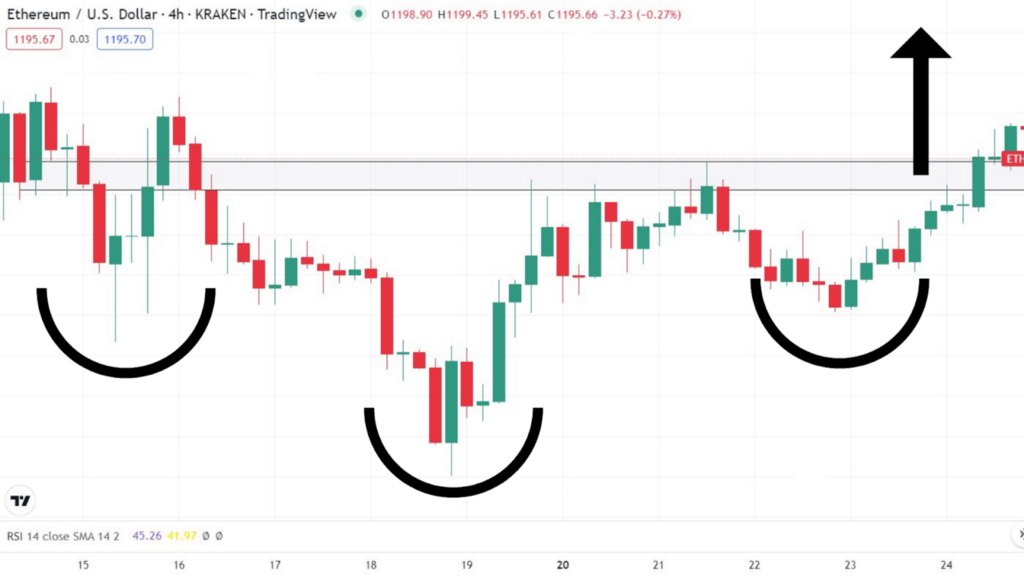
The inverse head and shoulders pattern is the reverse of the head and shoulders pattern. It is a bullish reversal pattern; if it plays out, the trend changes from bearish to bullish. Like the head and shoulder pattern, it is also identified by two shoulders and a head. However, these are flipped, with the heads and shoulders seeming more like two dips with a more significant drop in the middle.
Triangle Patterns

Triangle Patterns are pervasive in crypto. Many variations, such as wedges and microphone patterns and more, could be placed into this category, but for the sake of simplicity, we will only cover the basics.

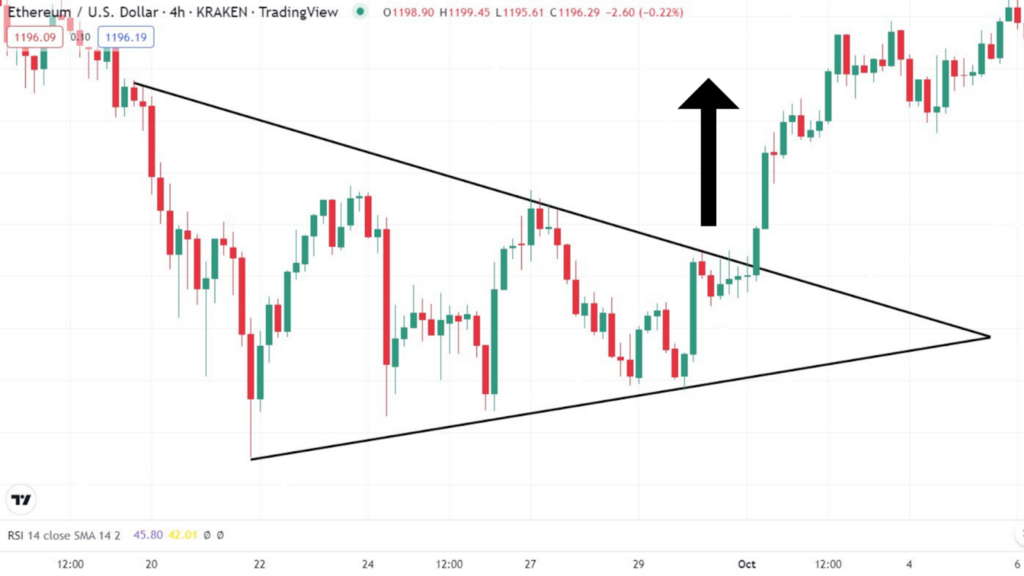
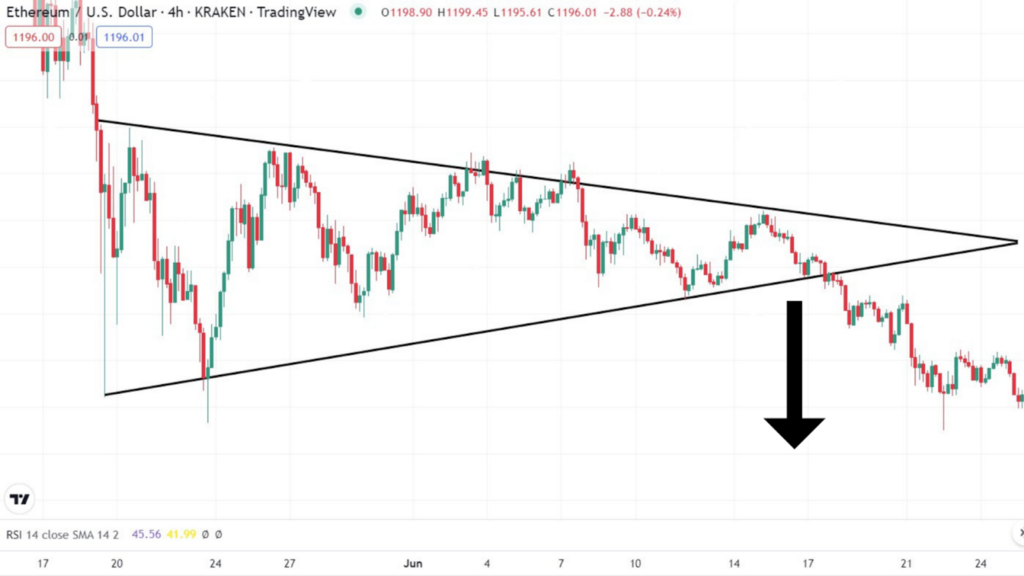
Common attributes of all triangle patterns are: two intersecting trendlines forming a triangle, one acting as support and one acting as resistance. There then is a tightening or compression of price as the triangle pattern plays out until the support trend line breaks (and price breaks down) or the resistance trend line breaks (and price breaks out). This occurs because, like a spring, price tends to get pent up and then explodes in whichever direction breaks.

Triangle Breakout
Triangle Breakdown
In Summary

The trading patterns in this article occur in almost every time frame and as a trader learning their structure is very worthwhile. This is because the better you get at spotting them, the more likely you can catch them forming in real-time and plan your trades accordingly. Although there are other patterns not mentioned in this article such as the cup and handle, microphone pattern, channels, and more, the patterns listed are great first tools in your traders’ toolbox to use to gain insights on the markets.

(by Liam McWilliams)

Comments

All Comments

Recommended for you

  • US Spot Ethereum ETF Sees $5.6 Million Net Outflow

    On May 15, according to monitoring data from Farside Investors, the US spot Ethereum ETF experienced a net outflow of $5.6 million yesterday.

  • Xi Jinping Holds Restricted Meeting with Trump in Zhongnanhai

    May 15 — Chinese President Xi Jinping held a restricted meeting with US President Donald Trump at Zhongnanhai. (CCTV News)

  • US Spot Bitcoin ETF Sees Net Inflow of $131.32 Million Yesterday

    On May 15, according to monitoring by Trader T, the US spot Bitcoin ETF experienced a net inflow of $131.32 million yesterday.

  • Kechuang 50 Index Declines by 2%

    On May 15, the Kechuang 50 Index experienced a decline of 2.36% during the day. Among the constituent stocks, JinkoSolar fell by 7.60%, Tianyue Advanced dropped by 7.11%, Canadian Solar decreased by 5.54%, and Zhongke Feiyun fell by 5.64%. (Dongxin News Agency)

  • Nikkei 225 Index Falls Below 62,000 Points for the First Time Since May 7

    On May 15, the Nikkei 225 index fell below 62,000 points during trading hours, marking the first time it has done so since May 7. (Tokyo News Agency)

  • U.S. 30-Year Treasury Yield Rises to 5.056%, Reaching 10-Month High

    On May 15, the yield on U.S. 30-year Treasury bonds rose to 5.056%, marking a 10-month high, while the yield on 10-year Treasury bonds reached 4.512%. (Dongxin News Agency)

  • Japan's 10-Year Government Bond Yield Reaches Highest Level in Nearly 29 Years

    On May 15, according to CCTV, the yield on newly issued 10-year government bonds, which serves as a long-term interest rate indicator in Japan's domestic bond market, rose to 2.665%, reaching its highest level in nearly 29 years. This increase is attributed to inflationary pressures from rising oil prices and market concerns about the deterioration of fiscal policy due to Japan's domestic economic measures, leading to selling pressure on bonds. (Dongxin News Agency)

  • ETH Surpasses $2300

    Market data shows that ETH has surpassed $2300, currently priced at $2300.06, with a 24-hour increase of 1.42%. The market is experiencing significant volatility, so please ensure proper risk management.

  • ETH Surpasses $2300

    Market data shows that ETH has surpassed $2300, currently priced at $2300.02, with a 24-hour increase of 1.97%. The market is highly volatile, so please ensure proper risk management.

  • Trump's Securities Trading Records Exposed, Invests in Nvidia and Apple

    On May 15, the U.S. Office of Government Ethics released two new financial disclosure documents on Thursday, revealing that Trump disclosed large-scale financial transactions worth at least $220 million earlier this year, involving securities from several major U.S. companies. The newly disclosed documents cover the first three months of 2026, with transaction values ranging broadly from $220 million to approximately $750 million. Significant purchases valued between $1 million and $5 million include S&P 500 index funds, Nvidia, and Apple. Large sales valued between $5 million and $25 million include Microsoft, Amazon, and Meta. The documents do not consistently specify the exact types of securities involved, such as whether they are stocks or corporate bonds, nor do they indicate which accounts the transactions occurred in or who authorized the trades. Such disclosure documents are mandatory but only partially reflect officials' financial activities, as they only list transactions exceeding $1,000 and present them in broad value ranges without disclosing specific transaction prices, profit situations, or whether assets were directly purchased or held through managed accounts. Trump's assets are held in a trust controlled by his children, and some transactions in the new documents indicate the involvement of brokers as agents. (NBC)
