


From Paul Veradittakit
The Ondo Summit 2025, held on February 6, 2025, in New York City, marked a significant milestone in the integration of traditional finance with blockchain technology. The event featured a star-studded guests list including but not limited to:
Asset Managers:
- Goldman Sachs
- Franklin Templeton
- BlackRock
- Fidelity Investments
- BNY Mellon
Blockchain and DeFi Leaders:
- David Schwartz (Chief Technology Officer, Ripple)
- Sergey Nazarov (Co-founder, Chainlink)
- Mary-Catherine Lader (Chief Operating Officer, Uniswap)
- Konstantin Richter (CEO, Blockdaemon)
Regulatory Officials:
- Caroline D. Pham (Acting Chairman, Commodity Futures Trading Commission)
- Summer K. Mersinger (Commissioner, Commodity Futures Trading Commission)
- J. Christopher Giancarlo (Former Chairman, Commodity Futures Trading Commission)
Industry Experts:
- Dan Morehead (Founder, Pantera Capital)
- Mike Novogratz (CEO, Galaxy Digital)
- Patrick McHenry (Former Chair, House Financial Services Committee)
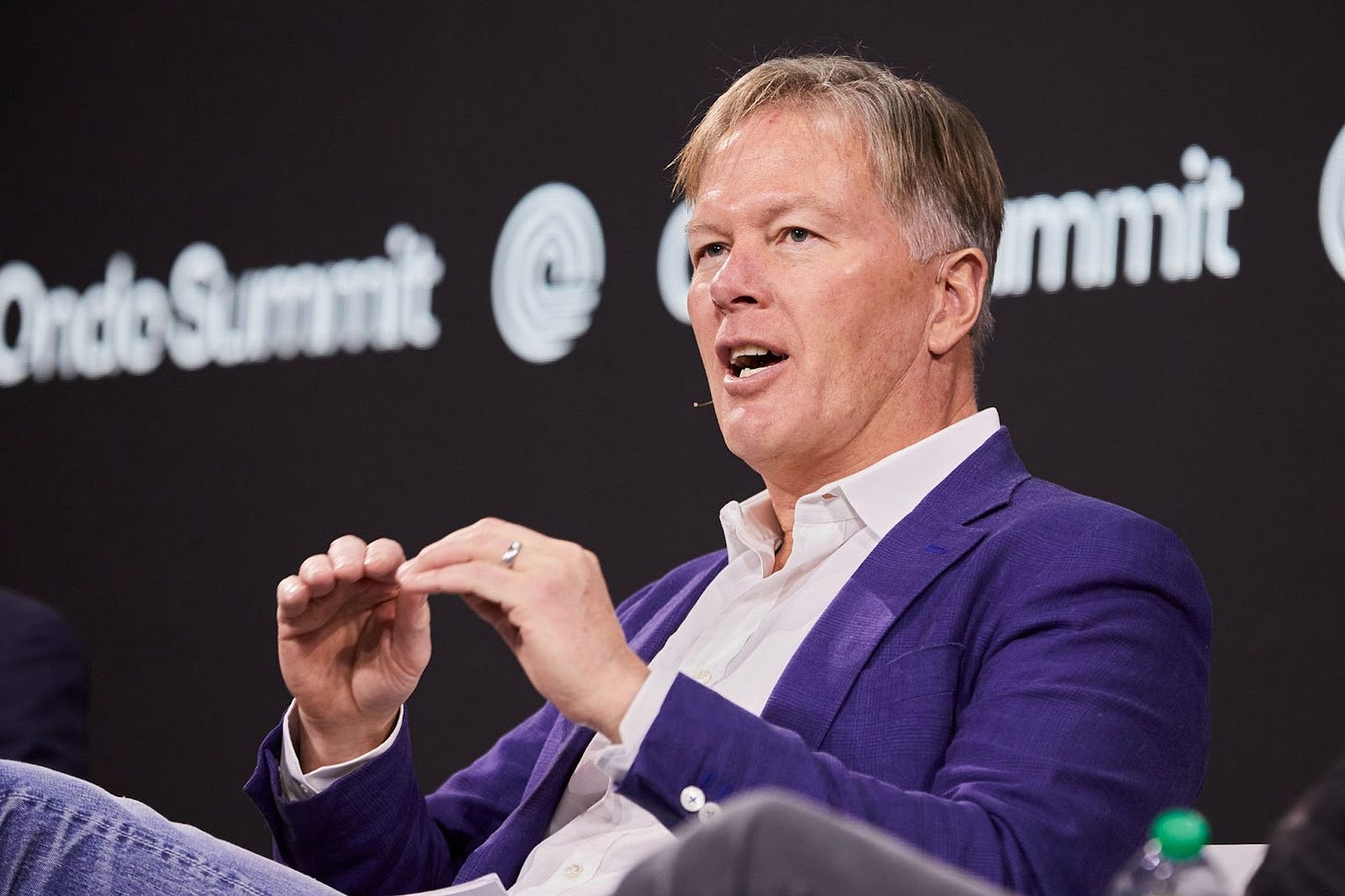
This was perhaps the first time where blockchain leaders, regulatory officials, and traditional asset managers came together to talk about the steps required to integrate blockchain technology with traditional finance rather than metaplanning.
This has been a long time coming.
The full summit is available on Youtube here.
What made me the most excited was the pragmatism during the conversations. Some quotes that Sandy Kaul from Franklin Templeton that displays this thoughtfulness are:
“Don't underestimate how difficult it is going to be to move from an account based system to a wallet based system… there is no such thing as a real portfolio; a portfolio is a virtual construct of different accounts and therefore the idea that I could commingle assets and use assets interoperable is completely foreign to anyone coming from a traditional background.”
“The system [the regulators] came up with [in the 1970’s] started to have Central counterparties [and] Central depositories. We started to have clearing organizations acting as buyer to every seller and seller to every buyer, we started netting portfolio positions, we started doing book order entry and ownership. We have to unwind that whole system to make this new system work.”
Dan Morehead, the Founder of Pantera Capital also mentioned the changing political zeitgeist:
“There used to be this huge group of people in Congress that were anti-crypto… In the 58 contested elections where pro-crypto PACs competed, 54 of the anti-crypto people left Congress. Nobody’s going to say anything bad about crypto in Congress again.”
Ondo’s Moment
Though I may be biased given Pantera led the seed round and co-led the Series A in Ondo, I believe that Ondo is the only company hyperfocused on fixing the integration issue between blockchain and traditional finance.
Ondo also announced the Ondo Chain, the Omnichain network for RWA’s. This chain solves two fronts: making on-chain yield more attractive/simpler to gain for off-chain investors, and to connect on-chain users to off-chain products/yields.
The problem is simple.
The current financial plumbing of the world is built on the assumption of distrust, with frequent checks and balances. If I wanted to buy a stock, my money would go through my bank or payment processor, brokerage, possibly a market maker, stock exchange, clearing firm, custodian bank, and possibly a transfer agent. That’s 7 intermediaries to buy a stock.
And if I am unsatisfied with the savings rate of my current bank, I would have to register at another bank account, requiring multiple days, possible re-dos of AML and identity checks, and the creation of new, repetitive documents.
On-chain, a single wallet can trustlessly interact with any market directly, without any middleman and without the creation of new accounts for each transaction.
Ondo’s vision is for the boundaries between traditional finance and blockchains to disappear, powered by the Ondo Chain and broader Ondo infrastructure. An investor will be able to instruct their bank to send a SWIFT bank wire to a user on-chain, which can be completed in a single action via the Ondo Chain. Similarly, a global investor will be able to purchase a security on the Ondo Chain, which will translate into a buy order on a TradFi exchange. Similarly, institutional investors will be able to pledge their treasuries as collateral in traditional repo markets, but have the resulting cash be converted into a yieldcoin asset that they can use in DeFi. The boundaries between the financial silos that currently exist will continue to blur, powered by the Ondo Chain and infrastructure Ondo is building.
Ondo Chain will allow for 24/7 trading, global assets, easier compliance, better rates, and new investment opportunities. Ondo goes into detail in their own blog post here.
Selling Shovels during a Gold Rush
Real world assets on-chain are accelerating ($8.5B at the start of 2024 vs $17B at the start of 2025) because it benefits both token creators and buyers.
On-chain users get access to yields from off-chain sources, while RWA creators can hold huge volumes of assets, charge menial fees on them, and invest them elsewhere for additional yield. RWAs supercharge DeFi because it brings some of the trust guarantees of RWA yield on-chain, which can be hyper-collateralized, margin-traded, and wrapped to create limitless derivative tokens. In effect, a single RWA dollar boosts the GDP of the on-chain economy multiple fold.
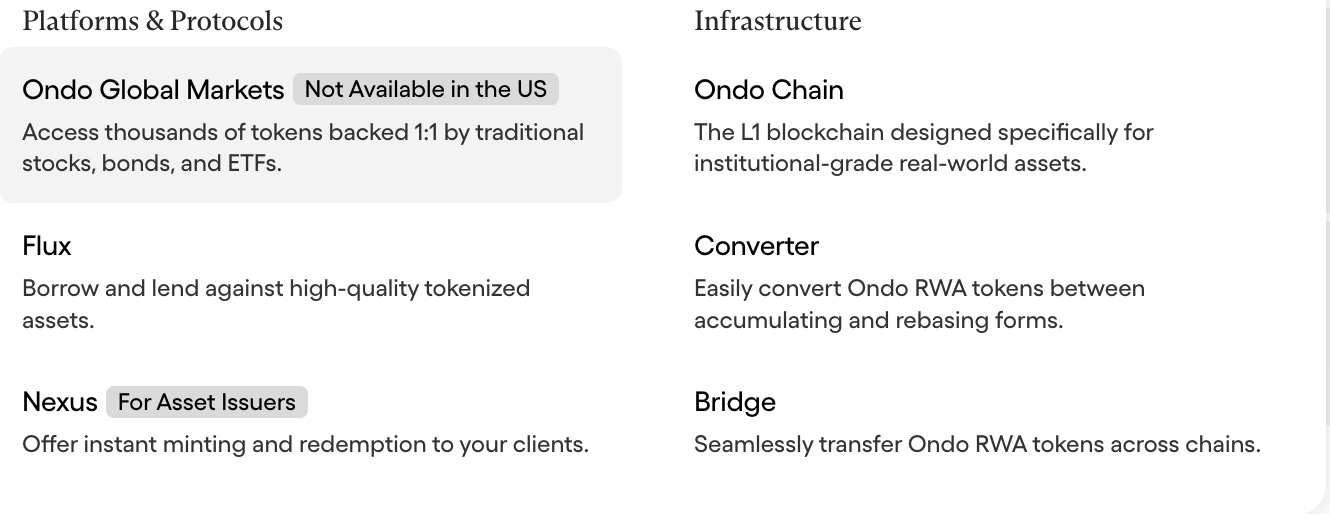
Ondo Global Markets allows access to tokens backed 1:1 by traditional assets, Bridge transfers RWA tokens across chains, and Nexus offers instant minting and redemption for clients. Instead of each bank having their proprietary channels, they can all use Ondo Chain to remove the administrative bloat of traditional finance, while giving users easy access to on-chain yields, and giving developers a single platform to build on top of, instead of having to create a product with each individual bank.
DeFi promised a dream of financial accessibility, interoperability, and transparency. More than a decade later, we may finally have the infrastructure to begin connecting the web2 world with the web3.
- Paul Veradittakit



All Comments