

Cointime

Download App
iOS & Android

Russia to Block Data Processing Centers from Mining Crypto with Cheap Power

The Russian government is poised to ban domestic data processing centers from mining crypto if they use subsidized power.

The Russian media outlet RBC reported that the government has revamped a draft law on mining that passed a first reading in the State Duma back in 2022.

Government officials are now working with lawmakers on a bid to refine the bill ahead of a second reading.
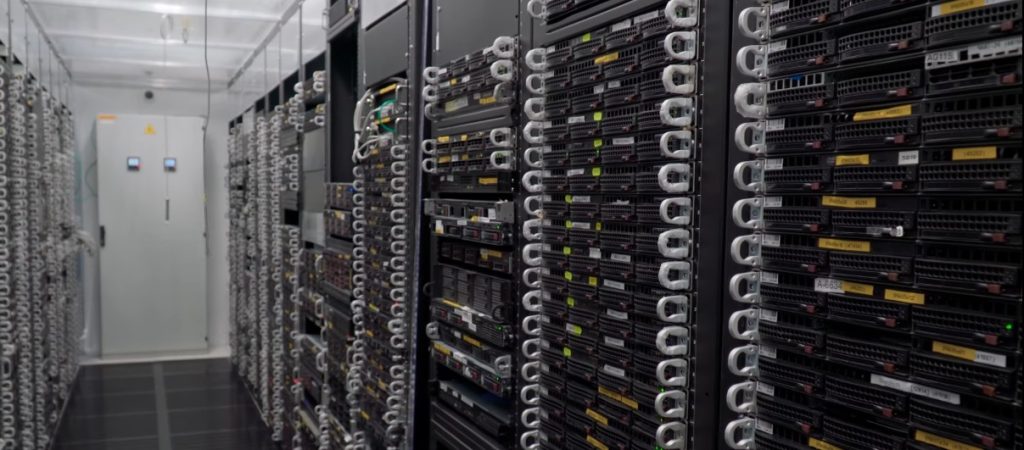
Inside a Russian data processing center. (Source: @regruvideo/YouTube/Screenshot)


Mining Crypto Soon to Be Off-limits in Many Russian Data Centers

The bill proposes asking data processing centers to sign up to a registry curated by the Ministry of Digital Development and Communications.

This process will involve operators pledging not to mine crypto at their centers. Only operators who make these pledges will be allowed to receive electricity at preferential rates.

The bill’s architects say its goal is to prevent miners from being able to claim benefits when paying for electricity.

These benefits will only be provided only to data centers that have been formally recognized as “communication facilities.”

Russian electricity firms provide subsidized power to residential users, as well as industrial sector and commercial firms.

But in recent months, lawmakers have called for power companies to roll out special unsubsidized rates for crypto mining companies.

Membership of the registry will be entirely voluntary, the bill’s authors added. However, all firms that join the registry will be barred from even housing crypto mining rigs, even if these are not connected to the internet.

Industrial Miners Say They’re Ready to Comply

Russian crypto mining experts said the bill has not taken them by surprise. RBC quoted the Intelion Director-General Artem Shchepinov as stating that he anticipated the measure.

Shchepinov added that it would help solidify Russia’s technological sovereignty and strengthening regulated its digital infrastructure.

Others, however, complained that Moscow has not asked the private sector for input before formulating the bill.

A blockchain expert was quoted as saying that the new law could have a detrimental impact on both the industrial crypto mining industry and the conventional data center industry.

But a data center operator claimed the move would do little to dent the capabilities of major industrial miners.

These centers are “self-sufficient and sustainable,” he said, and “do not require government support.”

Engineers work on a new 48 MW Intelion data center in the Russian Republic of Khakassia. (Source: @intelionmining/VK/Screenshot)


Dual-use Facilities

However, many major industrial miners operate dual-use centers. These facilities can house both mining and more conventional IT resources.

Shchepinov appeared to suggest that his company has already begun preparing for the change. He gave the example of Intelion’s facilities in the Samara Oblast.

The executive explained that Intelion has already divided this facility into “two clusters that provide crypto mining and AI computing in parallel.”

In May, industry figures revealed that Intelion and BitRiver’s combined revenues for the financial year 2024 hit the $200 million mark.

Around 90% of Russian industrial miners focus their efforts on Bitcoin (BTC), most experts in the nation agree.

However, a significant number of home-based miners in the nation prefer to miner Ethereum (ETH), crypto enthusiasts have told Cryptonews.com.

Comments

All Comments

Recommended for you

  • Trump Shares Op-Ed Claiming He is Winning the War Against Iran

    On August 29, U.S. President Trump shared a commentary article from the New York Post on Truth Social on Saturday, which stated that he is winning the war against Iran and should maintain the current strategy. The title of the article Trump shared read: 'Trump is Winning the War Against Iran - Stay the Course.'

  • Morgan Stanley: 2028 as a Key Observation Point for Global Memory Competition Landscape

    On August 29, Morgan Stanley pointed out that the rise of Chinese memory manufacturers should not be viewed merely as a technological catch-up or low-cost substitution; what is truly noteworthy is that their production capacity may gradually become large enough to alter the supply structure of the global memory market. Changxin Technology and Yangtze Memory Technologies are currently entering the mainstream product market and gradually extending into high-profit markets such as HBM, high-end server DRAM, and enterprise SSDs. Morgan Stanley considers 2028 as an important observation point for the global memory competition landscape. From 2026 to 2027, demand for AI servers, capacity crowding of advanced wafers by HBM, import substitution, and the time required for customer certification may absorb most of the new supply from Chinese memory manufacturers. By 2028, as Chinese manufacturers expand production, the additional capacity from Samsung, SK Hynix, and Micron, which had previously initiated expansions, will also be released. At that time, the supply variables in the global memory market will significantly increase. Morgan Stanley estimates that Changxin's DRAM monthly production capacity will rise from 180,000 wafers in 2025 to 300,000 in 2026, accounting for approximately 13% of global DRAM wafer capacity and about 11% of bit shipments; by 2028, it is expected to further increase to 500,000 wafers, and by 2031, it could reach 800,000 wafers. If the expansion proceeds smoothly, Changxin's global DRAM bit shipment market share could approach 15% by 2030, and it may even have the opportunity to surpass Micron in production capacity around 2028, becoming the third-largest DRAM supplier in the world.

  • US Spot Ethereum ETF Sees Net Inflow of $102.17 Million Yesterday

    On August 29, according to monitoring by Trader T, the US spot Ethereum ETF recorded a net inflow of $102.17 million yesterday.

  • US Spot Ethereum ETF Sees Net Inflow of $102.17 Million

    On August 29, according to monitoring by Trader T, the US spot Ethereum ETF experienced a net inflow of $102.17 million yesterday.

  • US Spot Bitcoin ETF Sees Net Outflow of $201.81 Million

    On August 29, according to monitoring by Trader T, the US spot Bitcoin ETF experienced a net outflow of $201.81 million yesterday.

  • US Spot Bitcoin ETF Sees Net Outflow of $201.81 Million Yesterday

    On August 29, according to monitoring by Trader T, the US spot Bitcoin ETF experienced a net outflow of $201.81 million yesterday.

  • BTC Surpasses $78,000

    Market data shows that BTC has surpassed $78,000, currently priced at $78,009.49. The 24-hour decline has narrowed to 3.23%. Due to significant market fluctuations, please ensure proper risk management.

  • BTC Surpasses $78,000

    Market data shows that BTC has surpassed $78,000, currently priced at $78,009.49, with a 24-hour decline narrowing to 3.23%. The market is experiencing significant volatility, so please ensure proper risk management.

  • BTC Briefly Drops Below $77,000

    Market data shows that BTC briefly fell below $77,000, currently reported at $77,694, with a 24-hour decline of 3.3%. The market is experiencing significant volatility, so please ensure proper risk management.
