Cointime

Download App
iOS & Android

Rising US treasury yields, war in Iran, rising inflation risk pressure Bitcoin price

Key takeaways:

  • Investors dumped gold and bonds for cash as war-driven oil spikes and inflation forced a defensive market stance.
  • Rising yields and a 20% rate hike chance signal a tight outlook, leaving Bitcoin vulnerable amid soaring US debt.

Bitcoin retested the $67,500 support level on Monday, a move that coincided with gold prices suffering their sharpest correction in over 50 years. Fears of a prolonged war in Iran and the inflationary impact of oil prices holding above $85 pushed investors to cut risk.
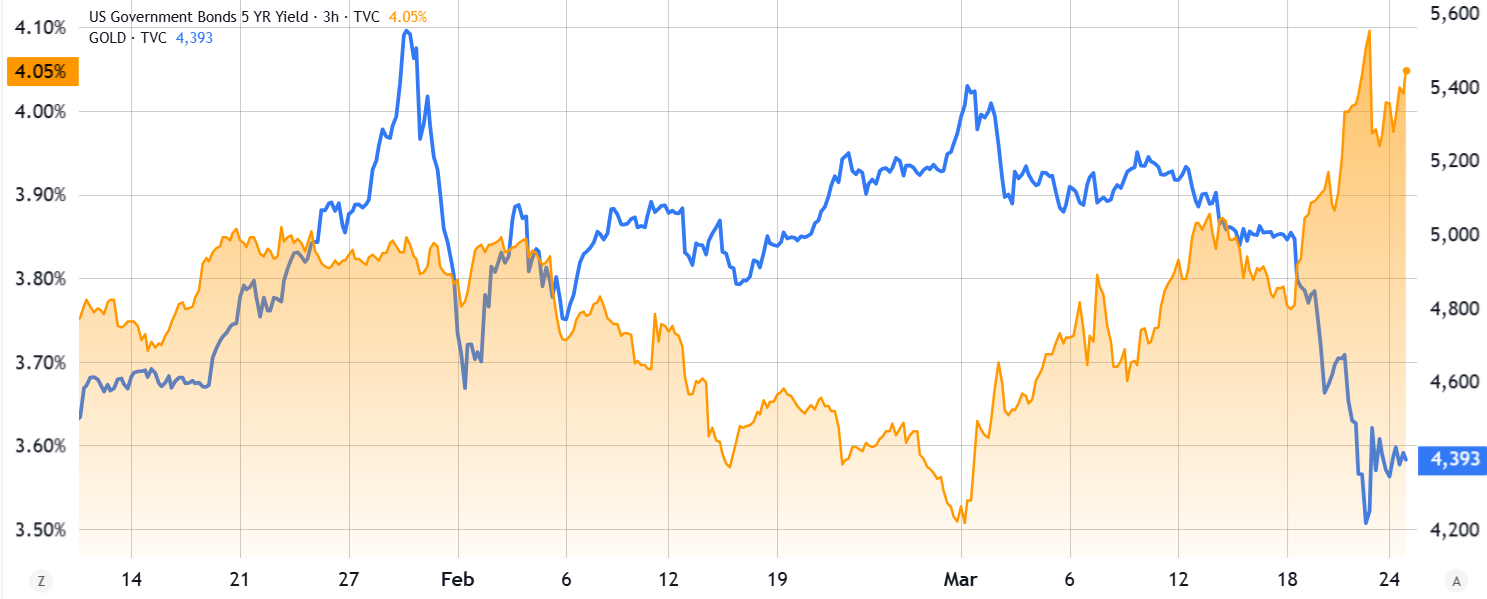
  US 5-year Treasury yields (left) vs. Gold/USD (right). Source: TradingView


US Treasuries also faced a sell-off during this period, suggesting that traders aggressively built cash positions. Yields on the US 5-year Treasury jumped to 4.10%, marking a nine-month high as traders demanded better returns. With the S&P 500 hitting its lowest point in over six months on Monday, evidence suggested a broad rush to liquidity.

Cash is king amid economic uncertainty, while Bitcoin risks further downside

Investors appeared to be raising cash either to cover recent losses or to brace for further price drops across risk markets.
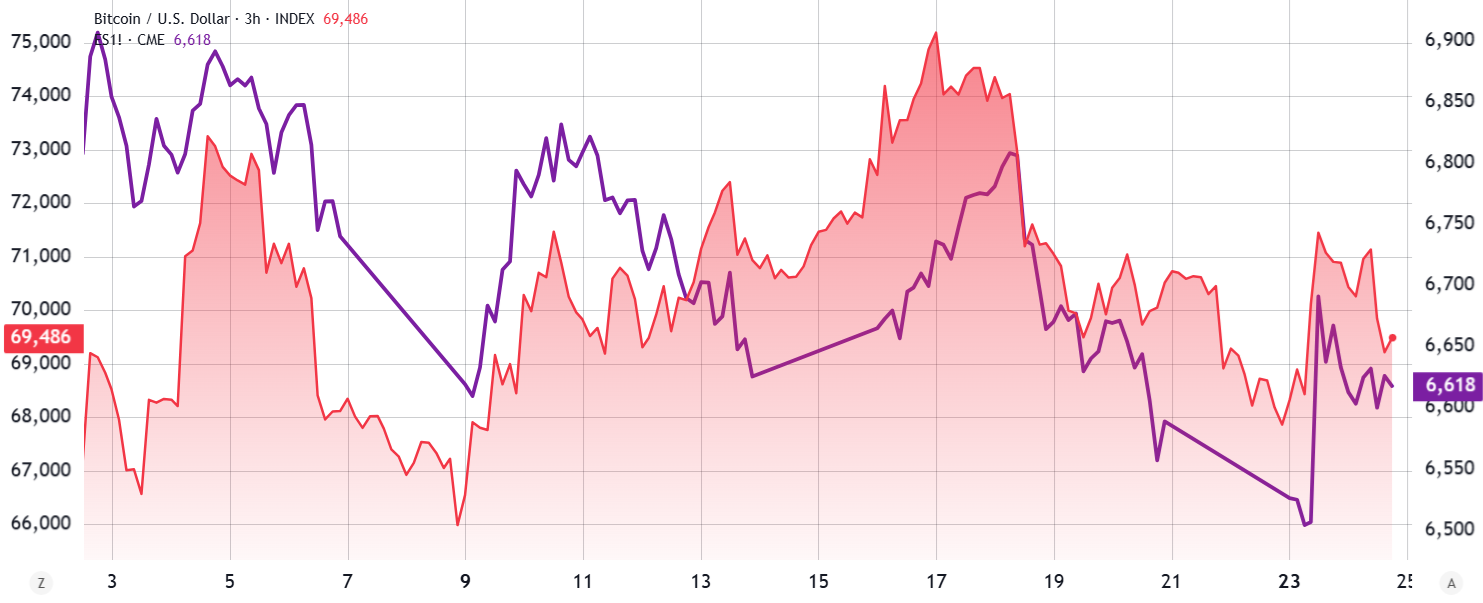
Bitcoin/USD (left) vs. S&P 500 futures (right). Source: TradingView


The ongoing war in Iran pushed oil prices past $90, creating inflationary pressure. The Wall Street Journal reported that the US planned to deploy roughly 3,000 troops to the Middle East to counter Iran’s influence over the Strait of Hormuz. Part of the decline in gold prices was likely linked to fading expectations for US monetary policy easing in the near term.
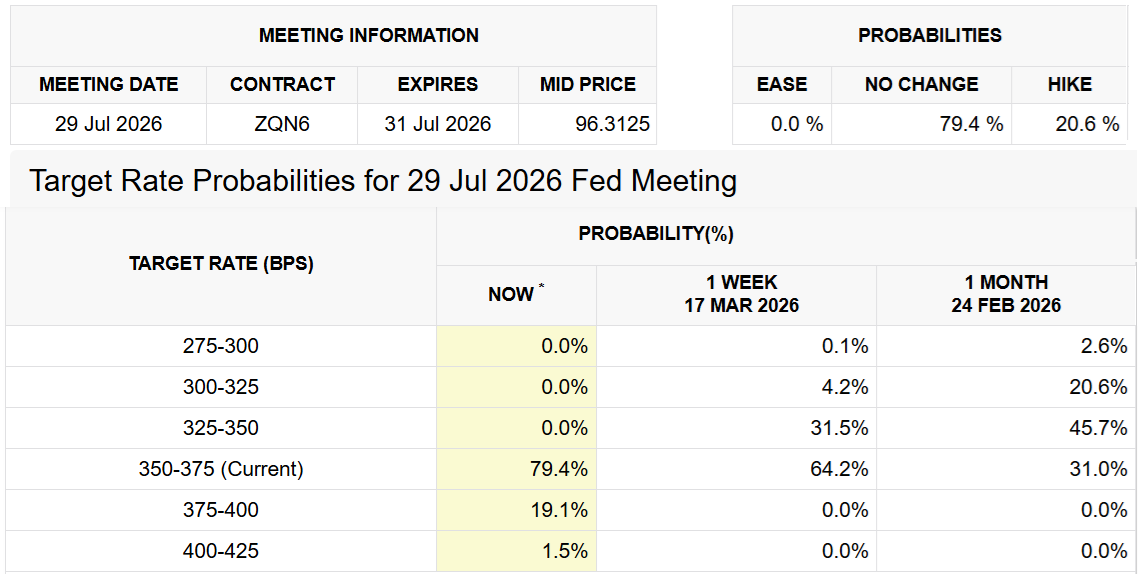
  Interest rate target probabilities for the July FOMC meeting. Source: CME FedWatch Tool


Bond market futures showed that the implied probability of the Federal Open Market Committee (FOMC) hiking interest rates by July surged to 20.5%, up from 0% just one week prior. Investors anticipated a cooling job market as high interest rates continued to reduce corporate expansion incentives.

Tech stocks fall, inflation hurts consumers

US legislators debated an additional $200 billion in funding to support the war in Iran, according to The Washington Post. Kevin Hassett, director of the US National Economic Council, stated that $12 billion had already been spent. Lawmakers did not authorize the war, and Congress showed growing unease with the military strategy, according to AP.

Meanwhile, the US national debt soared past $39 trillion, which further pushed consumers toward a cost-of-living crisis. Fear of excessive speculative investment in the artificial intelligence sector emerged after Reuters reported that ChatGPT maker OpenAI offered private-equity firms a guaranteed minimum return of 17.5% while the company remained largely unprofitable.
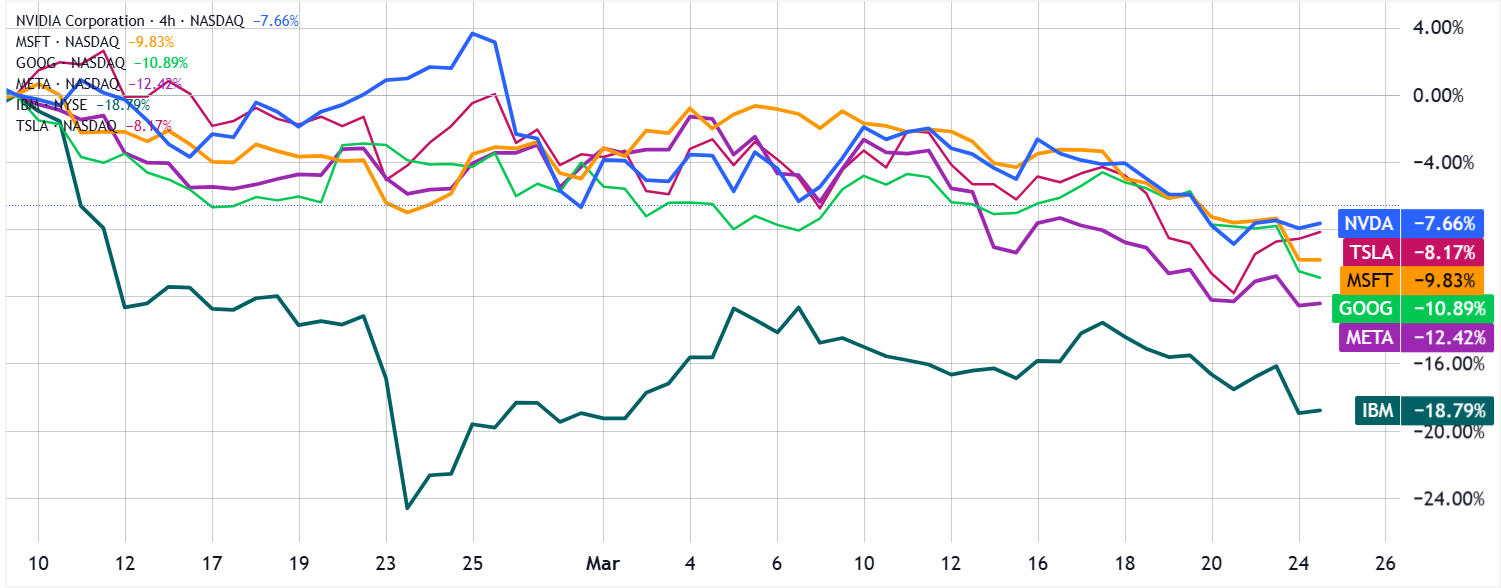
Tech stocks performance. Source: TradingView


Some of the world’s largest tech companies faced losses of 10% or more over the past six weeks, including Google (GOOG US), Meta (META US), and IBM (IBM US). Thus, regardless of the sharp correction in gold prices, traders increasingly feared recession risks or a surge in inflation above the 4% fixed income returns.

The combination of declining stock prices and persistent inflationary pressure explained why investors aggressively sought the safety of cash positions.

Regardless of favorable Bitcoin onchain metrics, broader macroeconomic conditions remained unfavorable for sustainable bullish momentum. The decline in gold prices while investors offloaded US Treasuries served as a sign of risk aversion. The odds of a $66,000 retest remain a serious threat, at least until inflation and war expenses hold US monetary policy tight for a longer period.


Comments

All Comments

Recommended for you

  • Bitcoin holders shift from panic to cash-buffer discipline as volatility deepens

    Bitcoin volatility rose as stablecoin flows surged to $440 billion over the weekend, highlighting investors’ pivot to cash as BTC spot and futures activity decreased.

  • Circle taps African fintech Sasai to expand USDC adoption in cross-border payments

    The move aims to integrate the second-biggest dollar-pegged stablecoin into regional payment networks to improve cross-border transactions and remittances.

  • 21shares sees active strategies shaping next phase of crypto ETFs

    21shares president Duncan Moir sees shifting investor demand and evolving product strategies pushing crypto ETFs and ETPs beyond passive exposure.

  • US Spot Bitcoin ETF Sees Net Outflow of $66.71 Million Yesterday

    According to monitoring by Trader T, the US spot Bitcoin ETF experienced a net outflow of $66.71 million yesterday.

  • BTC Surpasses $70,000

    Market data shows that BTC has broken through $70,000, currently trading at $70,011.9. The 24-hour decline has narrowed to 1.11%. The market is experiencing significant volatility, so please implement risk control measures.

  • BTC Drops Below $69,500

    Market data shows that BTC has fallen below $69,500, currently trading at $69,492.81. It has experienced a 2.2% decline in the past 24 hours. The market is experiencing significant volatility, so please implement risk control measures.

  • CLARITY Act Draft: Ban on Stablecoin Yields for Holding Only

    On March 24, according to CoinDesk, cryptocurrency industry practitioners on Monday saw the latest provisions regarding stablecoin yields in the revised version of the Senate's "Digital Asset Market Clarity Act" for the first time during a closed-door review meeting on Capitol Hill in Washington. The initial impression was that the relevant language was too narrow and lacked clarity. This new provision was released last Friday by Senators Angela Alsobrooks and Thom Tillis. According to a person familiar with the current draft, the new provision will prohibit earning yields solely from holding stablecoins, while restricting any practices that equate such programs with bank deposits, and imposing further limitations on other potentially permissible activities. The specific mechanism for determining activity-based stablecoin rewards remains unclear. This compromise stems from the lobbying battle between the crypto and banking industries. The banking industry insists that stablecoin rewards should not resemble interest-bearing bank deposits, arguing that such competing products could harm the banking sector and stifle lending. The final compromise allows for reward programs based on user stablecoin activities but prohibits balance-based rewards. This closed-door review aims to push the Senate Banking Committee to schedule a hearing, a significant step for the bill towards a full Senate vote. Similar versions of the "Clarity Act" have passed the House of Representatives in previous years, and another version has also passed the Senate Agriculture Committee's markup process. The bill's progress still faces other obstacles: all parties still need to reach an agreement on the DeFi regulatory framework, and Democrats are simultaneously insisting on including provisions that prohibit senior government officials from seeking personal gain from the cryptocurrency industry, a clause clearly targeting President Trump. (Dongxin News Agency)

  • Iran's IRGC: All Vessels Must Coordinate Passage Through Strait

    According to Al Jazeera: The Iranian Revolutionary Guard Corps (IRGC) Navy stated that the container ship 'Celine' was forced to leave the area because it did not possess a permit to pass through the Strait of Hormuz. The IRGC Navy further stated that any vessel transiting the Strait of Hormuz must coordinate fully with Iranian maritime authorities. (Jins10)

  • Circle Shares Plunge Over 16%, Hitting Largest Single-Day Drop Since June 2025

    Circle (CRCL) shares fell by more than 16% intraday, marking the largest single-day decline since June 2025. The stock is currently trading at $106.1.

  • BTC Drops Below $70,000

    Market data shows that BTC has fallen below $70,000, currently trading at $69,995.57. The cryptocurrency has seen a 1.86% decrease in the last 24 hours, indicating significant price volatility. Investors are advised to manage their risk accordingly.