

Cointime

Download App
iOS & Android

PopChain Global Ecosystem Conference Concludes Successfully, Showcasing the Power of Connection

Validated Individual Expert

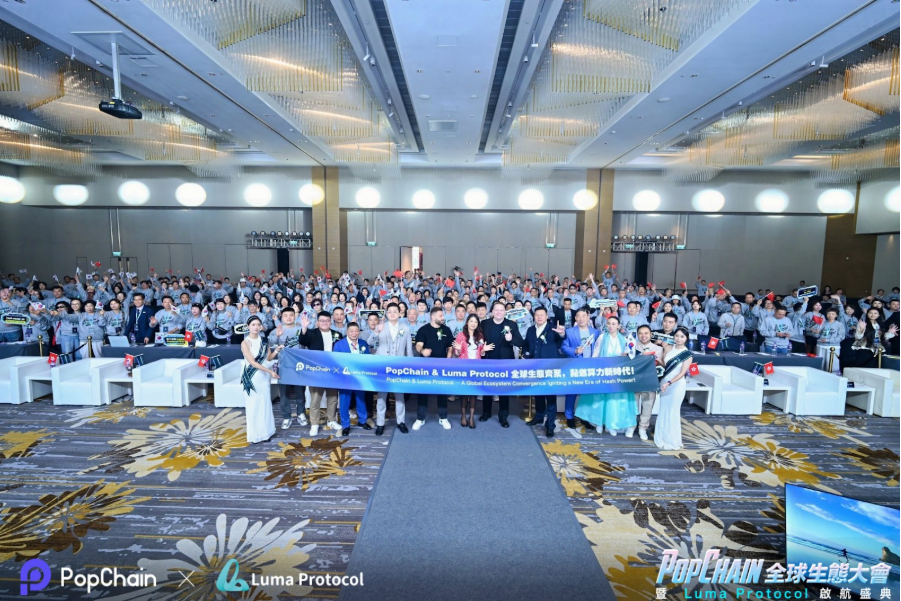
November 8, 2025 – Hong Kong — The PopChain Global Ecosystem Conference concluded successfully in Hong Kong, marking one of the most influential Web3 innovation events of the year. Hosted by PopChain and sponsored by Luma Protocol, the summit gathered developers, institutional representatives, and ecosystem partners from around the world to witness the official dawn of the ConnectFi era.
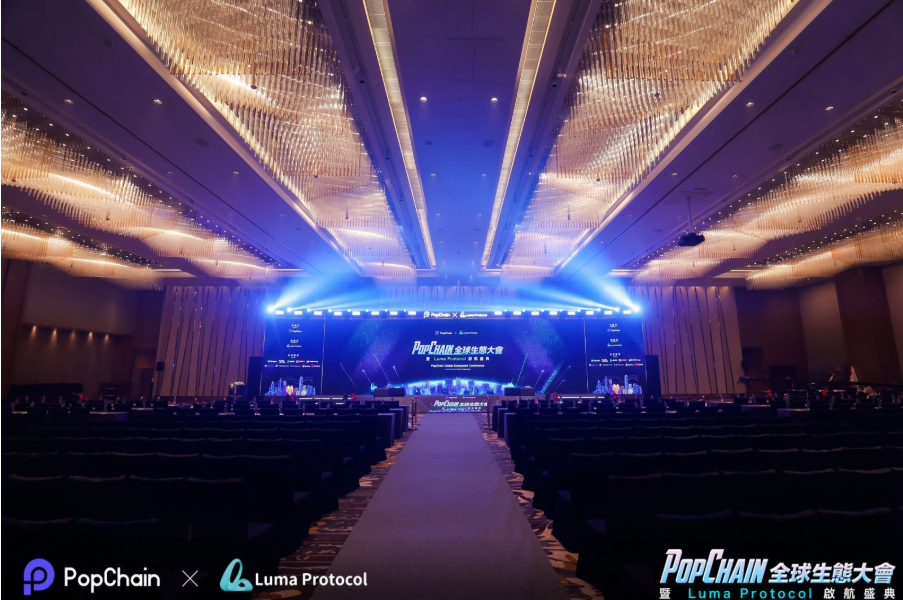
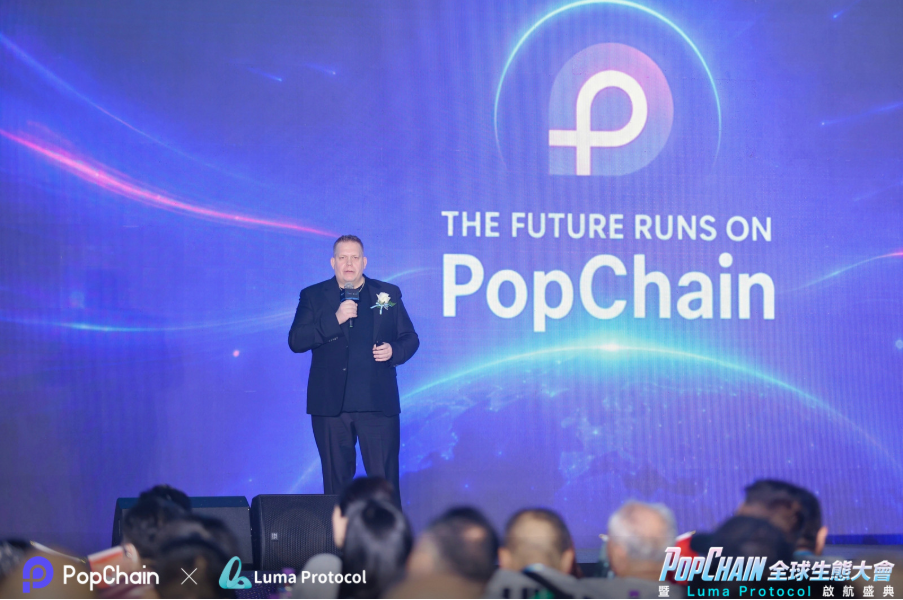
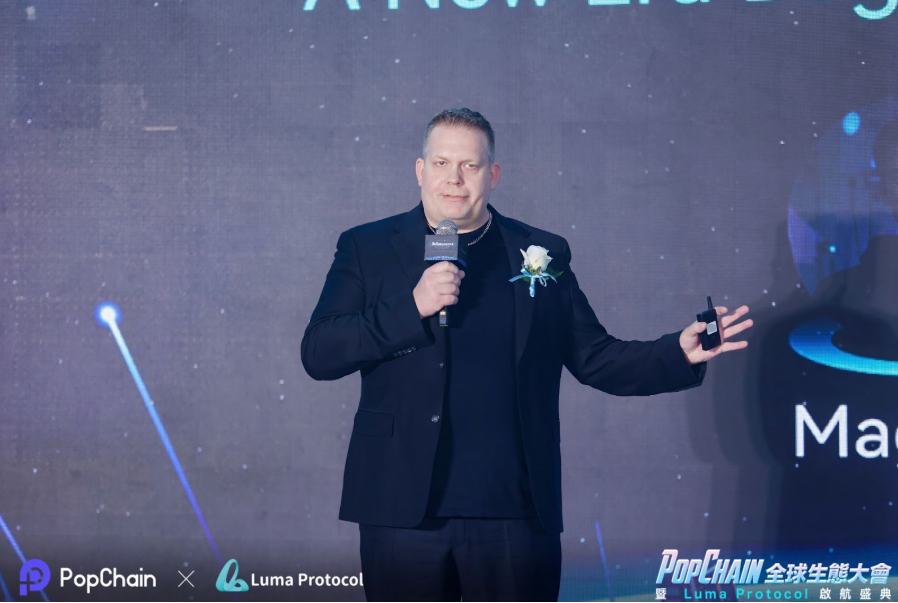
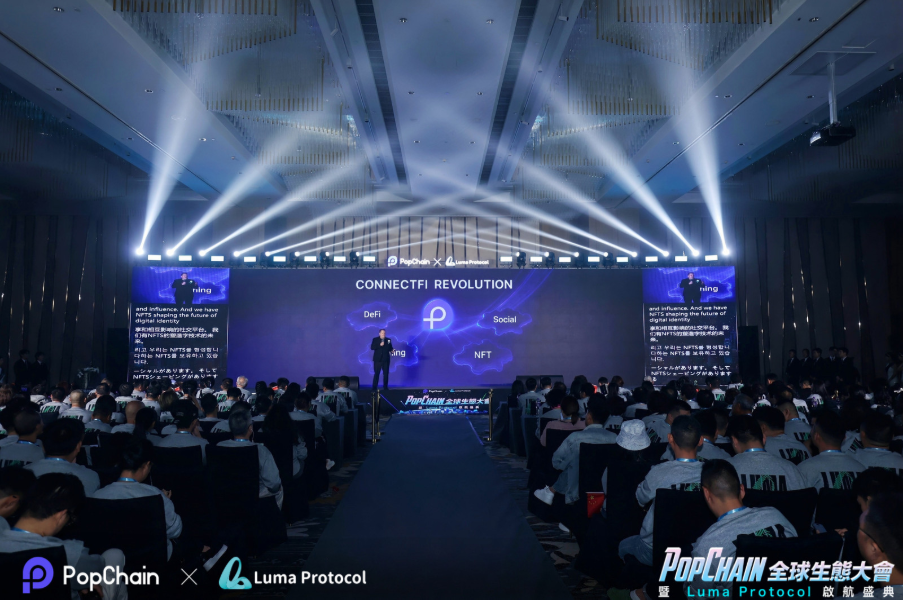
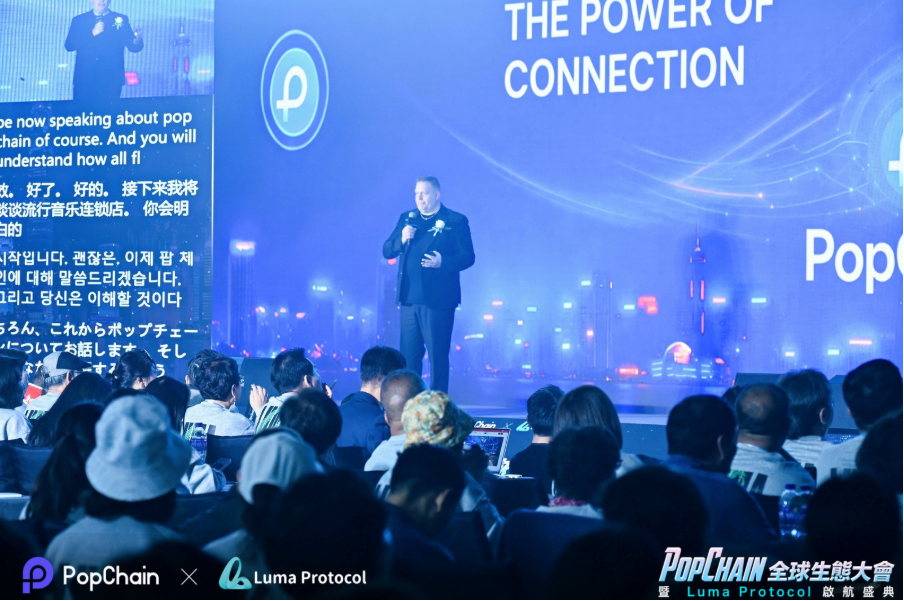
During the opening ceremony, PopChain CEO Magnus delivered a keynote speech titled “A New Era Begins: The Power of Connection.” Centered on the concept of connection, he articulated PopChain’s technological philosophy, ecosystem vision, and global strategic roadmap—signaling that this sovereign-grade blockchain, built for connection and efficiency, has fully entered the global stage.

1. The Age of Connection Begins

Magnus opened by stating that connection is the fundamental logic of the next-generation value internet. “In the past decade, blockchain has been reshaping trust; in the next, it will reshape connection,” he said.

He emphasized PopChain’s ambition to become the foundational infrastructure of this new era —a sovereign public chain enabling identity, content, behavior, and value to self-circulate within a unified network.

PopChain’s mission in the ConnectFi era is to rebuild on-chain order: allowing computing power, consumption, and value to flow freely, while enabling users, creators, and developers to share one trusted value network.
2. From Technology to Culture: The Three Dimensions of Connection

Magnus broke down the Power of Connection into three interconnected dimensions:

Technological Connection — PopChain is built on an EVM + Move + IBC multi-chain architecture, achieving 3-second block times, 5,000+ TPS, and gas fees under $0.01. With account abstraction and gas sponsorship features, Web3 finally becomes accessible to the mainstream.

Value Connection — By tokenizing computing power, consumption credits, and behavioral data, PopChain enables a self-sustaining ConnectFi economic loop where “spending becomes mining” and “behavior creates yield.”

Cultural Connection — Through Meme-Fi, content ownership, and community co-creation, PopChain transforms culture into measurable value — where consensus becomes capital and every individual contributes to value creation and transmission.

Magnus concluded, “The true meaning of connection is not just linking systems—it’s enabling trust, value, and creativity to flow freely.”
3. The Technical Foundation: The Power of a Sovereign Blockchain

PopChain’s goal is to provide a high-performance, secure, and regulation-ready sovereign blockchain for the global DeFi 3.0 and Web3 ecosystem.

  • Consensus and Performance: 3-second block time, over 5,000 TPS, gas costs below $0.01
  • Node Architecture: A three-layer structure — 210 gateway nodes, 2,100 staking nodes, and unlimited light nodes — balancing decentralization and performance
  • Developer-Friendly Tools: Open APIs, multi-language SDKs, and extensive development support
  • User Accessibility: Account abstraction and gas subsidies lower barriers for new Web3 users

This foundation positions PopChain as the core infrastructure of the ConnectFi economy, supporting the next generation of computing, consumer, and content-based financial ecosystems.
4. The Economic Model: From $POP to the ConnectFi Loop

At the heart of PopChain’s economy lies its native token, $POP, the central engine driving network value.

  • Fixed total supply: 1 billion tokens, with no future inflation
  • 80% allocated to mining and validator rewards
  • 20% allocated to ecosystem development, growth incentives, and brand expansion
  • Functions include governance, gas payments, staking, security, and ecosystem circulation

This model transforms PopChain from a technological infrastructure into a self-sustaining economic system, forming a closed loop between on-chain behavior and value creation.

5. Ecosystem Expansion: Connecting Blockchain and Real Life

The conference also unveiled PopChain’s latest ecosystem matrix, now including over 150+ integrated or reserve projects:

  • Luma Protocol — DeFi 3.0 protocol powering liquidity and yield aggregation
  • PopMe.fun — Decentralized Meme Launchpad driving the rise of Meme-Fi and cultural finance
  • BETV — Decentralized short-video platform combining SocialFi and content-based mining
  • Nivex — Global compliance-focused exchange connecting POP, LUMA, and BEE assets
  • BeFlow — Consumer finance aggregator enabling “payment-as-mining” scenarios
  • PopBridge, PopScan, PFDEX — Official PopChain infrastructure products completing the technical matrix

Together, these initiatives create a unified ecosystem where technology, finance, content, and culture interconnect seamlessly.

6. Roadmap: Toward a New Era of Sovereign Finance

According to the roadmap released during the conference:

  • 2025: Mainnet optimization; full launch of PopBridge, PopSwap, and PopScan
  • 2026: Launch of PopDAO and R&D on Rollup architecture
  • 2027–2028: Expansion into computing and consumer finance; introduction of RWA assets
  • 2029+: Formation of the global ConnectFi network and evolution toward a “token-equity parity” financial structure

Magnus concluded, “Only when every node, every transaction, and every consensus is connected will the new era of sovereign finance truly arrive.”
7. The Age of Connection Belongs to Every Creator

The PopChain Global Ecosystem Conference was not just a technology summit — it was a convergence of ideas and values. It symbolized PopChain’s shift from a technological narrative to a connection narrative, from a single public chain to an open ecosystem, from infrastructure to a sovereign digital economy.

In this new age, every participant is a node of connection; every act of creation is an echo of value. PopChain — Connecting the Future, Rebuilding Value.
Comments

All Comments

Recommended for you

  • Whale Transfers 1,133 BTC to Coinbase Prime, Valued at $71.48 Million

    According to Onchain Lens monitoring, a whale transferred 1,133 BTC from Coinbase to Coinbase Prime through an intermediary wallet, valued at $71.48 million.

  • U.S. AI Chip Stocks Decline Before Market Open, Intel Falls Over 3%

    On July 7, U.S. AI chip stocks experienced widespread declines before the market opened. Intel dropped over 3%, while AMD, Qualcomm, and NXP fell more than 2%. TSMC, Broadcom, and Tesla decreased by over 1%, and NVIDIA declined by 0.7%.

  • China's Central Bank Increases Gold Reserves for the 20th Consecutive Month

    As of the end of June, China's gold reserves stood at 75.44 million ounces (approximately 2,346.446 tons), an increase of 480,000 ounces (about 14.93 tons) from the end of May, which reported 74.96 million ounces (approximately 2,331.52 tons). This marks the 20th consecutive month of gold accumulation.

  • China's Foreign Exchange Reserves in June at $341.6262 Billion

    On July 7, China's foreign exchange reserves for June stood at $341.6262 billion, a decrease of $26 billion from the end of May, representing a decline of 0.75%, with expectations set at $343.2 billion.

  • U.S. Storage Stocks Drop Pre-Market, SanDisk and Micron Down Over 4%

    On July 7, U.S. storage concept stocks collectively fell in pre-market trading. Western Digital dropped over 5%, SanDisk and Micron Technology fell over 4%, Seagate Technology declined over 3%, Rambus fell over 2%, and SMI fell over 1%.

  • U.S. Stocks in Optical Communication Sector Drop Pre-Market

    On July 7, stocks in the optical communication sector of the U.S. market collectively fell pre-market. Astera Labs dropped over 4%, while Marvell Technology, Credo Technology, and AXT Inc. fell more than 3%. Tower Semiconductor, MaxLinear, Corning, Applied Optoelectronics, GlobalFoundries, Lumentum, and Qorvo all declined by more than 2%. Coherent, Nokia, Amphenol, and Broadcom dropped over 1%.

  • Pre-market Decline in U.S. Storage Stocks

    In pre-market trading, U.S. storage concept stocks experienced a widespread decline, with Micron Technology falling by 4.8%, SanDisk dropping over 4%, Corning down more than 2%, and Intel decreasing by over 3%.

  • Two Departments: Support for Reinsurance Institutions to Increase Capital and Issue Supplementary Capital Tools

    On July 7, the National Financial Supervision and Administration Bureau and the Shanghai Municipal Government released several measures to accelerate the construction of the Shanghai International Reinsurance Center. Among these measures, they proposed to enhance the quality and efficiency of the reinsurance industry, support reinsurance institutions in increasing capital and expanding shares, and issuing supplementary capital tools to improve the capacity for internal capital accumulation and external capital supplementation, thereby strengthening the reinsurance industry's capabilities. The initiative aims to guide the insurance industry to focus on major national projects, strategic emerging industries, and livelihood security, consolidating insurance and reinsurance underwriting capabilities to enhance risk protection levels. It also supports reinsurance institutions in leveraging their professional technical advantages to assist the insurance industry in reducing risk.

  • Sources: Saudi Arabia Plans to Expand Oil Pipeline to Red Sea, Increasing Capacity by 2 Million Barrels Daily to Bypass Strait of Hormuz

    On July 7, five informed sources revealed that Saudi Arabia is considering expanding the crude oil pipeline capacity to its western coast on the Red Sea, allowing Saudi Arabia and its neighbors to transport more oil without passing through the Strait of Hormuz. This east-west pipeline, built in the early 1980s, has gained strategic importance since the outbreak of the Iran war in February and the disruption of shipping in the Strait of Hormuz. The pipeline can deliver up to 7 million barrels of crude oil per day to the Red Sea port. The CEO of Saudi Aramco stated in May that approximately 2 million barrels are supplied to west coast refineries, while about 5 million barrels are for export. Sources indicate that Saudi Arabia is in preliminary discussions with some neighboring countries regarding the pipeline expansion, aiming to add about 2 million barrels of pipeline capacity per day. It remains unclear whether Aramco's planned expansion involves upgrading existing infrastructure or constructing new pipelines. One source mentioned that the expansion plan also includes a smaller refined oil pipeline. Two sources indicated that the expansion scale could range from 1 million to 2 million barrels per day, with refined oil also being considered. Another source stated that the project would take several years and cost billions of dollars, requiring adjustments to Saudi crude pricing mechanisms.

  • Citi: Tencent's WorkBuddy Gains Momentum, Maintains 'Buy' Rating

    On July 7, Citi released a research report stating that, according to the latest industry data, Tencent's AI agent product WorkBuddy has reached 20 million monthly active users (MAU) and over 13 million daily active users (DAU), with a DAU/MAU ratio between 65% and 75%. Considering the product has only been launched for a few months, user stickiness and daily engagement are performing strongly. Citi quoted Tencent's management as saying that in terms of daily active users, Tencent is leading its Chinese peers in the deployment of AI agents. Early user data reflects strong natural growth for both CodeBuddy and WorkBuddy, with high retention rates. Early users are interacting with the AI agents for long durations and with high frequency, creating a positive feedback loop. It is expected that AI products will become a key revenue source for Tencent Cloud. The firm believes that WorkBuddy's success demonstrates the strength of Tencent's ecosystem, the synergy between various productivity tools, and users' trust in Tencent's products and security. Citi maintains a 'Buy' rating on Tencent with a target price of HKD 763 unchanged.
