


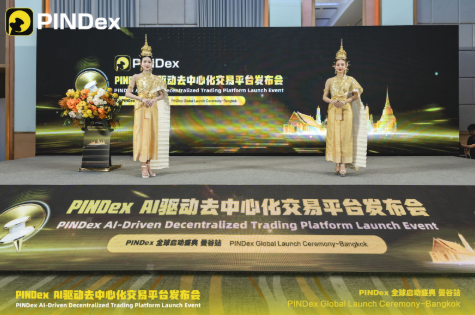
Bangkok, Thailand – March 31, 2026 — The “PINDex Global Launch Ceremony”, hosted by PINDex, officially concluded in Bangkok. The event brought together global blockchain technology experts, veteran investment institutions, and Web3 industry leaders to witness the stunning launch of the AI-driven decentralized trading platform, PINDex. This marks not only the emergence of an innovative technology but also signals that Web3 trading has officially entered the “Intelligent Computation Execution” era, achieving deep integration between AI decision-making and high-performance mainnet infrastructure.

1. From “Manual Play” to “Intelligent Autonomous Computation”
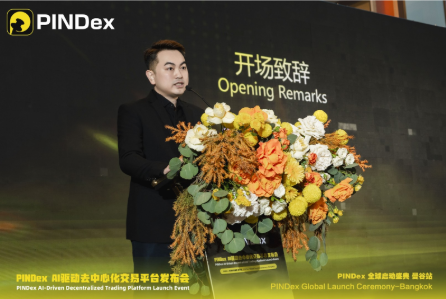
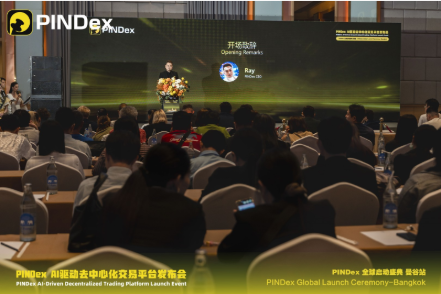
In his opening remarks, PINDex CEO Ray pointed out that March 31, 2026, marks the beginning of AI-native finance moving from vision to reality. He emphasized that traditional trading is constrained by human physiological execution limits, while PINDex’s core mission is to empower AI strategies with millisecond-level responsiveness through the high-performance PIN Chain mainnet, fully addressing the pain points of traditional DEX performance limitations and trading black boxes.
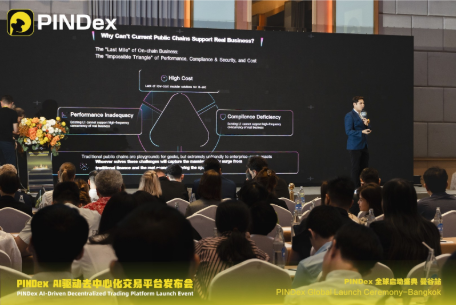
ENI blockchain representative, Asean Labs COO Leo, delivered a keynote titled “ENI Enterprise-Grade Modular L1 Built for Mass Commercial Adoption.” Leo stated that ENI, designed as an enterprise-grade modular L1 blockchain for large-scale commercial applications, aims to solve the “final mile” pain points in existing blockchains regarding performance, compliance, and cost. Leo emphasized that ENI is not just an underlying infrastructure but the “Chief Architect” of the Web3 world. Furthermore, ENI’s strategic partnership with Japanese telecom giant NTT has established a global benchmark for enterprise-grade Web3 technology. This deep integration with PINDex will allow ENI’s trillion-level computing power to be directly converted into AI-driven financial productivity, jointly ushering in a new era of intelligent computation finance.
PINDex advisor Cyrus delivered a keynote titled “AI-Driven Decentralized Trading Infrastructure Based on High-Performance Public Chains.” Cyrus noted that PINDex is more than a trading tool; it is a financial foundation built on a sovereign, independent high-performance mainnet. Leveraging the microsecond-level execution environment provided by PIN Chain, PINDex achieves synchronous execution from full-scope scanning to logical hedging, democratizing the algorithmic advantages previously exclusive to top-tier hedge funds.
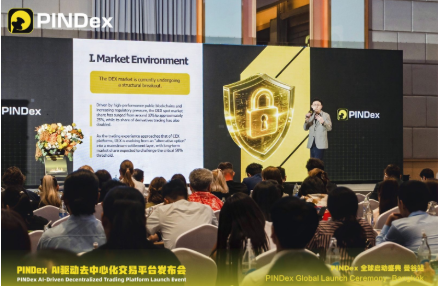
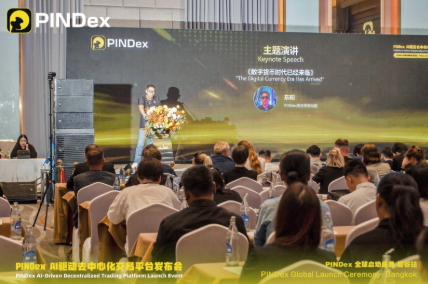
Additionally, PINDex Overseas Market Director Dongyang delivered a keynote titled “The Era of Digital Currency Has Arrived.” Dongyang highlighted that the era has chosen digital currency, confirming the strategic correctness of entering this industry. He noted that 2026 will be the explosive year for RWA (Real-World Assets), with housing, gold, and commodities becoming widely accepted narratives within Web3. Coupled with the AI boom, these three major trends are converging, and PINDex sits squarely at the intersection of RWA, AI, and Web3.
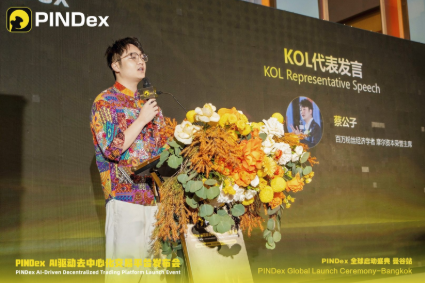
Later, million-follower KOL Cai Gongzi and supermodel champion Cici also delivered compelling speeches on stage.

2. Deep Synergy Between Top Algorithms and High-Performance Mainnet
The most anticipated segment of the ceremony was the in-depth revelation of PINDex’s core architecture. Industry consensus is that PINDex achieves a deep coupling of a top-tier “AI brain” with a high-performance “computing body” in the Web3 space.
By embedding AI execution units at the PIN Chain base layer, PINDex achieves atomic-level synchronization between strategy generation and instruction execution. This native architecture addresses execution latency and performance loss, providing physical-level performance isolation and security guarantees for institutional-grade assets.
3. Global “Intelligent Computation Dividends” Launching April 1
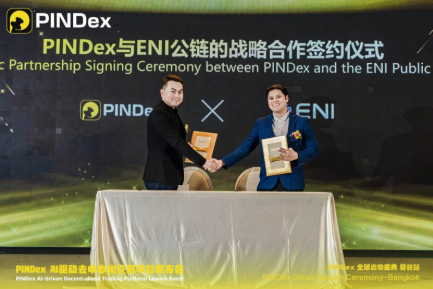
On-site, PINDex and ENI blockchain signed a strategic cooperation agreement. Through this partnership, PINDex will fully integrate into ENI’s enterprise-grade modular L1 microsecond execution environment, leveraging its unlimited TPS scalability and ultra-high-performance parallel engine to achieve atomic-level synchronization between strategy generation and instruction execution. This collaboration not only resolves execution delays and trust entropy in decentralized trading but, with the technical backing of ENI, NTT, and other global giants, establishes the underlying technological benchmark for the era of intelligent computation finance.
Subsequently, PINDex held its Global Strategic Launch Ceremony, officially announcing that the PINDex platform will go live on April 1, 2026, at 11:00 AM (UTC+8). This milestone marks PINDex’s full transition from technology development to global operational deployment.
4. Peak Dialogue: Who Will Lead Wealth Distribution in the Intelligent Computation Era?
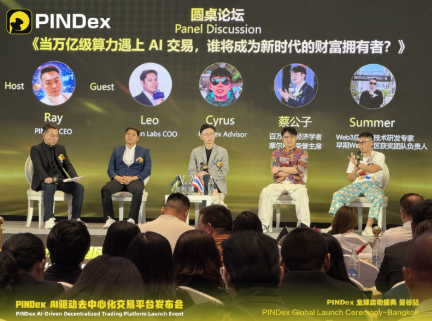
During the roundtable forum, PINDex CEO Ray, ENI blockchain representative Asean Labs COO Leo, PINDex advisor Cyrus, renowned KOL Cai Gongzi, and Summer from the Singapore Microelectronics Research Institute discussed new rules for wealth distribution:
PINDex CEO Ray stated that leveraging the public chain and a self-developed two-year AI large model product enables PINDex to provide fair and efficient investment opportunities for everyone, not limited to professional traders. True shared prosperity comes from allowing more people to participate in investment and trading, which is the vision of PINDex.
Asean Labs COO Leo noted that ENI offers trillion-level TPS, making its cooperation with PINDex a perfect match. Through this collaboration, every transaction enables users to experience institution-grade trading operations.
PINDex advisor Cyrus highlighted that PINDex’s uniqueness lies not only in being a trading scenario but also in its AI Agent system, which helps users generate additional returns while trading.
Cai Gongzi emphasized that 2026 is the ideal time to participate in Web3. As Web3 gradually develops, the industry will attract more users and capital, creating more wealth opportunities. PINDex sits at the convergence of RWA and AI narratives, offering a highly optimistic growth outlook.
Summer noted that at any stage there are ways to make money, but over time it becomes harder for ordinary people to generate wealth. The smart approach is to make money work for you while protecting your assets. Projects like PINDex, which leverage user wallets to execute AI strategies, have enormous market potential.
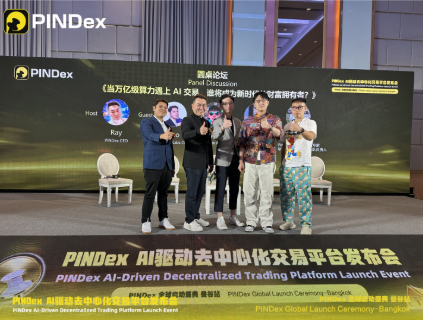
In conclusion, all roundtable participants agreed that opportunities have arrived in 2026, and PINDex’s prospects are immeasurable.
5. Join the Intelligent Computation Financial Revolution
With the successful conclusion of the Bangkok ceremony, PINDex’s global expansion has officially commenced. From extreme AI execution performance to the security baseline of self-custody, PINDex is constructing a vast wealth gravity field.
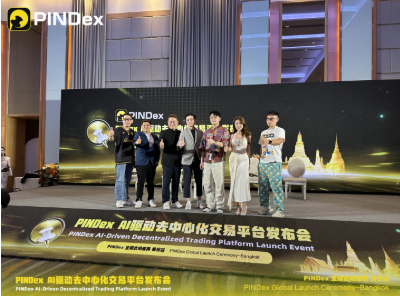
The future is here, and intelligent computation wins. Starting from Bangkok, PINDex will radiate AI-driven intelligent computation dividends worldwide.


All Comments