

Cointime

Download App
iOS & Android

Nearly 400,000 FTX users risk losing $2.5 billion in repayments

Nearly 400,000 creditors of the bankrupt cryptocurrency exchange FTX risk missing out on $2.5 billion in repayments after failing to begin the mandatory Know Your Customer (KYC) verification process.

Roughly 392,000 FTX creditors have failed to complete or at least take the first steps of the mandatory Know Your Customer verification, according to an April 2 court filing in the US Bankruptcy Court for the District of Delaware.

FTX users originally had until March 3 to begin the verification process to collect their claims.

“If a holder of a claim listed on Schedule 1 attached thereto did not commence the KYC submission process with respect to such claim on or prior to March 3, 2025, at 4:00 pm (ET) (the “KYC Commencing Deadline”), 2 such claim shall be disallowed and expunged in its entirety,” the filing states.

  FTX court filing. Source: Bloomberglaw.com

The KYC deadline has been extended to June 1, 2025, giving users another chance to verify their identity and claim eligibility. Those who fail to meet the new deadline may have their claims permanently disqualified.

According to the court documents, claims under $50,000 could account for roughly $655 million in disallowed repayments, while claims over $50,000 could amount to $1.9 billion — bringing the total at-risk funds to more than $2.5 billion.

  FTX court filing, estimated claims. Source: Sunil

The next round of FTX creditor repayments is set for May 30, 2025, with over $11 billion expected to be repaid to creditors with claims of over $50,000.

Under FTX’s recovery plan, 98% of creditors are expected to receive at least 118% of their original claim value in cash.

How FTX users can complete KYC

Many FTX users have reported problems with the KYC process.

However, users who were unable to submit their KYC documentation can resubmit their application and restart the verification process, according to an April 5 X post from Sunil, FTX creditor and Customer Ad-Hoc Committee member.
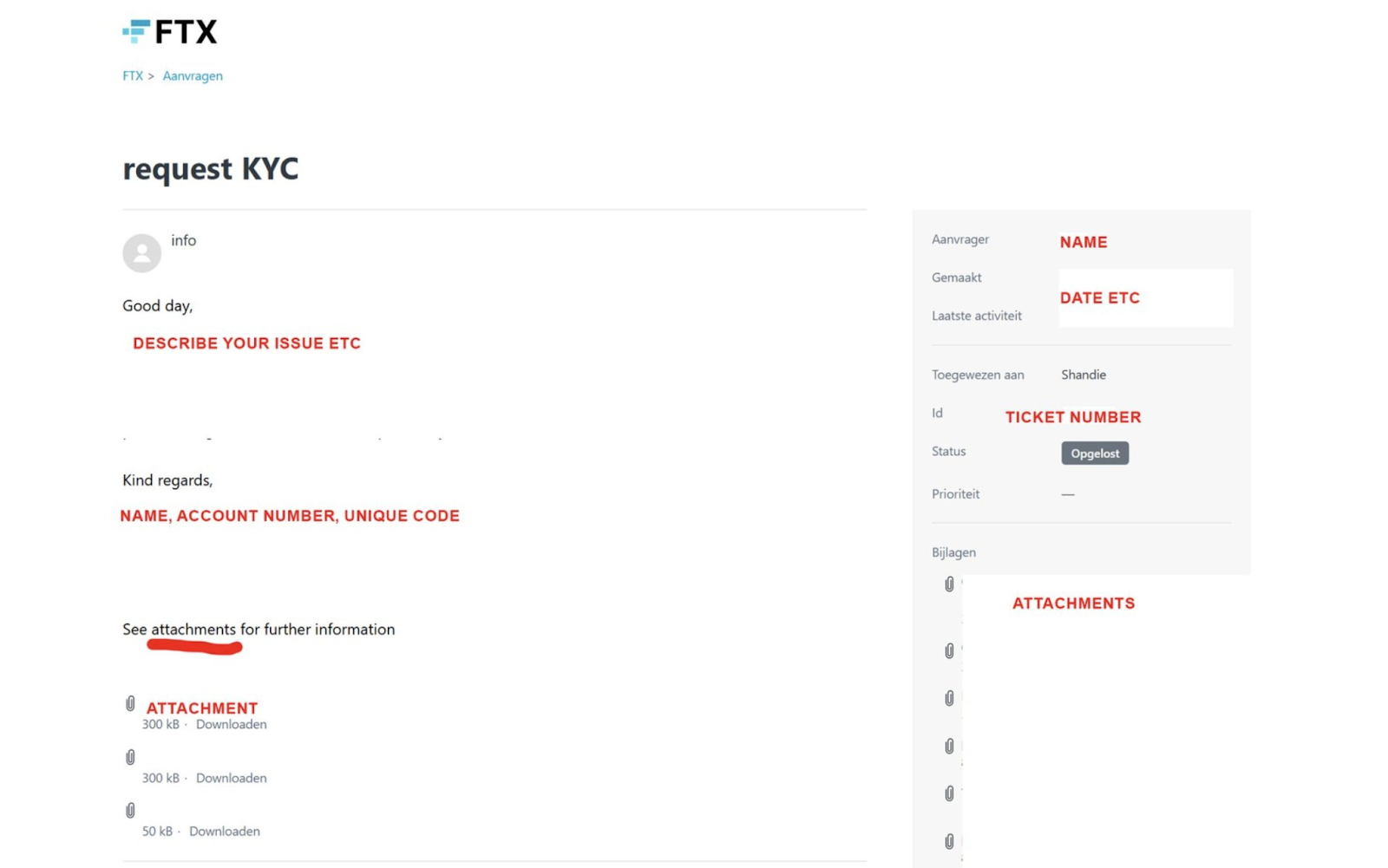
  FTX KYC portal. Source: Sunil


Impacted users should email FTX support ([email protected]) to receive a ticket number, then log in to the support portal, create an account, and re-upload the necessary KYC documents.

FTX’s Bahamian subsidiary, FTX Digital Markets, processed the first round of repayments in February, distributing $1.2 billion to creditors.

The crypto industry is still recovering from the collapse of FTX and more than 130 subsidiaries launched a series of insolvencies that led to the industry’s longest-ever crypto winter, which saw Bitcoin’s 

BTC$82,784price bottom out at around $16,000.

While not a “market-moving catalyst” in itself, the beginning of the FTX repayments is a positive sign for the maturation of the crypto industry, which may see a “significant portion” reinvested into cryptocurrencies, Alvin Kan, chief operating officer at Bitget Wallet, told Cointelegraph.


Comments

All Comments

Recommended for you

  • Japanese listed company ANAP Holdings increased its holdings of Bitcoin by 127.73.

    according to market sources, Japanese listed company ANAP Holdings has disclosed an increase in its Bitcoin holdings by 127.73 coins. As of now, the company's total Bitcoin holdings have reached 1,346.58 coins, valued at approximately 118 million USD.

  • Changpeng Zhao: Binance Wallet now supports identifying malicious addresses; you will receive a warning if you transfer funds to them.

    Zhao Changpeng posted on Binance Plaza stating, "The cryptocurrency industry should be able to completely eradicate address poisoning attacks and protect users. All wallets should simply check whether the receiving address is a poisoned address and block the user.This is a blockchain query. Wallets should not even display these junk transactions anywhere. If the value of the transaction is very small, filter it out. Security alliances in the industry should maintain a real-time blacklist of these addresses so that wallets can check before sending transactions. Binance Wallet is already doing this. If a user tries to send to a malicious address, they will receive a warning.

  • Bitcoin spot ETFs saw a total net outflow of $189 million yesterday, marking the fourth consecutive day of net outflows.

     according to SoSoValue data, the total net outflow of Bitcoin spot ETFs is 189 million USD.The Bitcoin spot ETF with the largest single-day net outflow yesterday was Blackrock's ETF IBIT, with a single-day net outflow of 157 million USD. Currently, IBIT's total historical net inflow has reached 62.34 billion USD. The second is Fidelity's ETF FBTC, with a single-day net outflow of 15.2979 million USD. Currently, FBTC's total historical net inflow has reached 12.189 billion USD. As of the time of writing, the total net asset value of Bitcoin spot ETFs is 114.289 billion USD, with the ETF net asset ratio (market value as a proportion of Bitcoin's total market value) reaching 6.53%, and the cumulative historical net inflow has reached 57.076 billion USD.

  • BTC falls below $88,000

     market shows BTC fell below $88,000, currently at $87,997.85, 24-hour decline reaches 0.88%, market volatility is significant, please manage your risk accordingly.

  • The U.S. spot Ethereum ETF saw net inflows of $84.59 million yesterday.

     according to Trader T monitoring, the US spot Ethereum ETF had a net inflow of 84.59 million USD yesterday.

  • ETH breaks $3,000

     the market shows ETH breaking through $3000, currently at $3000.08, with a 24-hour decline of 0.38%. The market is highly volatile, please manage your risk accordingly.

  • Binance Wallet launches "secure auto-signature" service

     according to the official announcement, Binance Wallet has launched the "Secure Auto Sign" (SAS) service: it now supports mnemonic/private key wallets to trade on Binance Wallet (web version).

  • Circle minted 500 million USDC on the Solana network.

    according to Onchain Lens monitoring, Circle has minted 500 million USDC on the Solana network. Since October 11, Circle has issued a total of 18 billion USDC on the Solana network.

  • Sources familiar with the matter: JPMorgan Chase is considering offering cryptocurrency trading services to institutional clients.

    according to Bloomberg, as major global banks deepen their involvement in the cryptocurrency asset class, JPMorgan Chase is considering offering cryptocurrency trading services to its institutional clients. A knowledgeable source revealed that JPMorgan is evaluating what products and services its market division can offer to expand its business in the cryptocurrency field. The source stated that these products and services may include spot and derivatives trading.

  • Federal Reserve Governor Milan: We believe that the policy rate will eventually be lowered.

    Federal Reserve Board member Mylan stated that due to the US government shutdown, there were some anomalies in last week's inflation data; he believes that the US will not experience an economic recession in the near term, but if policies are not adjusted, the US will face an increasing risk of economic recession. We believe that policy interest rates will eventually be lowered.