

Imagine a bustling marketplace where vendors accept only specific currencies. A customer with a wallet full of diverse currencies faces frustration, unable to make seamless trades or purchases. This is the current liquidity fragmentation problem in the blockchain ecosystem, where assets spread across multiple chains struggle to interact, leaving the full potential of decentralized finance (DeFi) untapped.
Fragmented liquidity makes transferring value across chains cumbersome, requiring costly and complex bridging solutions. Users navigate a labyrinth of swaps and transfers, incurring high fees and time delays, significantly detracting from their experience. This hampers the efficiency and growth of decentralized applications (DApps) and DeFi platforms, leaving users disheartened.
Addressing liquidity fragmentation in DeFi
Aggregation offers a solution by combining assets and liquidity from multiple blockchains into a unified pool, enabling seamless trading and interaction. This involves sophisticated protocols and smart contracts that facilitate the merging and interaction of assets from different blockchains, resulting in improved liquidity and enhanced user experience with more fluid and efficient transactions.
Next, rollups come into play as scaling solutions designed to enhance blockchain performance. Rollups operate by bundling multiple transactions into a single batch, which is processed offchain before being committed to the main blockchain. This process significantly reduces transaction costs and increases throughput.
There are two main rollup types: Zero-knowledge rollups (ZK-rollups), which use cryptographic proofs to validate transactions, and optimistic rollups (OP-rollups), which assume transactions are valid by default and rely on fraud proofs to detect and correct invalid transactions post-submission.
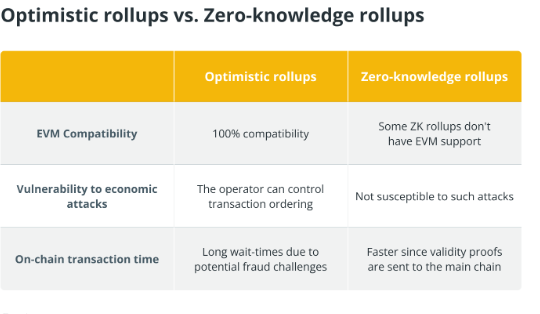
While layer-2 (L2) solutions like ZK-rollups and OP-rollups address scalability, their approach has a negative impact on the user experience as liquidity becomes scattered in siloed chains.
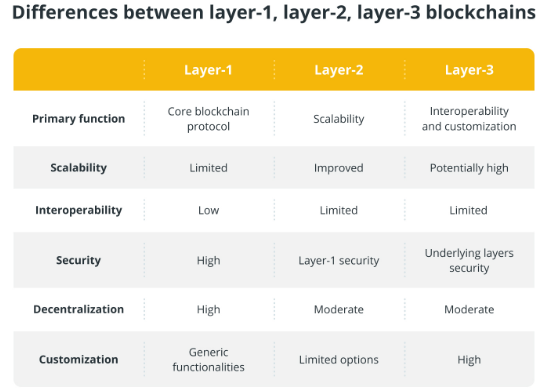
Aggregated rollups for seamless trading
One solution that leverages all these technologies to solve liquidity fragmentation is zkLink, a ZK-based aggregated rollup developer. zkLink offers two main products, zkLink Nova and zkLink X.
zkLink Nova is an aggregated rollup network built on zkEVM, a zero-knowledge Ethereum Virtual Machine (EVM). Aggregated rollups combine assets from different blockchains into a single rollup, enhancing efficiency and interoperability. By merging ZK and OP ecosystems assets, zkLink Nova enables users to trade and interact with a unified liquidity pool.
zkLink X is a high-performance scaling engine designed for DApps. It empowers developers to build app-specific rollups, offering fast deployment and interoperability across multiple chains. By utilizing plug-and-play application programming interfaces (APIs) and software development kits (SDKs), zkLink X simplifies the development process. The scaling engine allows DApps to aggregate liquidity and enable complex financial products, such as multichain asset loans.
Streamlining development with rollup solutions
For developers, zkLink provides a one-stop shop for chain and development abstraction. Teams can leverage zkLink Nova to access aggregated liquidity from multiple chains, allowing them to tap into deeper liquidity pools to create innovative DeFi products.
With zkLink X, developers can accept deposits from supported chains like BNB Chain, Solana and Arbitrum for their DApps.
Teams can utilize zkLink’s ZK-based infrastructure to settle on multiple blockchains, providing enhanced security. With support from zkSync’s ZK Stack, developers can easily convert their EVM applications into zkEVM apps, benefiting from the zero-knowledge security properties of the network.
The project’s comprehensive approach positions zkLink as an attractive choice for serious tech developers looking to build on cutting-edge blockchain technology.
Solving interoperability with stack-agnostic rollups
zkLink rollups address interoperability issues in rollups built with the Polygon CDK, OP Stack, and ZK Stack. The stack-agnostic nature of these rollups allows aggregation of assets from both ZK and OP ecosystems for interoperable trade. zkLink achieves this through its proprietary settlement layer technology, zkLink Nexus, which ensures consistency and coherence of data and transactions across multiple blockchain networks.
Onchain transactions like deposits are relayed to the rollup network in real time, enhancing user experience by ensuring immediate processing. Transaction finality is secured by multichain settlement, dependent on ZK-proof (ZKP) verification and multichain state synchronization. To optimize verification costs, zkLink Nova designates one layer-2 network as the primary chain responsible for ZKP verification and transaction consistency checks.
Currently, Linea serves as the primary chain due to its fast settlement finality on Ethereum mainnet and capability to execute zk-SNARKs proofs — a type of cryptographic proof that allows one party to prove to another that they possess certain information without revealing the information itself. Secondary chains, which do not execute ZKP verification, achieve equivalent verification through multichain state synchronization via canonical rollup bridges.
Ethereum’s liquidity hub
zkLink Nova is the largest L3 network in terms of total value locked (TVL), according to L2Beat. The growth was driven by zkLink’s Aggregation Parade campaign, which launched in March 2024, attracting substantial user interest.
The campaign offered triple-layer yield rewards for users bridging assets like Ether, wrapped Bitcoin (wBTC) and stablecoins such as Tether USDT into the network. These incentives led to over 500,000 wallet addresses participating and the TVL reaching a peak of $1 billion.
zkLink has initiated an ecosystem grants program, dedicating 20 million ZKL tokens to support and develop its growing ecosystem.
Additionally, zkLink Nova’s success drew collaborations from its connected L2 networks and notable Web3 wallet arms of centralized exchanges, including OKX Cryptopedia and Binance Web3.
zkLink aspires to become Ethereum’s central liquidity hub by consolidating and unifying fragmented liquidity through aggregated rollups. As Ethereum faces ongoing scaling and liquidity fragmentation challenges, zkLink’s solutions offer a promising path forward. By connecting various scaling and aggregation solutions, zkLink strives to create an efficient DeFi ecosystem, enhancing user experiences and fostering innovation.


All Comments