


Decentralized finance (DeFi), where users retain custody of their funds, has become a safer alternative for crypto investment after the public trust has declined in centralized exchanges (CEXs) due to several high-profile collapses.
Despite DeFi’s promise to mitigate the risks associated with CEXs, its highly fragmented nature hinders widespread adoption. With over 3,000 protocols across 227 chains, the DeFi ecosystem presents a daunting landscape for even the most experienced investors, making it challenging to set up comprehensive strategies without significant investment in time and development resources.
DeFi vault for simple asset management
Thankfully, DeFi offers innovation faster than any other industry in recent history while becoming simpler, quicker and cheaper with each new step. The latest DeFi innovation has arrived in the form of Velvet Capital, a DeFi asset management platform that aims to simplify managing DeFi portfolio by allowing anyone to set up advanced DeFi strategies in minutes.
The platform offers crypto users, traders, asset managers and fintech projects to launch tokenized funds and other DeFi products for themselves or their clients. Initially operating on BNB Chain, Velvet Capital has expanded to Arbitrum — a popular Ethereum layer-2 blockchain — to cover most DeFi space.
Built as a “DeFi operating system” for asset management, Velvet Capital introduces an easy way to create a DeFi vault with all the back-end systems and technical aspects covered by the platform. A DeFi vault is a smart contract on the blockchain that manages users’ funds based on predefined strategies to maximize returns. Vaults automate the process of earning yield on digital assets in various ways, such as staking, liquidity provision and employing other yield farming strategies.
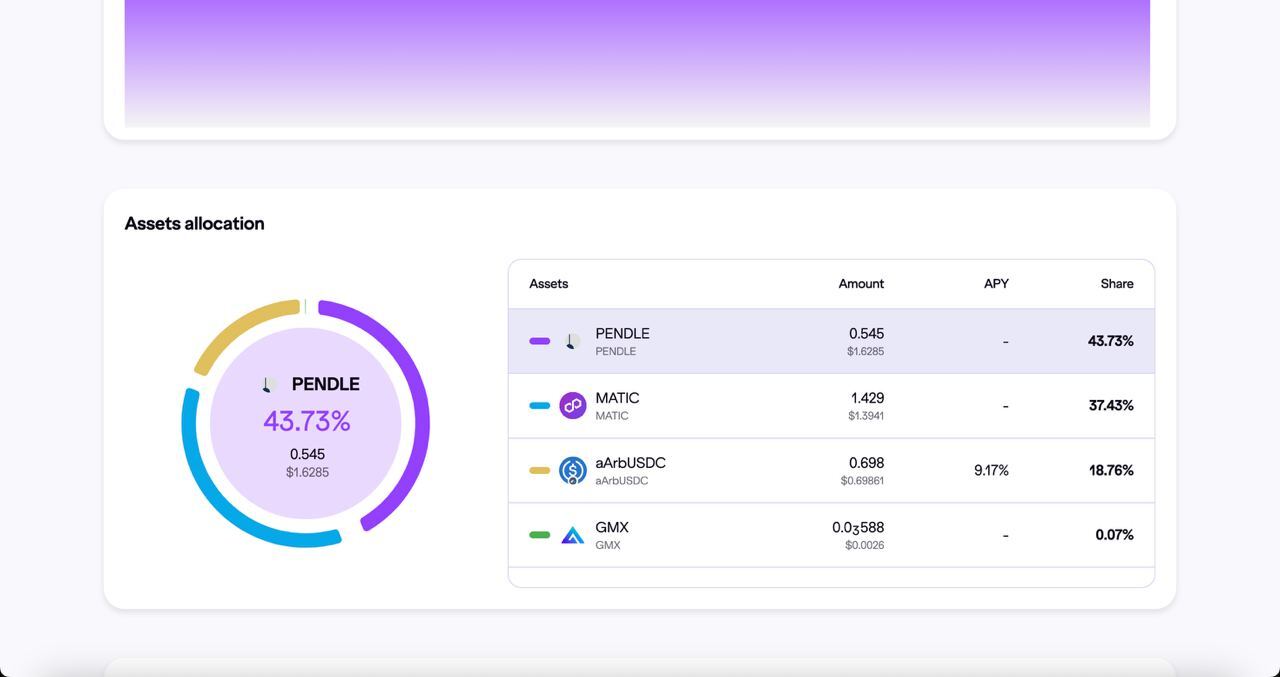
Velvet Capital has developed an Intent-Based Trade Execution for smart order routing so that users benefit from optimal liquidity and capital efficiency. The smart order routing feature finds the best routes for trades — both for 1:1 and Many:Many swaps — by sending trade orders to a wide variety of integrated decentralized exchanges (DEXs), automated market makers (AMMs) and market makers. This enables users to get optimized gas fees and token prices when trading on Velvet Capital.
How to create a vault
Users can enter the vault creation module and deploy noncustodial or multisig tokenized vaults with a single click and pick the crypto assets they want to include. The process is fairly straightforward:
- After signing in to the Velvet Capital platform, you can hit Create to enter New vault creation mode.
- Here, you are asked to fill in the basic vault parameters, including its name, the allowed deposit range and a percentage for management, performance and entry/exit fees.
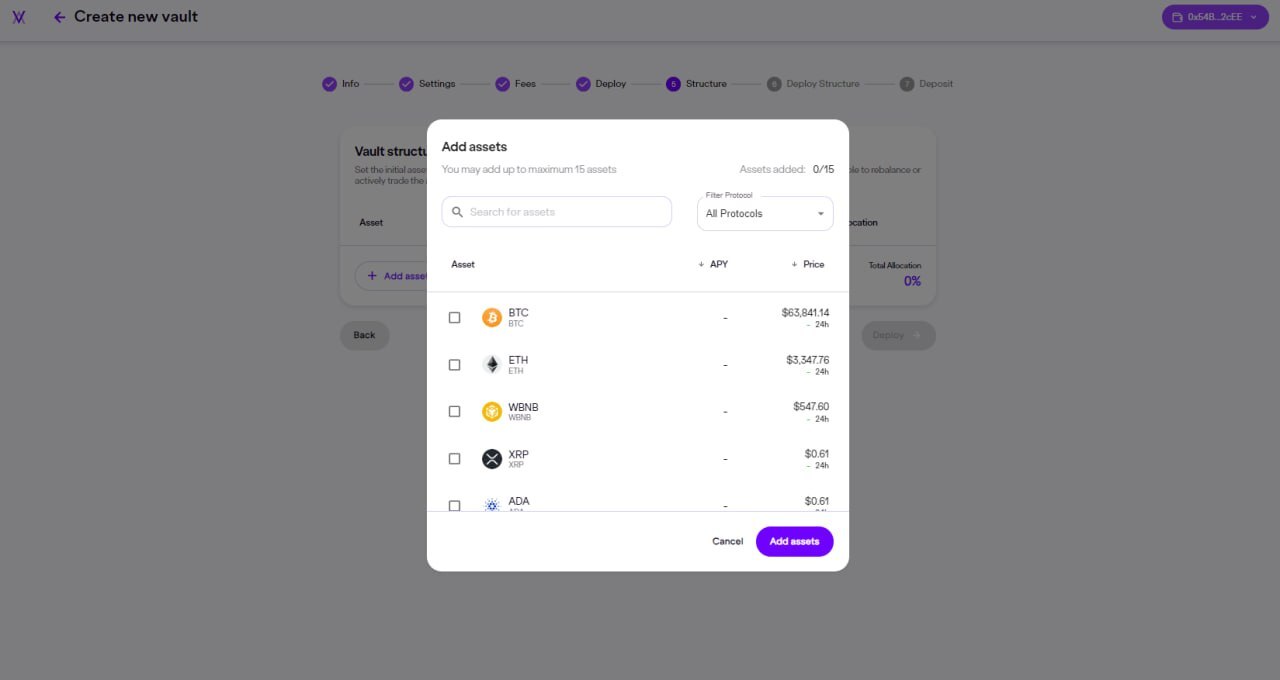
- The next step involves enabling deposits in either BNB, ETH, USDT or USDC.
- After that, you need to add the tokens you want the vault to start off with.
- Once you make your first deposit into the vault, you’re ready to manage your DeFi asset portfolio.
Streamlined DeFi for businesses
Aside from the easy-to-use dashboard, Velvet Capital also serves business users, including fintech projects and traditional asset managers who are looking for a simplistic way to get into DeFi. Institutions can either use the web application to launch their vaults or go for Velvet Capital’s white-label solution, which also brings extra benefits, such as assistance in adding custom assets — including real-world assets (RWAs).
Verdict: A packed DeFi experience
As a DeFi platform with several advanced features, Velvet Capital offers a surprisingly easy onboarding experience. Thanks to the solid integration network, users can sign in to the platform from a vast range of Web3 wallets. If you have a wallet from MetaMask, Coinbase, Binance or OKX, you’re good to go.
The refined v2 version of the dashboard then shows the Marketplace, a curated vault screen with top TVL vaults at the top. You can easily sort the vault order by TVL, APY or estimated returns. Seeing all this information on a single screen adds clarity when picking an existing vault.
Vault creation, the main premise of the platform for power users, felt as easy as filling out a Google form. Since creating a vault is free (you don’t have to deposit for creation), it’s easy to try and flex your Web3 skills. Moreover, anyone creating or joining a vault is eligible for an upcoming airdrop.
Once you join other vaults or create your own, it’s easy to track the performance and yields from each vault under the My Portfolio tab.
Aside from the user-friendly design, the platform has made a smart move by expanding the support to Arbitrum, which technically means digital assets from two of the top DeFi networks — Ethereum and BNB Chain — are available to Velvet Capital users.
“We envision Velvet Capital as becoming a one-stop-shop for DeFi Investors to manage their portfolios,” explained Michael Hage, the vice president of business development and growth at Velvet Capital. He added that as the team builds an omnichain infrastructure and expands through the DeFi ecosystem with new integrations, Velvet will make it easier for every DeFi user to navigate the market and find the best opportunities.


All Comments