

A crypto lobby group claims that the US is back on track to lead the cryptocurrency industry after the White House’s latest crypto report called for the nation’s finance regulators to align on digital assets.
The report, released last week, marks a possible end to the long-standing turf war between the Securities and Exchange Commission and the Commodity Futures Trading Commission over how to classify and regulate cryptocurrencies.
“We’ve had legal precedent — Bitcoin, Ether and many other digital assets are much more akin to commodities,” said Ji Hun Kim, newly appointed CEO of the advocacy group Crypto Council for Innovation, in an exclusive interview with Cointelegraph.
“The President’s Working Group report reflects this, [and] I do think the CFTC will have an important role to play when it comes to the oversight of these assets, which are digital commodities — not securities.”
Kim, who attended the report’s public release at the White House, said “the time is now” for the US to take the lead in the global crypto race. While other jurisdictions have a years-long head start, the US is now in a “crypto sprint,” with both the SEC and CFTC signaling plans to swiftly implement the report’s recommendations.
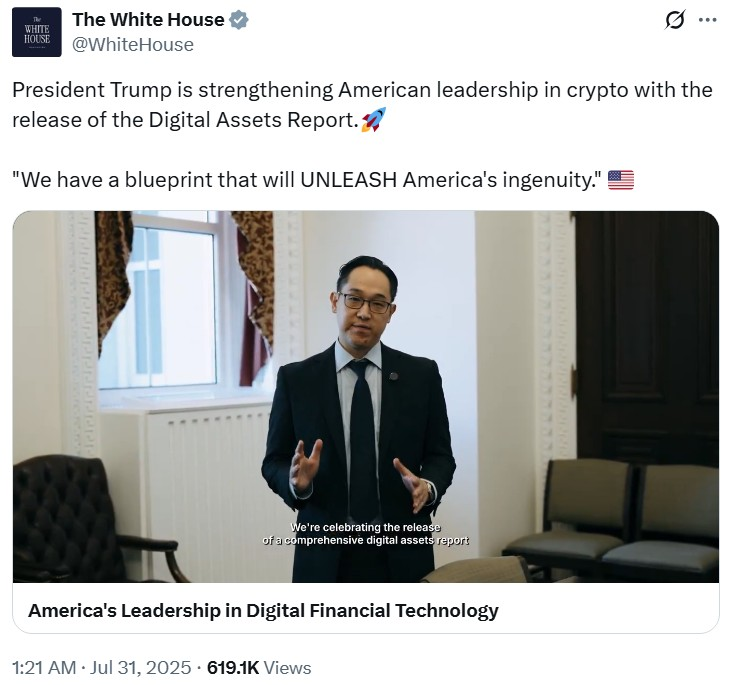
US race to the crypto capital
The SEC under the previous administration faced widespread criticism from the crypto industry for its regulation-by-enforcement approach, filing lawsuits against crypto firms based on existing securities laws. That crackdown was coupled with what came to be known as “Operation Chokepoint 2.0,” a wave of debanking that saw crypto firms lose access to traditional financial services.
“This is another example where the report is so explicit and strong and positive — it clarifies that banks should be allowed to engage in various digital asset activities,” said Kim.
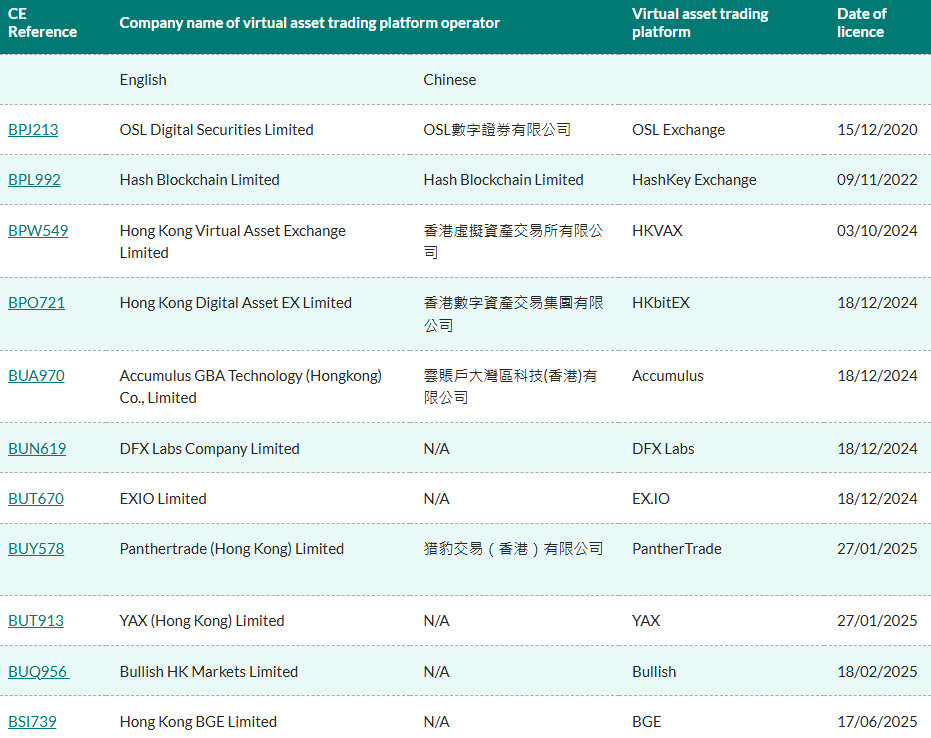
Past uncertainty in the US regulatory environment pushed many crypto companies offshore. Dubai quickly emerged as a top destination, with a dedicated crypto regulator. Singapore and Hong Kong also rose in popularity, offering favorable tax treatment and formal licensing regimes for cryptocurrency exchanges.
But the grass isn’t always greener. Though regulatory clarity is improving globally, industry players are learning that clarity doesn’t always mean crypto-friendly — something the US is increasingly becoming.
Earlier this year, Dubai’s Virtual Asset Regulatory Authority tightened supervision and gave firms 30 days to comply with updated rules. Singapore expelled unlicensed firms exploiting regulatory loopholes by serving only overseas clients. And Hong Kong’s cautious pace in issuing licenses has made it clear that it isn’t welcoming all applicants.
Hong Kong’s Stablecoin Ordinance, which took effect last Friday, created a new licensing regime for stablecoin issuers. The European Union has its own stablecoin rules, part of its broader Markets in Crypto-Assets (MiCA) framework. The US’s response came in the form of the GENIUS Act, which has been touted as a key tool for preserving the dollar’s dominance in the global financial system.
This is where crypto enters the heart of a wider geopolitical power struggle. China has been working to supercharge the internationalization of its fiat currency, the renminbi, through its central bank digital currency (CBDC). In contrast, US President Donald Trump signed an executive order in January banning any US government-issued CBDC.
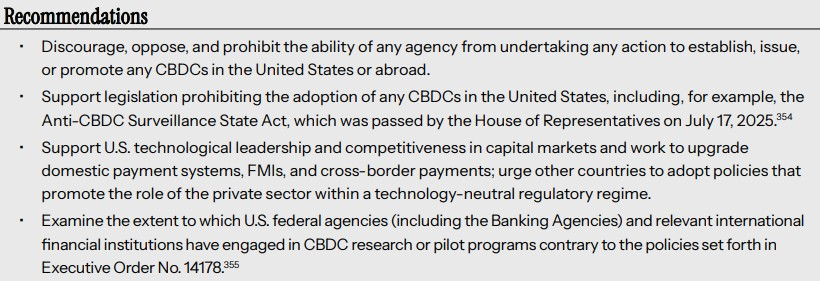
Kim supports the stance, arguing that CBDCs pose a direct threat to privacy. Instead, he pointed to the GENIUS Act as offering a viable, market-driven alternative.
“With GENIUS, you can see a lot of growth and development [in private stablecoins]. I think the primary focus should be on these types of stablecoins,” he added.
Meanwhile, Hong Kong’s stablecoin regime is expected to play a strategic role in China’s CBDC ambitions. Chinese academics argue that Hong Kong’s stablecoin network could allow Beijing’s digital currency to integrate into the global stablecoin ecosystem.
US SEC’s “Project Crypto” and CFTC’s “crypto sprint”
Shortly after the White House’s crypto report was published, the SEC unveiled “Project Crypto,” an initiative aimed at developing formal guidance for digital asset firms and attracting crypto companies back to the US as a response to the White House report.
The SEC proposed to streamline licensing by allowing brokerages to operate across various asset classes with a unified license. It also aims to establish a clearer division between securities and commodities.
“It should not be a scarlet letter to be deemed a security,” Atkins said. “Many issuers will prefer the flexibility in product design that the securities laws afford, and investors will benefit from the opportunity to earn distributions, voting rights, and other features typical of securities.”
The CFTC, meanwhile, is positioning itself to play a more central role in regulating non-security digital assets. Acting CFTC Chair Caroline Pham said on Aug. 1 that the CFTC will kick off a “crypto sprint” to implement the Presidential Working Group’s crypto recommendations.
That division of labor — with the CFTC regulating spot markets for digital commodities and the SEC focusing on tokenized securities — is at the heart of the CLARITY Act, which Kim described as essential to ending the jurisdictional tug-of-war between the two agencies. While the bill has passed in the House, it still awaits movement in the Senate.
“You’ll see increased collaboration between the two agencies. That’s a theme many people overlook in this report. It was also included in the president’s executive order back in January, which directed the agencies to work together on providing clarity, guidance and rulemaking,” Kim said.
US crypto clarity is not deregulation, CCI says
Bitcoin proponents voiced how the White House’s crypto report missed the mark, as itlacked an anticipated update to the Bitcoin reserve.
The concern echoes outside the crypto industry as well. A coalition of over 80 organizations representing civil rights and consumer groups opposed the CLARITY Act, claiming it “deregulates” the crypto industry by legitimizing risky businesses.
More recently, Senator Elizabeth Warren, joined by Senators Chris Van Hollen and Ron Wyden, has urged the Office of the Comptroller of the Currency to address potential conflicts of interest stemming from the Trump family’s cryptocurrency ventures.
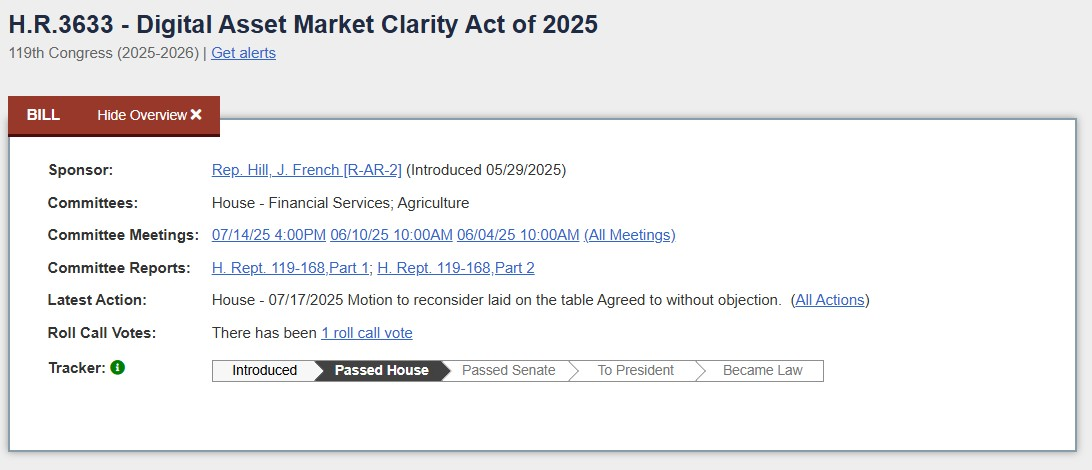
But Kim disagrees with that framing. To him, the White House report and recent regulatory developments involving the GENIUS and CLARITY acts represent a shift in regulatory philosophy, not deregulation.
“I don’t think this is deregulation,” he said. “I think this is saying, ‘Hey, we recognize the unique attributes of digital assets. We want to work with the industry to make sure that we best combat illicit finance, protect consumers and investors and give the industry clear rules of the road.’”
With two of the nation’s top finance watchdogs now largely aligned with the White House, the US appears ready to move past infighting and ambiguity.


All Comments