


In the past year there have been many different solutions created to solve Ethereum’s scalability challenges. Among the array of potential solutions, Zero-Knowledge Ethereum Virtual Machines (zkEVMs) have emerged as one of the most popular options for developers. Linea’s zkEVM is a fairly new contender in the space, but it’s certainly one that has been rapidly gaining traction. Let’s take a look at Linea and how it managed to capture the attention of the Ethereum community today.
So, What Are zkEVMs?
Prior to delving into zkEVMs, let's acquaint ourselves with the fundamental concept of zero-knowledge proofs (ZKPs), which underpin the foundation of zero-knowledge technology. Essentially, a ZKP is a cryptographic method enabling one party to demonstrate to another party their possession of specific information, all the while abstaining from divulging the actual information itself. Presently, a variety of algorithms exist for producing ZKPs, with the most notable being zk-STARKs and zk-SNARKs.
Now, let’s delve into the concept of a zkEVM. It's essentially a form of zk-rollup, which mirrors Ethereum's way of executing transactions and smart contracts. By emulating Ethereum's design, zkEVM offers a familiar environment for developers and users. Developers can easily integrate their applications on zkEVMs without having to alter their application code base and smart contracts.
Getting Started with Linea
Developed by Consensys, the parent company behind MetaMask, Infura and Truffle, Linea joins a suite of successful products with big shoes to fill.
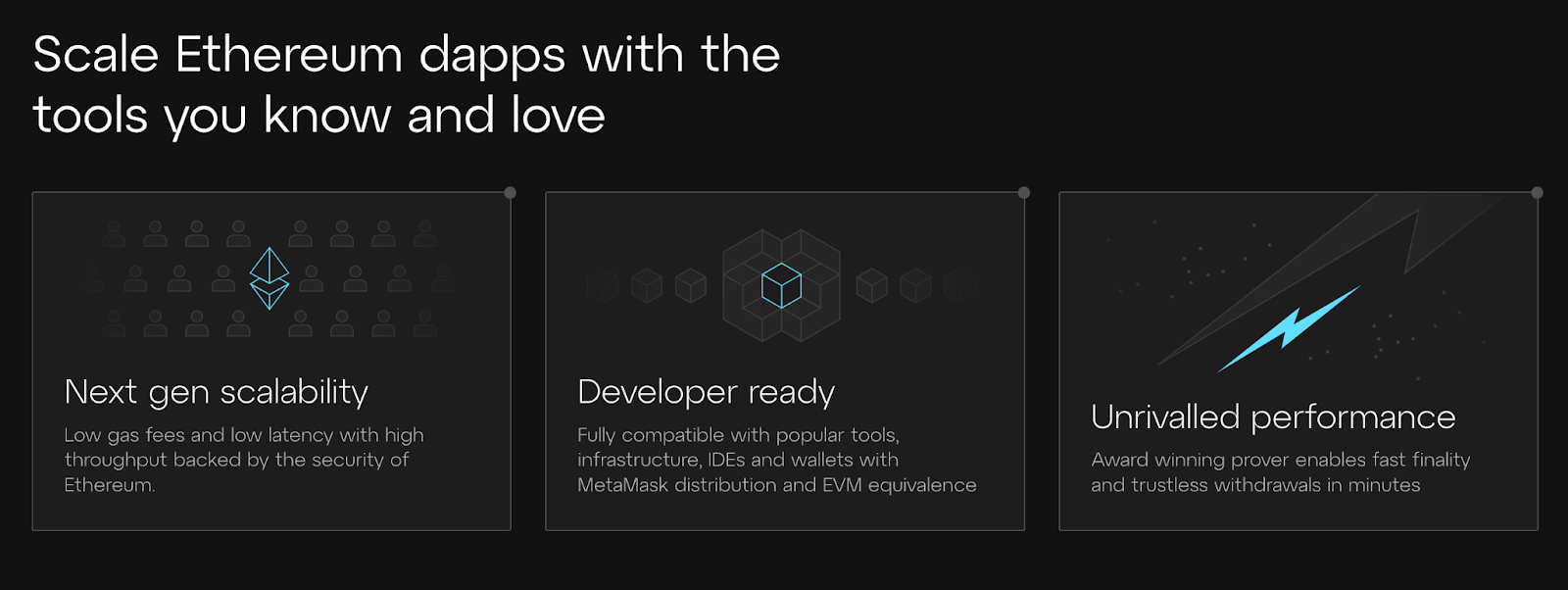
At its core, Linea is driven by a fundamental objective: to replicate the familiar user experience of the Ethereum mainnet, all while enhancing transaction speed and substantially reducing transaction costs — potentially up to 20s times cheaper as compared to Ethereum, made possible by Linea’s recursion-friendly, lattice-based prover. Under Vitalik Buterin's classification , Linea would fall under Type-2 zkEVM. As a zkEVM, Linea not only mirrors Ethereum's user experience but also seamlessly integrates with nearly all existing Ethereum dApps.
Declan Fox, Product Lead for Linea stated that “If you’re a Solidity developer, building on Linea is exactly like building on Ethereum.”
Highlights of Linea
- Linea's integration of well-established ConsenSys tools such as MetaMask, Truffle, and Infura
This integration allows developers to easily connect with users through the MetaMask web3 wallet, for instance. Notably, Linea's mainnet is automatically included in the network options of the MetaMask wallet extension. This eliminates the need for users to manually input network details, thereby improving the user experience and making it more seamless.
- Vortex and Arcane: Linea’s In-House Proof System
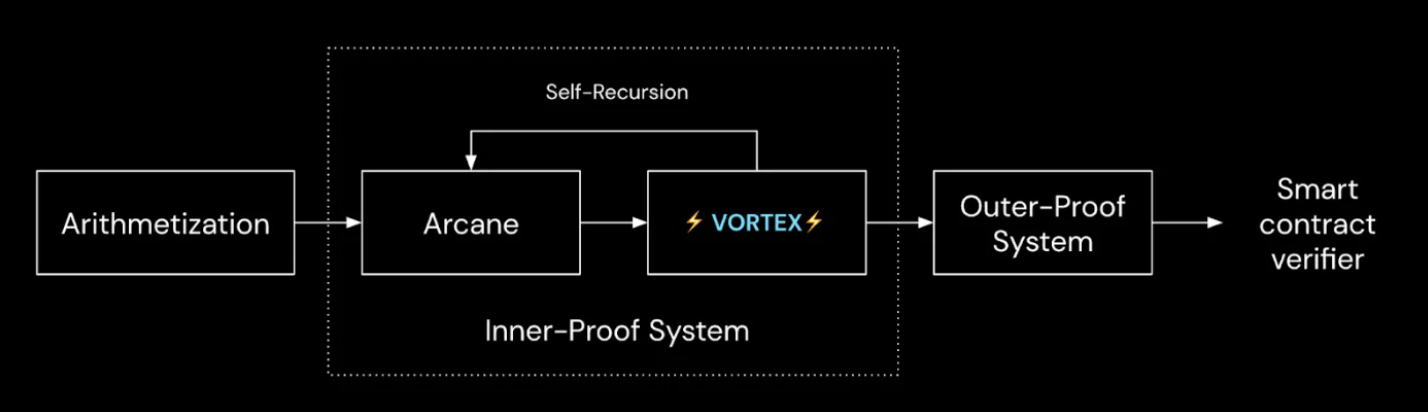
Linea's technology diverges from other zkEVMs in its approach to arithmetic schemes and inner proof systems. Linea’s transaction validation process begins with arithmetization, translating computer programs into mathematical expressions comprehensible by ZKPs. This transforms transactions into traces and a set of constraints that verify computational accuracy.
Subsequently, Linea employs a proprietary inner proof systems — Vortex and Arcane, to reduce proof size by optimizing computation and employing specific algorithms, consistently enhancing proof efficiency and compactness. After multiple iterations and internal optimizations, the proof is further compressed by the outer proof system, Plonk.
This architectural design equips Linea with the capability to swiftly generate and validate ZKPs, thereby ensuring the confidentiality and security of transactions. By implementing recursive optimization strategies within its inner proof systems, coupled with the final compression phase, Linea effectively reduces the size of proofs while concurrently boosting the overall performance, providing users with rapid and efficient transaction experiences. This innovative technological approach sets Linea apart in the zkEVM landscape, creating a robust network for building scalable decentralized applications.
Linea's Extensive Applications and Robust Ecosystem
Throughout its 9-week voyage testnet phase starting in May, Linea achieved a remarkable feat of processing over 30 million transactions, all originating from 5.2 million unique addresses. This accomplishment positions Linea as one of the most sizable and active projects on the Goerli testnet to date.
In July, ConsenSys introduced the alpha version of the Linea mainnet to the public at ETHCC, signifying a momentous achievement. Since then, Linea has garnered substantial attention, with over 150 dApps deployed on the network, including big names such as Aave, PancakeSwap, Beefy, and Sushiswap. Notably, there is consistent user retention, with over 100,000 weekly active users returning to the network, highlighting its growing popularity and active user base.
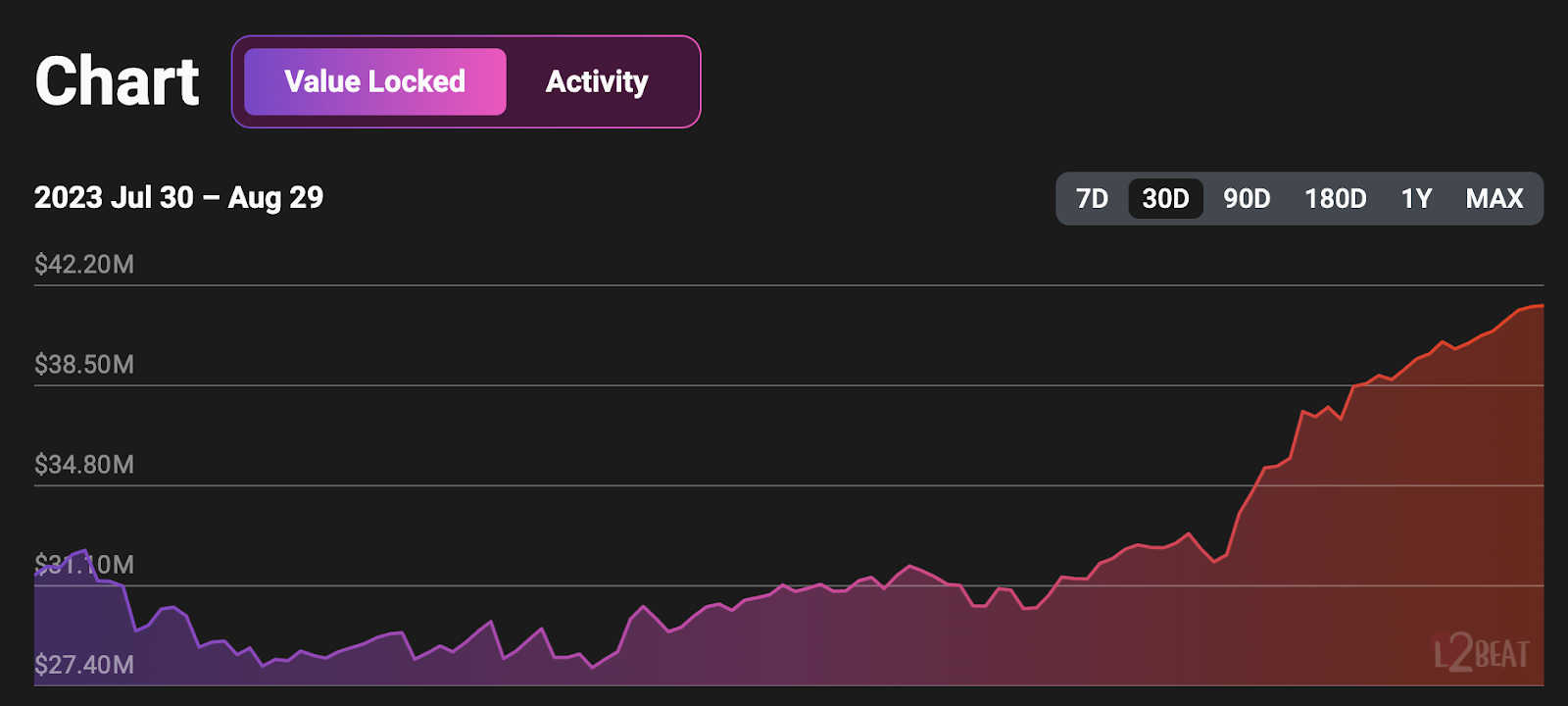
As reported by L2 Beat, Linea has successfully processed approximately $2.7 million worth of transactions over the course of the last 30 days. As of the present moment, the network's Total Value Locked (TVL) stands at $41 million, reflecting the substantial value and engagement that Linea has been able to attract.
In an effort to propel the growth of the Linea ecosystem, ConsenSys is introducing the Linea Ecosystem Investment Alliance (EIA). This alliance is composed of a coalition of more than 30 distinguished venture capital firms. The primary objective of the EIA is to empower developers by providing them with capital, developer resources, and a clear route to becoming part of the Linea network.
What’s Next for Linea?
Following its mainnet debut, Linea has revealed an extensive five-phase roadmap that lays out the course for the network's development. The team plans to progressively accomplish each phase through collaboration with the wider Linea ecosystem and community. With each phase, the Linea network makes strides towards its ultimate goal of evolving into a fully mature rollup, fortified by the security of Ethereum.
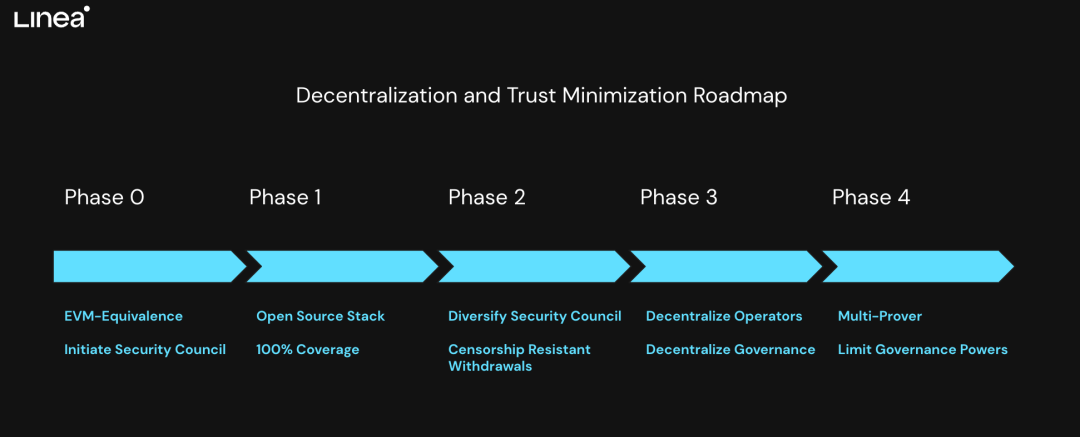
Should Linea fulfill its commitments, it will become one of the top choice for developers looking to deploy their application on a rollup, with plenty of users already part of the Consensys ecosystem.
The launch of Linea opens up a new design space for Ethereum developers, especially those who have already integrated with Consensys products. With Linea, we could see the emergence of a diverse range of scalable decentralized applications dApps spanning various sectors like DeFi, gaming, decentralized identity, decentralized social networks as well as NFTs.


All Comments