

The data recently released on the X platform regarding the Sui Chain shows a strong upward trend in daily trading volume and total value locked (TVL). The TVL has surpassed the significant milestone of $70 million. Behind this achievement, Cetus Protocol, as a member of the Move ecosystem (including Sui and Aptos), has particularly stood out in the decentralized trading platform and centralized liquidity protocol sectors.
According to its latest third-quarter report, Cetus has surpassed a cumulative transaction volume of over $520 million, with a user base of 861,000. The total locked value of its protocols has also exceeded $13 million, and daily trading volumes have peaked at $8 million. These numbers undoubtedly demonstrate the strong market enthusiasm for the Cetus project. But what exactly has made Cetus so popular and garnered such attention?
The following text will introduce the Cetus project in more detail.
Cetus, a decentralized trading platform and liquidity protocol based on the Move ecosystem, is rapidly gaining prominence. Its core technology utilizes an algorithm similar to Uniswap V3, creating a centralized liquidity protocol and a range of auxiliary features aimed at providing DeFi users with an unprecedented trading experience and capital efficiency. At the same time, Cetus cleverly leverages the unique ecosystem features of SUI to offer its users a vastly different set of composability functions compared to Uniswap.
On May 2nd of this year, Cetus successfully completed its seed round financing with lead support from OKX Ventures and KuCoin Ventures. Additionally, prominent investment institutions such as Comma3 Ventures, NGC Ventures, Jump Crypto, Animoca Ventures, IDG Capital, Leland Ventures, AC Capital, Adaverse, and Coin98 Ventures also participated in this round of financing. Although the specific amount of funding has not been publicly disclosed, this undoubtedly injects strong capital momentum into the development of Cetus.

The reason why Cetus has garnered so much attention fundamentally lies in several unique aspects:
1. Innovative Concentrated Liquidity: Similar to Uniswap V3, Cetus' concentrated liquidity provision algorithm offers unprecedented flexibility to liquidity providers (LPs).
On Cetus, LPs can set multiple positions within the same pool and simulate various price curves using different price ranges, thus enabling personalized strategies. When market prices fluctuate, Cetus' smart contracts automatically adjust to maximize liquidity and earnings. This design not only enhances capital efficiency but also generates more trading fee income for LPs.
2. Open and Permissionless: Cetus is designed with openness and inclusivity in mind. This means that any user or protocol can easily integrate with Cetus, create new trading pools, or develop additional products on top of it.
3. Remarkable Composability: Cetus consistently adheres to the principle of "liquidity as a service." This allows developers to easily access Cetus and create various derivatives and products.
Following the significant achievements in technology and ecological development by Cetus, its token CETUS has also demonstrated remarkable performance in the market. This not only validates Cetus' advantages in technology and strategy but also reflects the high level of recognition and trust from the market.
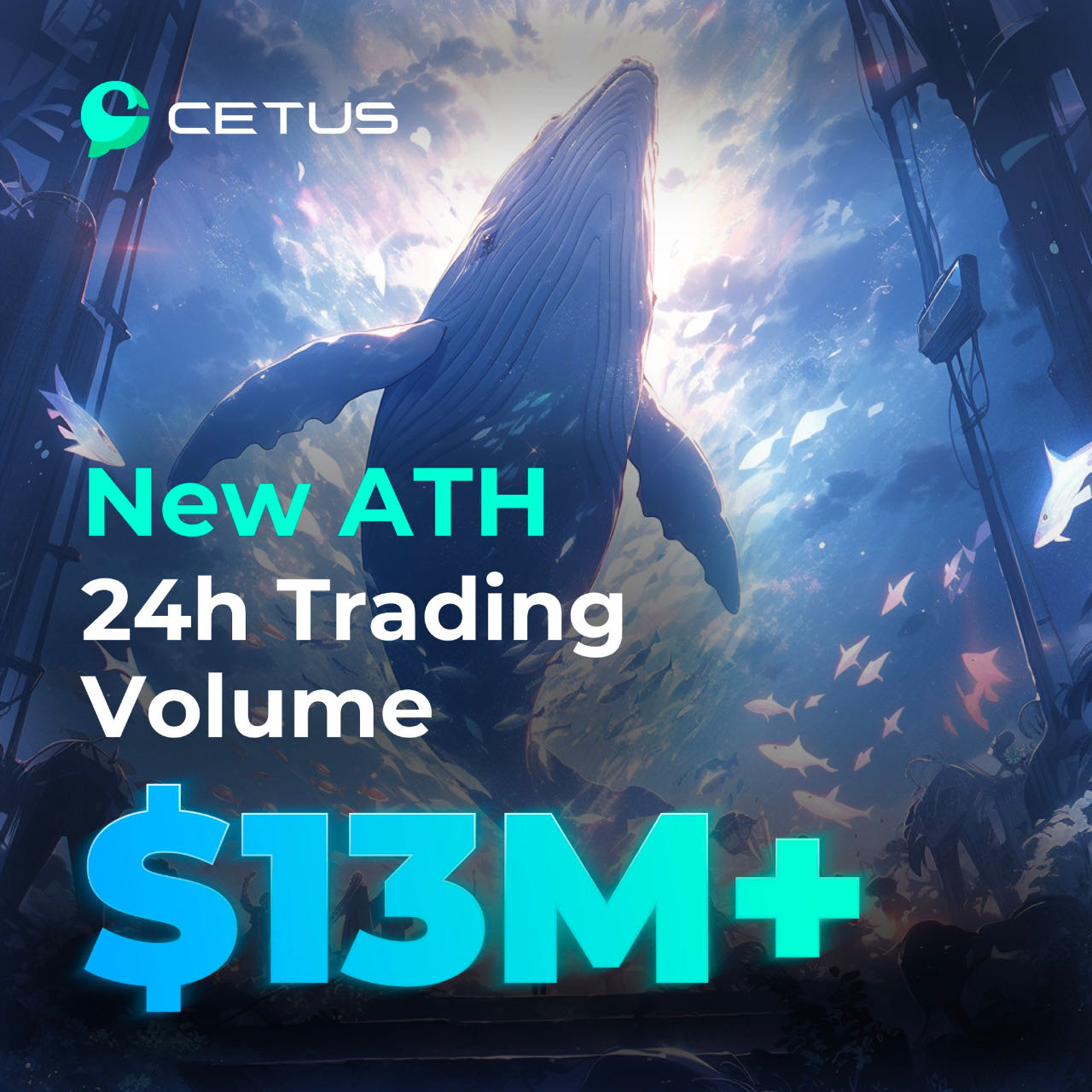
Since the Token Generation Event (TGE) of CETUS, it has gained eligibility for listing on numerous leading centralized exchange (CEX) platforms. Whether on these CEX exchanges or on Cetus's own decentralized exchange (DEX), the trading activity of CETUS tokens has been quite active. According to CoinGecko's statistics, in just the third quarter, the daily average trading volume of CETUS tokens surpassed the $1.8 million mark. It's worth noting that in past quarters, CETUS tokens not only frequently ranked among the top 10 trending assets on exchanges like OKX and KuCoin but were also recognized as the most favored perpetual trading asset on OKX by traders.
Now, let's introduce the tokenomics of Cetus:
1. Community Incentives: Cetus has reserved half of its tokens for the community, primarily to incentivize liquidity providers, emphasizing Cetus's commitment to community engagement and activity.
2. Team and Advisors: 20% of the tokens are allocated to Cetus's core team and advisors. There is a one-year lockup period for this portion, followed by a gradual release over two years, with the aim of ensuring the team's long-term dedication and loyalty to the project.
3. Early Supporters: 15% of the tokens are allocated to early investors. These tokens have a six-month lockup period and will gradually be released over one year, encouraging investors to grow alongside Cetus.
4. Ecosystem Development and Activities: The remaining 15% is dedicated to supporting initial liquidity, community activities, and an insurance fund, ensuring the healthy operation of Cetus and the ongoing prosperity of the community.
Additionally, it's worth mentioning that Cetus has introduced two unique currencies, $CETUS and $xCETUS, to cater to the diverse needs of the ecosystem. The relationship between the two and their respective functions are as follows:
1. The conversion between CETUS and xCETUS is flexible, but the conversion ratio may vary depending on the duration of the lock-up period.
2. xCETUS not only represents the voting rights of holders but will also determine purchasing allocations in the Launchpool in the future.
3. To further incentivize liquidity providers, Cetus offers generous rewards to users who lock up xCETUS, with the size of the reward varying based on the liquidity provided.
In summary, Cetus's currency strategy is key to its success. It encourages deep community engagement, ensures the team's long-term commitment, and attracts investor trust, collectively propelling Cetus towards a brighter future.
After achieving significant success in its currency strategy and market performance, the technical team at Cetus did not stop. Instead, they continued to iterate and upgrade the product to ensure that Cetus remains at the forefront of the industry and provides users with the best trading experience.
Recently, Cetus' trading router has undergone two major upgrades since its launch. Now, it not only supports jump orders that establish trading paths by connecting multiple liquidity pools but also supports split orders, allowing large orders to be executed simultaneously through multiple trading paths.
In addition, Cetus has carried out the following series of integrations and collaborations:
1. Integration with DeepBook: This integration further expands Cetus' trading depth and liquidity.
2. Integration with Alchemy Pay and Coinbase Pay: This ensures that Cetus users can conveniently make payments and trade.
3. CETUS price feeds supported by Pyth Network: This provides Cetus with a reliable and real-time price data source.
4. Scallop accepts CETUS tokens as collateral: This further enhances the application and value of CETUS tokens in the DeFi space.
5. Cetus Exchange SDK powers major dApps on Sui: This demonstrates the leading position of Cetus technology and its core role within the entire Sui ecosystem.
In summary, Cetus has not only achieved success in the market and strategy but its technological advancements and continuous product iterations have also laid a solid foundation for its long-term development in the DeFi sector. We have reason to believe that Cetus will continue to lead the industry, bringing more value and innovation to users.
As the last quarter of 2023 approaches, Cetus has outlined clear development directions for the months ahead. Based on its third-quarter report, we can see that Cetus will focus on two main areas.
Firstly, Cetus will fully support the growth of Liquid Staking Derivatives (LSD) on Sui. With an increasing number of LSD projects emerging on Sui, Cetus is determined to provide support to the ecosystem, helping it to adopt these liquidity staking technologies and LST assets more quickly. This will not only strengthen Cetus' position in the DeFi space but also bring more vitality and innovation to the Sui ecosystem.
Secondly, Cetus will continue to prioritize the upgrade of its supported Liquidity Providers (LP) strategies. This means that Cetus' LPs will be able to enjoy more advanced LP features and a more convenient experience when providing liquidity on-chain. This ongoing technological upgrading and innovation will undoubtedly keep Cetus at the forefront of the competitive DeFi market.
With continuous technological advancements and a maturing market, Cetus has proven its leadership in the DeFi space. Its dedication to technology, deep community involvement, and ongoing enthusiasm for innovation foreshadow a brighter future. We have every reason to believe that whether it's in liquidity provision, technological upgrades, or ecosystem development, Cetus will continue to lead industry trends. Let us look forward together to Cetus bringing us more innovation and breakthroughs, creating more value for the entire blockchain world.


All Comments