

Layer 3, once considered a complex and abstract term, is now emerging as a new focus in the blockchain space.
Layer 3 is a new independent layer built on top of Layer 2, inheriting not only the security of Layer 1 but also the performance of Layer 2, further achieving cost reduction and efficiency improvement. For example, StarkWare has mentioned that if the cost of each layer is reduced by 1000 times, then the cost of Layer 3 could be reduced by as much as 1,000,000 times compared to Layer 1. What's even more critical is that Layer 3 provides greater customization capabilities, allowing developers to control the technology stack to meet various specific needs and ensure privacy protection.
Currently, both Arbitrum and zkSync seem to recognize the enormous potential of Layer 3. Especially as Optimism announced its rebranding as "OP Mainnet," revealing its ambitions for a superchain empire, Arbitrum and zkSync have both chosen to wield the weapon of Layer 3, envisioning a future of multi-chains. In this multi-chain competition, XAI, as the first L3 chain based on Arbitrum Orbit, undoubtedly serves as the ace up Arbitrum's sleeve. It not only plays a critical role in Arbitrum's strategic deployment but also presents a clear challenge to Optimism. Below is a brief introduction to the XAI project.
Before delving deeper into XAI, it's essential to understand Arbitrum Orbit. Arbitrum Orbit is more than just a name; it represents a general modular Layer 3 stack that provides developers with a powerful platform to build specialized Layer 3 chains on top of it. All transactions on Layer 3 are settled using Arbitrum's Layer 2 technology, such as Arbitrum One or Nova.
So, how does XAI relate to Arbitrum Orbit? XAI is a Layer 3 chain designed specifically for gaming scenarios, and it is built on top of Arbitrum Orbit. What sets this chain apart is that it is created entirely using the permissionless Arbitrum Orbit technology stack, which means anyone can deploy their custom networks on Arbitrum. The official XAI website also explicitly states their plans to launch their own token on this network.

At this point, one might ask, since Nova is already a general-purpose L2 designed for gaming scenarios, why do we need XAI? The answer is quite simple, and it revolves around performance and resources. Unlike Nova, which is a gaming public chain, XAI, as a dedicated Layer3 chain, not only offers higher performance but also has computing and storage resources specifically designed for it. This enables resource-intensive applications, such as compute-intensive AI models, to be implemented on XAI.
These advantages of XAI are all thanks to Arbitrum's technology stack, including Nitro, BOLD, and Stylus. Nitro is an upgraded version of Arbitrum One's technology stack, which achieves higher compatibility with Ethereum by compiling the Geth core directly at the client software layer. BOLD is an permissionless verification mechanism proposed by Arbitrum. Stylus, on the other hand, is an open-source SDK that supports multiple programming languages, allowing developers to use their familiar programming languages to develop on Arbitrum, thus reducing development costs.
While Nova provides a basic solution for gaming scenarios, XAI is undoubtedly a rising star in the Arbitrum ecosystem, further showcasing the advantages and potential of the Arbitrum technology stack.
After our in-depth exploration of XAI and its place within the Arbitrum technology stack, October 26th brought us a milestone announcement. Xai, the Layer 3 blockchain specifically designed for video games and backed by Arbitrum's developer, Offchain Labs, officially unveiled the mystery behind its token economics.
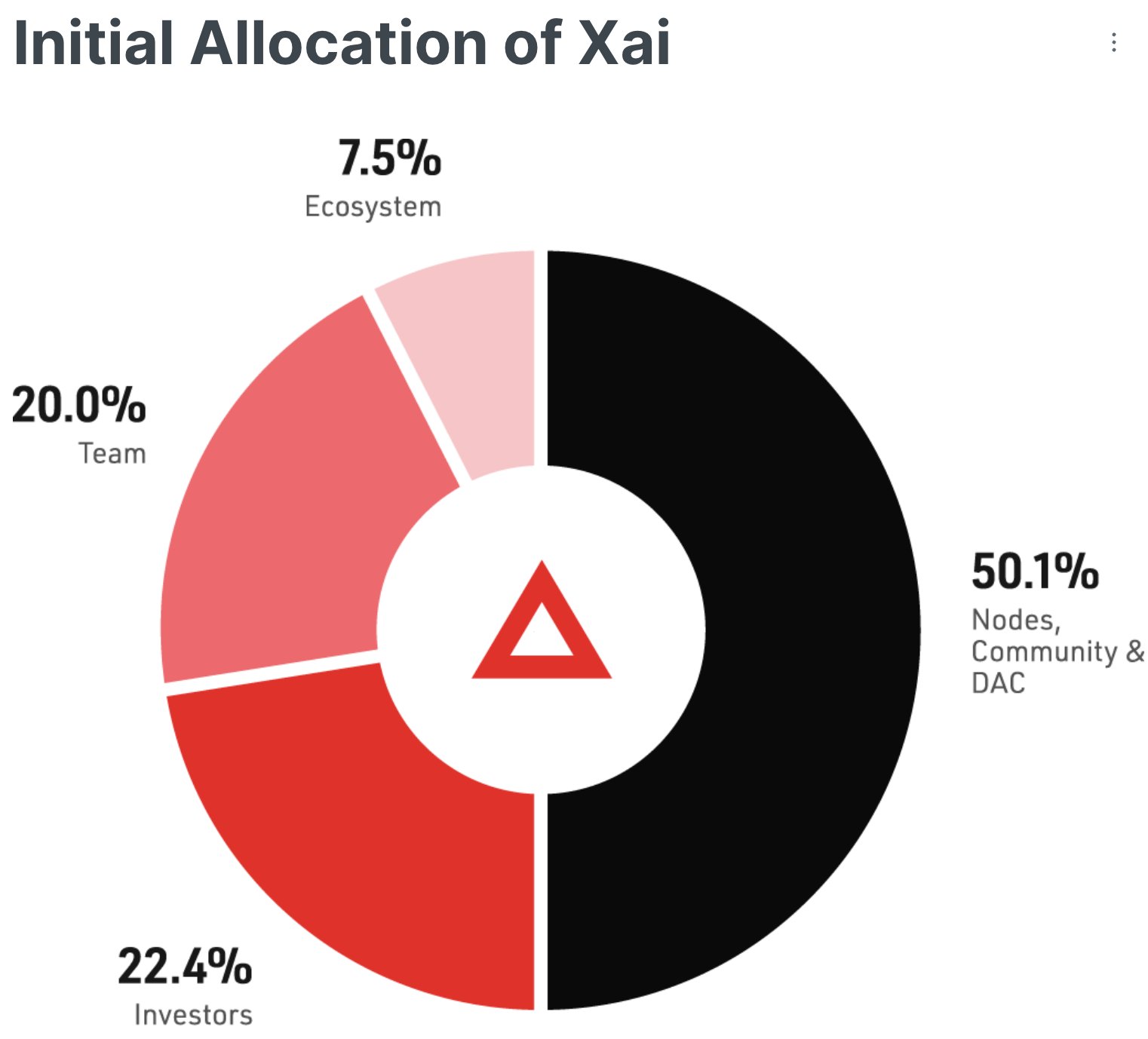
First, let's delve into the details of this economic model. The total supply of Xai and its staking token esXai has reached 2.5 billion tokens. The distribution of these tokens has been carefully considered: more than half of the tokens, specifically 50.1%, will be allocated to the community, Sentry node operators, and the Data Availability Committee (DAC). This design reflects Xai's strong commitment to its community and partners. Additionally, 22.4% of the tokens will be allocated to investors, providing financial security for the long-term development of Xai. The team and the ecosystem will receive 20% and 7.5% of the tokens, respectively, ensuring the project's continued operation and the prosperity of the ecosystem.
However, the significance of Xai tokens goes beyond this. In the Xai blockchain, this token will play several crucial roles. It will serve not only as a Gas token but also as rewards for validators and as the core token supporting the entire gaming ecosystem. As the development roadmap of Xai becomes clearer, we can expect to see more milestones in the coming months. Especially in October and November, Xai's pioneer nodes will officially come online, preparing for the mainnet launch and token release in December.
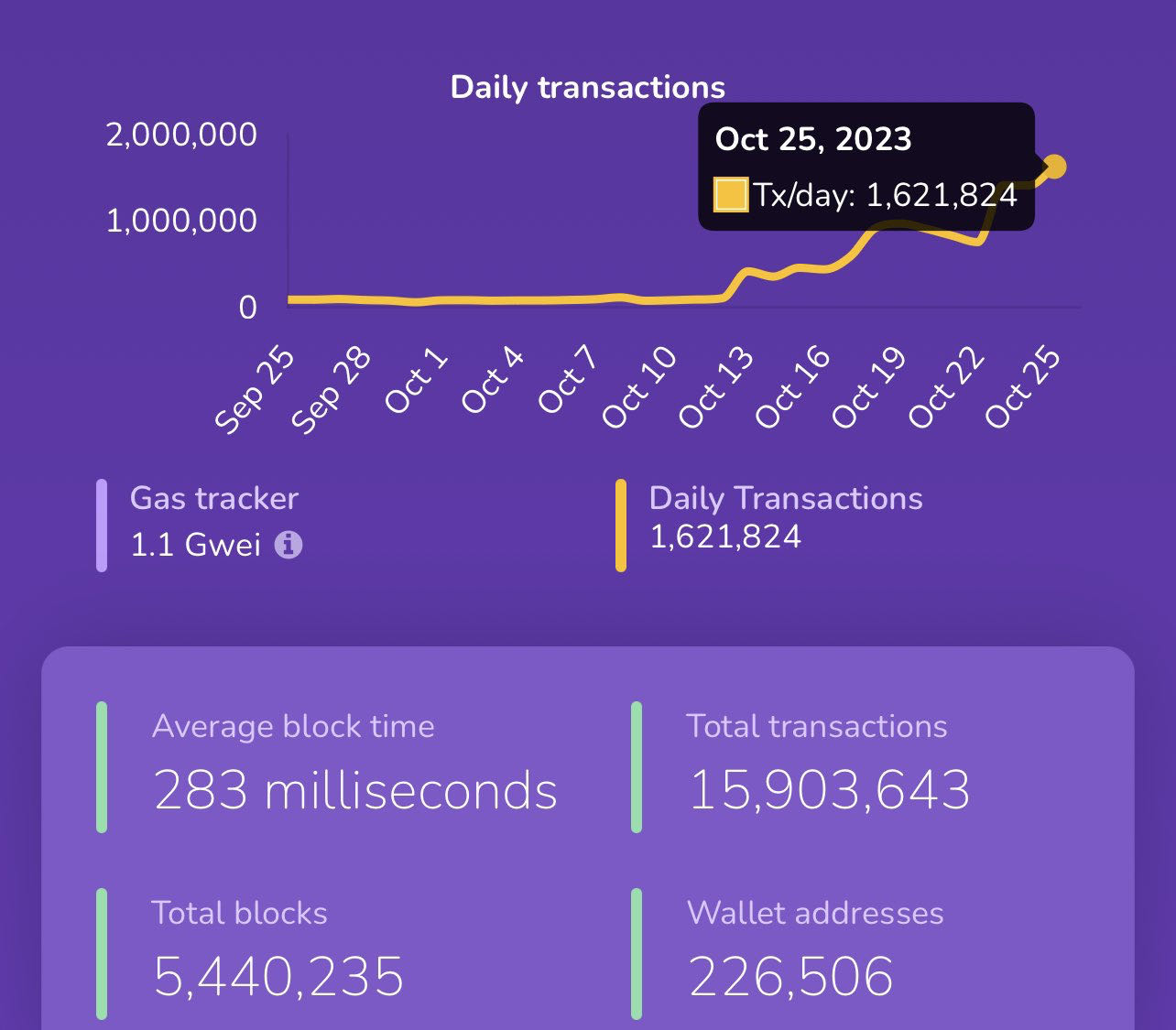
The enthusiastic response from the market further demonstrates the immense potential of Xai. In just one day after the news was released, Xai's trading volume surged to 1.6 million transactions, which is 20 times the trading volume on its testnet just one month ago. This data not only showcases the strong appeal of Xai but also foreshadows its future market position.
Taking all these factors into account, we have reason to believe that Xai will not only bring revolutionary changes to the Layer 3 blockchain space for video games but also inject new vitality into the entire Arbitrum ecosystem. With the official release of Xai tokens, we look forward to seeing more innovation and breakthroughs while also having high expectations for Xai's future.
In the evolution of blockchain technology, Layer 3 has gradually gained prominence and become a hot topic in the industry. Within this field, Xai is undoubtedly a noteworthy participant. Its unique token economic model not only offers us a fresh perspective but also reveals the critical role it may play in the future blockchain ecosystem.
However, every technological leap comes with numerous challenges. As an emerging Layer 3 blockchain, Xai faces not only technical hurdles but also tests in terms of market competition, user adoption, partner selection, and more. Nevertheless, along with these challenges come opportunities. With more businesses and developers showing interest in Layer 3 technology, Xai has the opportunity to establish its position in this domain and become an indispensable player.
Furthermore, the success of Xai is not solely dependent on its own efforts. Community support, partner trust, and positive market feedback will all be crucial factors in Xai's journey towards success. Throughout this process, open collaboration, continuous innovation, and a deep understanding of user needs will be the driving forces behind its progress.
In conclusion, Xai has a long road ahead in the Layer 3 blockchain space. However, with continuous technological advancements and a maturing market, we have reason to believe that Xai will find its place in this field, bringing more value and opportunities to the entire blockchain industry.


All Comments