

Cointime

Download App
iOS & Android

Crypto markets prepare for Fed rate cut amid governor shakeup

As the US Federal Reserve prepares to adjust interest rates on Wednesday, a broader shake-up at the central bank could have serious implications for crypto markets.

The Fed is expected to cut interest rates tomorrow, in a move that traditionally signals a rally in crypto markets: Lower yields on assets like bonds mean riskier assets like crypto are more attractive.

The expected rate cuts come amid a political battle and a new appointment to the Federal Reserve. US President Donald Trump’s administration has charged Fed governor Lisa Cook with mortgage fraud as it seeks her removal. Meanwhile, the Senate has confirmed White House economic adviser Stephen Miran to the board of governors.

The charges against Cook and the effort to nominate an individual with ties to the administration could mean a less independent Federal Reserve, which plays an important role in setting crypto policy.
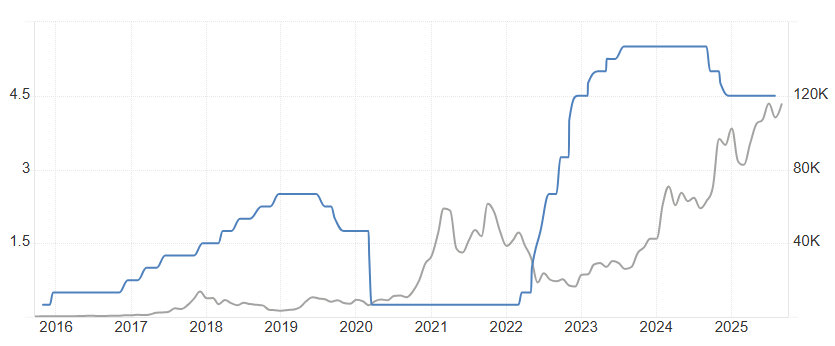
  Bitcoin price spiked in 2021-2022 amid low US interest rates. Source: Trading Economics


What a political Federal Reserve means for crypto policy

The Trump administration is seeking to remove Cook — a Biden-era appointee — as it aims to exert more control over the Federal Reserve. On Aug. 25, the White House X page posted a letter in which Trump fired Cook, accusing her of making false statements on one or more mortgage agreements.

Cook denied the accusations and refused to step down. Her legal team said the charges were motivated by politics and that the White House is “scrambling to invent new justifications for its overreach.” Cook herself said that it is “unprecedented and illegal.”

On Monday, the appeals court in Washington blocked the White House from removing Cook from her position at the Federal Reserve. This will allow her to maintain her post while the case is pending.
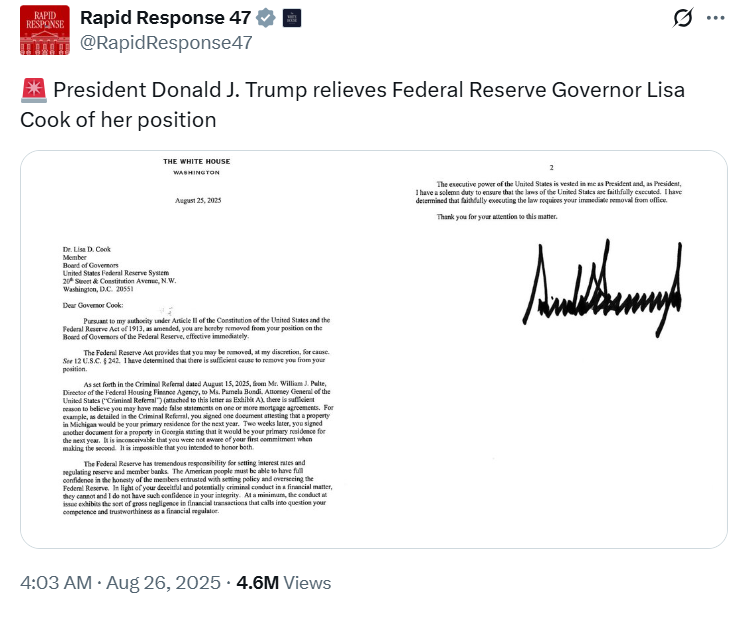
  Trump sought to remove Cook on Aug. 25 “effective immediately.” Source: Rapid Response 47


This morning, Miran, an economist and chairman of the Council of Economic Advisors, who has also made some pro-crypto comments in the past, was confirmed by the Senate.

His position is temporary — the term ends in January 2026 — but Miran has declined to commit to stepping down as a White House adviser should his term extend beyond Jan. 31.

This has Democratic legislators worried that the Fed and its monetary policy agenda will be more beholden to Trump’s political goals.

Aaron Brogan, founder of crypto-focused law firm Brogan Law, told Cointelegraph, “The Fed has great authority over banks, and ultimately, banks are quasi-regulators of the crypto industry by determining who can and cannot access financial services.”

“That influence is unlikely to decrease with a less independent Fed, but the policy might. I would wager it would be more changeable and susceptible to public whims.”

A politicized Fed is relatively uncharted territory. When asked what a less independent Fed means for US monetary policy, Brogan said, “Nobody knows.”

“There is an assumption that a dependent Fed would have more liberal, profligate monetary policy simply because it is more responsive to public opinion, which is fickle. But since we haven’t seen it, it is pure speculation. In this administration, at least, Trump would cut rates.”

Crypto market gets ready for Federal Reserve rate cut

As lawmakers in Washington fight over the fate of the central bank, crypto markets are getting ready for the Fed’s meeting tomorrow, where it’s expected that they will cut rates.

Kevin Rusher, founder of real-world asset (RWA) borrowing and lending ecosystem RAAC, told Cointelegraph that “markets are on edge.”

“Resuming the cutting cycle begins to unlock the $7.2 trillion sitting in money market funds, as well as the trillions tied up in outstanding mortgage debt.”

He predicted that liquidity would flow into alternative yield-generating investments like those in decentralized finance (DeFi) and RWAs.

Alice Liu, research lead at CoinMarketCap, told Cointelegraph that “high-beta layer 1s” like Ether and Solana are particularly affected by Fed interest rate changes.

“These trade like growth tech — more sensitive to liquidity and risk appetite than BTC. Especially as interest rate cuts could potentially trigger additional capital injected in risk-on assets, investors could be looking at deploying additional capital into ETH’s ‘digital oil’ narrative or SOL’s adoption growth,” she said.

She said that DeFi tokens are “relatively more attractive” when interest rates fall, boosting tokens tied to lending/DEX activity.” Bitcoin is “still the quality crypto” and less rate-sensitive to interest rate changes but can still move “around big policy surprises and liquidity turns.”

The Kobeissi Letter wrote, “When the Fed cuts rates within 2% of all time highs, the S&P 500 typically loves it.” While immediate-term results were mixed, “in 20 of the last 20 times this has happened, the S&P 500 has ended higher 1 year later.”
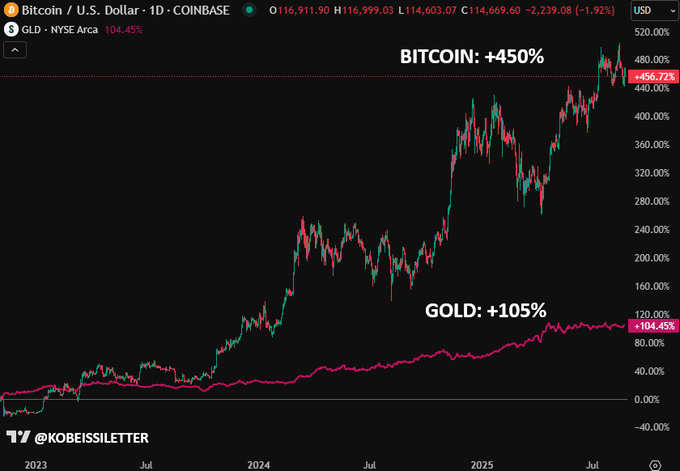
  Bitcoin and gold soar after interest rate cuts. Source: Kobeissi Letter


They expect the same outcome this time as well. “There will be more immediate-term volatility, but long-term asset owners will party.”

“Gold and Bitcoin have known this. The straight-line higher price action we have seen in these asset classes is pricing-in what’s coming. Gold and Bitcoin know lower rates into an already HOT backdrop will only push assets higher. It’s a great time to own long-term assets.”

The political fight for the Fed is still undecided, but regardless of who is pulling the levers, low interest rates are a welcome sight for traders.


Comments

All Comments

Recommended for you

  • Iranian Official: US Provocation on Strait of Hormuz is a Reactive Response

    According to IRNA, Hussein Nushabadi, the Director General of the Iranian Foreign Ministry's Parliamentary and Legal Affairs Department, stated in an interview that Washington's controversial claims regarding control over the Strait of Hormuz are primarily driven by domestic political needs and are a reactive response to Iran's demonstrated strength and strategic actions in this waterway. He noted that the baseless assertions made by the US President regarding the Strait of Hormuz do not align with international shipping regulations or the relevant provisions of the United Nations Convention on the Law of the Sea. Nushabadi also pointed out that Iran possesses political and military dominance over the Strait of Hormuz, a vital lifeline for global energy and economy, making it a powerful lever and strategic trump card in responding to external threats.

  • Jensen Huang Collaborates with Wall Street Giants to Support AI Computing Market

    On August 15, a rare scene unfolded as Jensen Huang joined forces with six major Wall Street asset management giants to endorse the idea of establishing AI computing as an independent asset class. Analysts believe this reflects Huang's commitment to the concept of token economics, marking a shift in the AI boom from a technological competition to a capital competition. However, the latest plan has raised concerns among investors regarding 'circular financing' and debt risks. In response to these doubts, Huang personally stepped in to reassure the market, stating that Nvidia may provide a residual value support mechanism of up to 25% for individual investment projects and will carefully evaluate each project. Following this, market sentiment showed slight improvement. (CCTV Finance)

  • DJI Added to 'Blacklist', US Court Orders Rehearing

    On August 15, according to the Russian Satellite News Agency, the U.S. Court of Appeals recently ruled that a lower court must rehear the case regarding the inclusion of Chinese drone manufacturer DJI on the Pentagon's 'Chinese Military Industrial Enterprises' blacklist, stating that the previous ruling was based on non-confidential information and contained flaws. The report indicated that the D.C. Circuit Court of Appeals pointed out that the lower court's conclusion that DJI 'contributes to China's defense industrial base' was erroneous, as it relied solely on publicly available information. The court has mandated that during the rehearing, the lower court may review classified documents and decide whether to uphold the Department of Defense's designation based on that information.

  • Iran Claims Undisputed Ownership of Strait of Hormuz

    On August 15, according to CCTV International News, Iran's Chief Justice Ejei stated today that the absurd remarks made by the U.S. President regarding the Strait of Hormuz are entirely based on his personal delusions. In the real world, the true owner and dominant power of this important international waterway is Iran. Ejei emphasized that Iran has proven militarily that the Strait of Hormuz is an inseparable part of Iranian territory and sovereignty.

  • US Spot Bitcoin ETF Sees Net Outflow of $56.2 Million Yesterday

    On August 15, according to data monitored by Farside Investors, the US spot Bitcoin ETF experienced a net outflow of $56.2 million yesterday.

  • No Net Inflow or Outflow for US Spot Ethereum ETF Yesterday

    On August 15, according to monitoring data from Farside Investors, there was no net inflow or outflow for the US spot Ethereum ETF yesterday.

  • Charles Schwab: Low Probability of CLARITY Act Passing Before U.S. Midterm Elections

    On August 15, Charles Schwab stated in its 'Weekly Trader Market Outlook' that as of the time of writing, the Bitwise Top 10 Large Cap Crypto Index has fallen 3% since last Friday; Bitcoin has dropped 3% during the same period, while Ethereum is down 2%. Bitcoin continues to exhibit characteristics of a low-correlation asset, with limited impact on its price from the CPI and PPI data released this week. Last week, the U.S. Senate entered its summer recess without voting on the CLARITY Act. Although the final debate vote for the bill is scheduled for September 14, the probability of it passing before the midterm elections remains low.

  • Sources: Trump to Attend Closed-Door Meeting with Crypto Executives at the White House

    On August 15, sources revealed that U.S. President Trump is expected to attend a White House meeting held by the newly established Innovation Committee on Wednesday. The committee consists of executives from the crypto industry as well as leaders from prediction markets and artificial intelligence companies. Sources indicated that the CEOs of companies such as Coinbase, Ripple, Gemini, Robinhood, Polymarket, and Kalshi are members of the U.S. CFTC Innovation Advisory Committee. Before attending the committee's first official meeting on Thursday, these crypto industry CEOs will gather at the White House for the meeting on Wednesday. Attendees learned that Trump plans to participate in this meeting. The meeting is expected to take place at the Eisenhower Executive Office Building next to the White House, aiming to initiate policy discussions on several key directions in the U.S. innovation sector. Sources also stated that CFTC Chairman Mike Selig and other policy advisors are expected to attend the meeting. One source further revealed that U.S. Treasury Secretary Scott Bessent and Commerce Secretary Howard Lutnick may also be present. The White House spokesperson has not yet responded to requests for comments regarding the meeting arrangements.

  • U.S. Optical Communication Stocks Rise, Lumentum Up Over 6%

    On August 14, U.S. optical communication stocks collectively rose, with Applied Optoelectronics increasing by over 14%, AXT Inc and MaxLinear rising by over 7%, POET Technologies and Lumentum up by over 6%, and Lightwave Logic increasing by over 5%. Corning and Tower Semiconductor also saw gains of over 4%.

  • Dunamu Reports 73% Decrease in Q2 Operating Profit to 23.5 Billion Won

    On August 14, Upbit operator Dunamu announced its Q2 2026 performance, reporting quarterly revenue of 173.5 billion won (approximately 123 million USD) and an operating profit of 23.5 billion won (approximately 16.65 million USD), representing declines of about 26% and 73% respectively compared to Q1. In the first quarter, Dunamu's revenue was 234.6 billion won (approximately 166 million USD) with an operating profit of 88 billion won (approximately 62.34 million USD). Dunamu stated that the decline in performance this quarter was primarily influenced by the overall contraction in liquidity in the global digital asset market, which weakened investor sentiment.