

Crypto kiosks or automatic teller machines (ATMs) are facing increasing pushback from US regulators amid concerns about fraud and crime.
Once seen as a bellwether of crypto adoption, crypto ATMs, which allow users to buy or convert crypto anonymously, are increasingly under lawmakers’ microscope. Critics and regulators have flagged numerous cases in which the machines are used to commit or facilitate illicit activity.
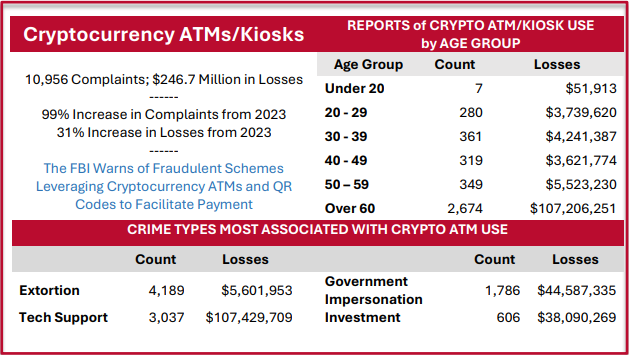
The Federal Bureau of Investigation (FBI) has noted an increasing amount of money related to criminal activity going through crypto ATMs. In 2024, the FBI received nearly 11,000 complaints of fraud cases at crypto kiosks, valuing over $246 million.
Some cities have introduced outright bans on crypto ATMs, and a handful of states are beginning to introduce limits on their activities.
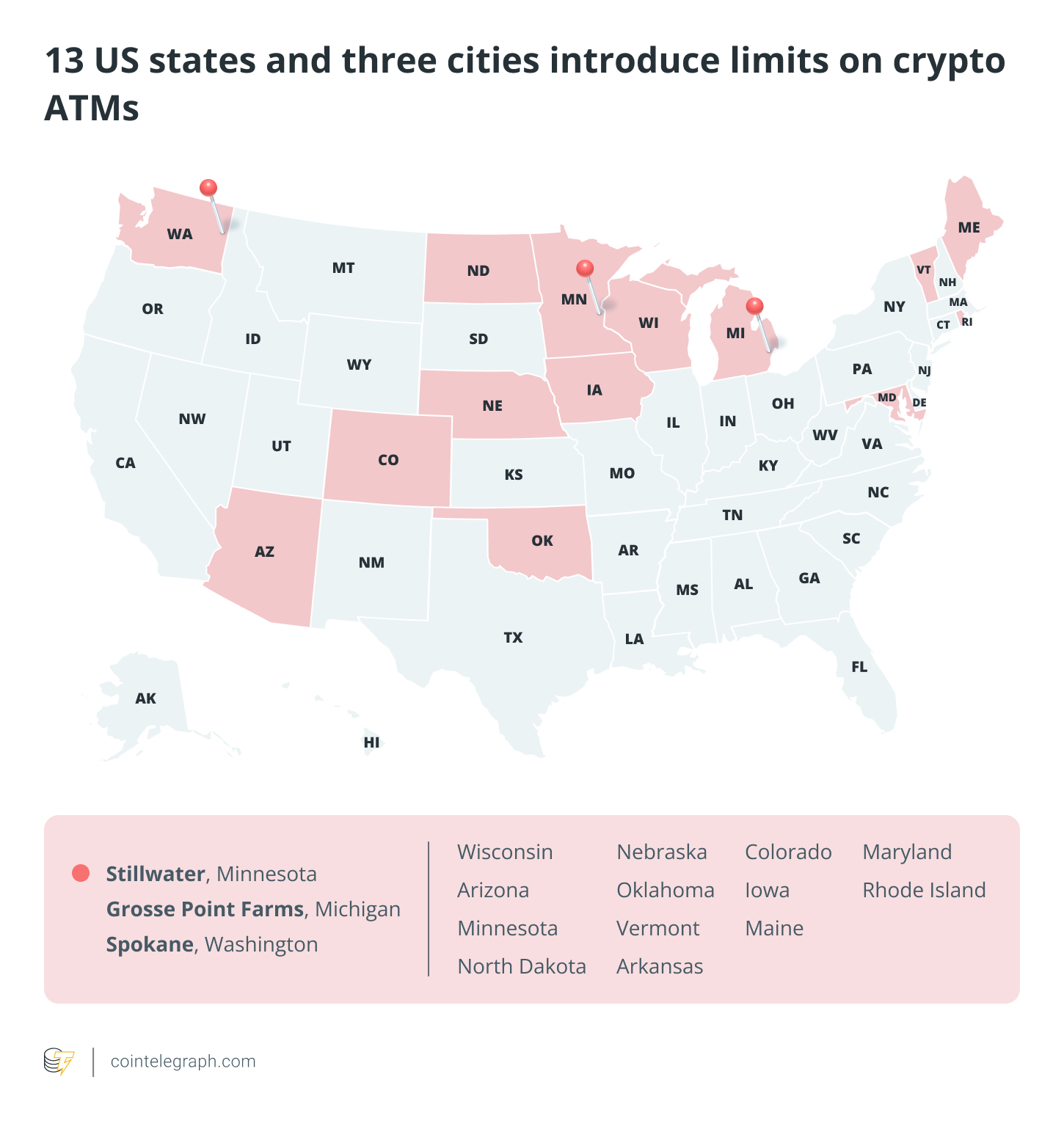
Stillwater, Minnesota
In mid-May, the government of the city of Stillwater, Minnesota banned crypto kiosks after a senior citizen was defrauded of over $5,000.
Law enforcement told local media, “Someone called her and told her she had a $20,000 ‘overpayment’ to her PayPal account ... They told her to drive to her bank (Royal Credit Union in Oak Park Heights) and withdraw $20,000.”
Local police reported 31 fraud cases through crypto ATMs since 2023, with one victim, also a senior citizen, losing $29,000. The city of Stillwater has just 20,000 residents.
Stillwater police said that it has limited resources to pursue these increasingly sophisticated cases, and that a ban would be an effective measure.
Spokane, Washington
Spokane banned crypto ATMs on June 17 in response to a surge in scam activity using the machines.
City council member Paul Dillon said, “These kiosks have become a preferred tool for scammers looking to defraud unsuspecting victims.”
The ban will not just prevent future kiosks from operating in the city but will also remove current ATM locations.
Grosse Pointe Farms, Michigan
A small town just outside of Detroit has also introduced limits on crypto kiosks. Grosse Pointe Farms will implement a $1,000 daily transaction cap and $5,000 aggregate limit over a 14-day period.
The decision was seen as preemptive, considering the town doesn’t host any crypto ATMs.
As for why, the city council cited concern over resident welfare, stating, “The operation of virtual currency kiosks ... if not properly regulated, provides a heightened risk of fraudulent transactions that may victimize residents.”
Arizona
Arizona Governor Katie Hobbs has offered a more cautious approach to crypto regulation in her state, signing a bill into law that regulates crypto ATMs while vetoing measures that would establish a state crypto reserve. On May 12, Hobbs approved House Bill 2387, which stipulates:
- $2,000 per day transaction limit for new users
- $10,500 per day for returning users after 10 days
- New user refund in 30 days in case of fraud, including fees.
Arkansas
Following several cases of consumer fraud and an official warning from the state Attorney General Tim Griffin, Arkansas enacted a law regulating crypto ATMs in May. Griffin said that in 2024 alone, his office “received complaints from consumers totaling more than $400,000 in lost money in cryptocurrency kiosk scams.”
The law includes several provisions:
- $2,000 per day transaction limit for new users
- Warnings must be prominently displayed
- New user refund in 14 days in case of fraud, including fees
- Operators must obtain user identification
- Operators must contact registered users who are senior citizens before they make their first transaction.
Colorado
In early June, the state of Colorado instituted controls for crypto ATMs amid a rising number of scams.
Amy Nofziger, director of victim support for the American Association of Retired Persons’ (AARP) Fraud Watch Network, told Colorado press, “The amount of fraud that is happening via these crypto ATM machines is huge ... We’re hearing it across the country, but it’s really affecting Colorado consumers.”
The law includes requirements like:
- $2,000 per day transaction limit for new users
- Operators must refund transactions if crypto is transferred to a wallet outside the country
- Proof of transaction/receipt.
Iowa
The state of Iowa has taken hard measures against crypto ATMs. Not only did it pass a law on July 1 regulating crypto kiosks, but Attorney General Brenna Bird has also filed a lawsuit against the two largest cryptocurrency ATM operators in Iowa: Bitcoin Depot and CoinFlip.
“[Scammers] convince these older women that they need help, and then send their victims to crypto ATMs. And the crypto ATM companies take a cut of the profits. It’s not just wrong, it’s illegal,” said Bird.
The law requires:
- $1,000 per day transaction limit for new users
- Fees cannot exceed 15% of the transaction value
- Warnings must be prominently displayed
- Operators must provide reports on consumer protection practices to state authorities.
Maine
On June 10, the state of Maine unanimously passed legislation to control cryptocurrency kiosks. State Senator Chip Curry said that crypto ATM scams “aren’t isolated incidents. They’re part of a growing pattern of international criminal networks targeting Maine and preying on our most vulnerable citizens.” The new law imposes several requirements:
- $1,000 per day transaction limit for new users
- Operators must register as money transmitters in Maine
- Transaction fees cannot exceed $5 or 3% of the transaction value
- Guarantee refunds for victims of fraud
- Prohibit operators from asking customers to waive their rights.
Maryland
On July 1, a new law in Maryland came into effect to regulate crypto kiosks amid a wave of crypto ATM scam reports. Victims of crypto ATM scams in Maryland have sued Bitcoin ATM operator Athena Bitcoin for alleged elder abuse, claiming that operators purposefully place kiosks in neighborhoods with a high number of low-income and senior residents.
The new law requires:
- $2,000 per day transaction limit for new users
- Operators must register with the Commissioner of Financial Regulation
- Transaction fees cannot exceed $5 or 15% of the transaction value
- Operators must collect user identification, including name, date of birth and address
- Warnings must be prominently displayed.
Minnesota
In Minnesota, the Department of Commerce, Financial Institutions and Enforcement Divisions now regulates crypto kiosks. The law is part of a joint effort between lawmakers, law enforcement agencies and the AARP and requires:
- $2,000 per day transaction limit for new users
- New user refund in 14 days in case of fraud, including fees
- Warnings must be prominently displayed
- Operators must disclose terms and conditions.
Scammers often target senior citizens, who are less familiar with electronic forms of payment, including cryptocurrencies. According to FBI statistics, the largest portion of crypto ATM fraud is directed at senior citizens (over 60 years of age).
North Dakota
North Dakota passed House Bill 1447 on March 18 with the goal of protecting residents from scams. It lays out a number of requirements:
- $2,000 per day transaction limit
- Warnings must be prominently displayed
- Operators must register as money transmitters
- Operators must monitor kiosks for suspicious activity
- Operators must provide quarterly reports on locations, including user names and transaction data.
Nebraska
Nebraska Governor Jim Pillen signed a bill into law on March 12 that regulates crypto ATMs. He said that the state has been “working hard to build Nebraska into a cryptocurrency leader,” but that “an important part of these efforts is to make sure that we have guardrails to prevent criminals from taking advantage of Nebraskans.” The bill requires:
- $2,000 per day limit for new users
- $5,000 per day for existing customers
- Fees cannot exceed 18% of the transaction value
- New user refund in 90 days in case of fraud, including fees.
Oklahoma
Oklahoma passed a bill in May to regulate crypto ATMs. Lauded by the AARP, Senate Bill 1083 was initially vetoed by Oklahoma Governor Kevin Stitt, but both houses were able to override the veto.
The bill was filed with the secretary of state and became law. It takes effect Nov. 1 and stipulates:
- $2,000 daily transaction limit for new users
- New user refund in case of fraud
- Operators must register with the Oklahoma Banking Department
- Operators must use blockchain analytics to prevent purchase assets from going to wallets associated with criminal activity.
Rhode Island
The state of Rhode Island passed a law regulating crypto ATMs on Aug. 11, entitled the Crypto ATM Fraud Prevention Act.
Rhode Island Senate Artificial Intelligence & Emerging Technologies Committee Chairwoman Victoria Gu said, “Crypto ATMs are unfortunately an increasingly common way for criminals to get away with their ill-gotten gains, and without increased regulation, this trend will only accelerate.”
The bill includes measures such as:
- $2,000 per day transaction limits for new users
- New user refund in 90 days in case of fraud, including fees
- Operators are required to make statutory disclosures
- Warnings must be prominently displayed.
Vermont
In May 2024, Vermont passed H.659 to regulate crypto ATMs. Aaron Ferenc, deputy banking commissioner at the Department of Financial Regulation, told local media that the bill was to “slow down the speeds at which people are being victimized.” The law includes familiar provisions, including:
- $2,000 daily transaction limit for new users
- Kiosks must register with the Commissioner of Financial Regulation
- Refund rights for new users.
Wisconsin
On Aug. 13, the Wisconsin State Senate introduced a bill that requires crypto kiosk operators to obtain a money transmitting license to operate in the state, as well as collect Know Your Customer data about users such as their name, address and date of birth.
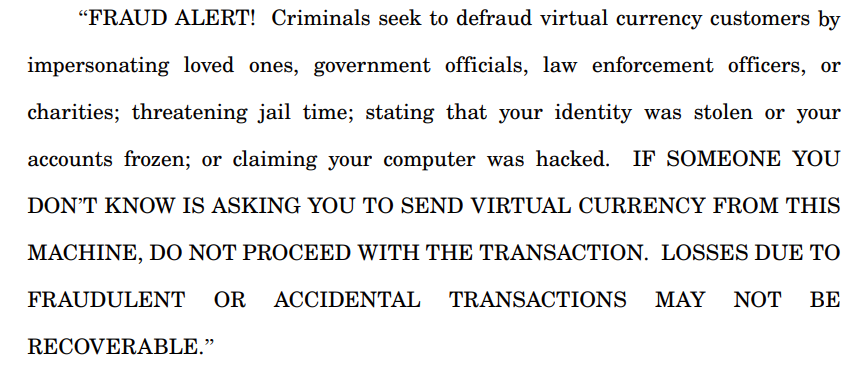
Users will be capped at $1,000 worth of transactions per day, and machines will have to display a warning about the possibility of crypto ATMs being used for fraud.
The bill follows an identical one that was filed in the State Assembly, the lower house of the state legislature. This is a common tactic to increase the likelihood of the bill becoming law and speeding up the legislative process.
Crypto ATM restrictions could go nationwide
The number of states imposing strict regulations on crypto ATMs is growing as concerns from senior rights groups and consumer protection watchdogs grow.
Senior citizens form a large percentage of Iowa’s and Maine’s populations — a particularly vulnerable demographic for crypto ATM scams. Both states have enacted strict laws with low daily limits on withdrawals and strict licensing and reporting requirements.
In Washington, lawmakers are considering a bill that would impose regulations on crypto ATMs at a national level, with many of the proposed measures similar to those already appearing in various states.
The crackdown on crypto ATMs has stymied the crypto kiosk business’s growth. New license and ID requirements, as well as commission caps, could break profitability for crypto ATM operators.


All Comments