

Cointime

Download App
iOS & Android

Vitalik calls for open-source infrastructure in health, finance, governance

Ethereum co-founder Vitalik Buterin called for open-source, verifiable infrastructure across critical sectors, including healthcare, finance and governance, warning that centralized systems risk eroding trust and security.

In a Wednesday blog post, Buterin argued that as digital infrastructure becomes embedded in everyday life, relying on closed, opaque systems increases the danger of abuse and monopolization.

“The civilizations that gained the most from new waves of technology are not the ones who consumed the technology, but the ones who produced it,” Buterin wrote, adding that “openness and verifiability can fight against global balkanization.”

Buterin said he envisions a world where verifiable devices form the backbone of global systems. “By default, we will likely get digital computer things that are built and run by centralized corporations,” he warned. “But we can try to steer toward a better alternative.”

Open, verifiable tech for health, finance, voting

Buterin said proprietary health tech can limit access, create data monopolies and expose users to surveillance risks. He pointed to the COVID-19 vaccine rollout as an example of how closed manufacturing and communication systems undermined public trust. In contrast, he praised initiatives like PopVax, which use open processes to reduce costs and skepticism.
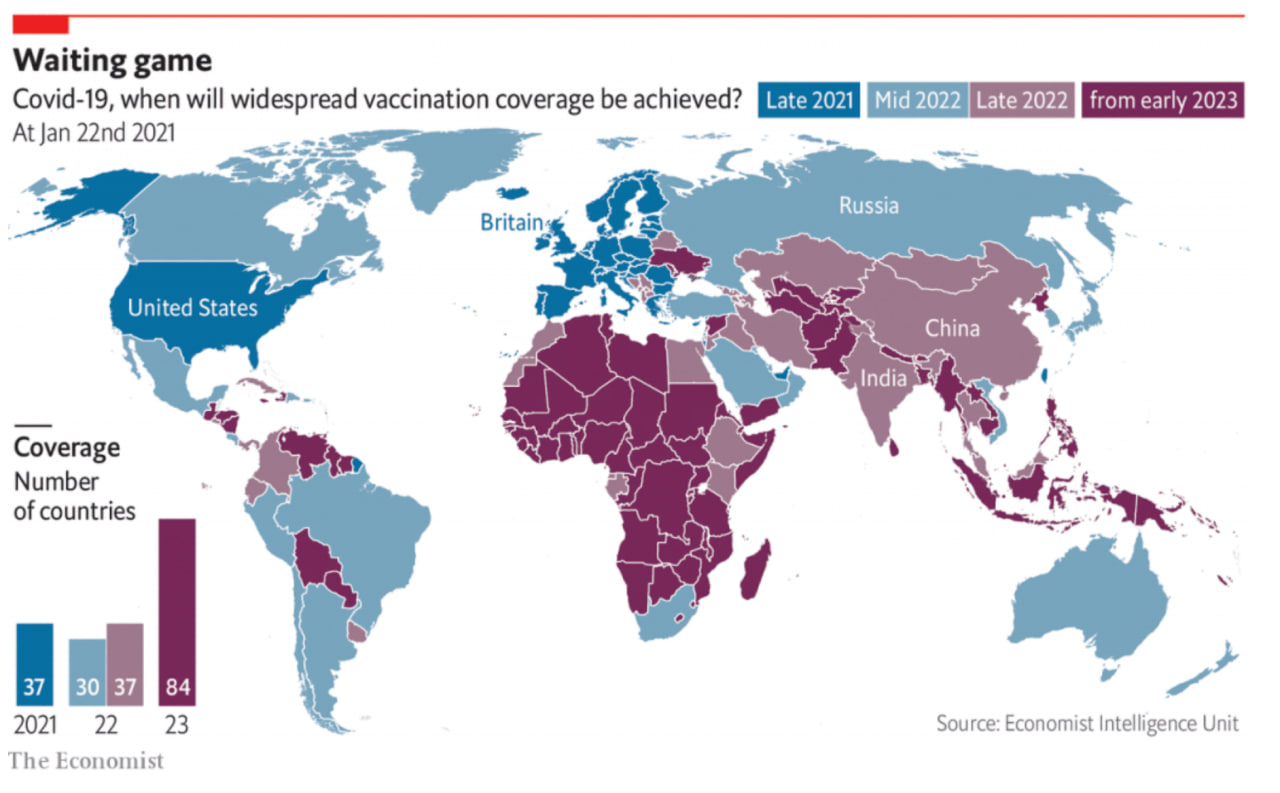
COVID-19 vaccine coverage, 2021–23. Source: Vitalik Buterin


The same concerns apply to finance. Buterin noted the sharp contrast between the five seconds it took him to sign a crypto transaction and the half-hour, $119 ordeal required to ship a signed legal form overseas. “Crypto wallets and blockchain-based systems already show how open, verifiable infrastructure can cut through inefficiency,” he said.

He also called for building secure, open hardware and software for critical public systems, especially voting. Drawing from decades of skepticism toward electronic voting machines, Buterin emphasized that proprietary “black box” software cannot deliver public trust.

Buterin advocates for privacy

Buterin has been a vocal advocate of privacy. In April, he said privacy must be a core design goal, arguing that blind faith in transparency and benevolent leadership is outdated.

Buterin also unveiled a privacy roadmap for Ethereum. In it, he highlighted the short-term changes to the base protocol and ecosystem needed to ensure better user privacy.


Comments

All Comments

Recommended for you

  • BTC falls below $88,000

     market shows BTC fell below $88,000, currently at $87,997.85, 24-hour decline reaches 0.88%, market volatility is significant, please manage your risk accordingly.

  • The U.S. spot Ethereum ETF saw net inflows of $84.59 million yesterday.

     according to Trader T monitoring, the US spot Ethereum ETF had a net inflow of 84.59 million USD yesterday.

  • ETH breaks $3,000

     the market shows ETH breaking through $3000, currently at $3000.08, with a 24-hour decline of 0.38%. The market is highly volatile, please manage your risk accordingly.

  • Binance Wallet launches "secure auto-signature" service

     according to the official announcement, Binance Wallet has launched the "Secure Auto Sign" (SAS) service: it now supports mnemonic/private key wallets to trade on Binance Wallet (web version).

  • Circle minted 500 million USDC on the Solana network.

    according to Onchain Lens monitoring, Circle has minted 500 million USDC on the Solana network. Since October 11, Circle has issued a total of 18 billion USDC on the Solana network.

  • Sources familiar with the matter: JPMorgan Chase is considering offering cryptocurrency trading services to institutional clients.

    according to Bloomberg, as major global banks deepen their involvement in the cryptocurrency asset class, JPMorgan Chase is considering offering cryptocurrency trading services to its institutional clients. A knowledgeable source revealed that JPMorgan is evaluating what products and services its market division can offer to expand its business in the cryptocurrency field. The source stated that these products and services may include spot and derivatives trading.

  • Federal Reserve Governor Milan: We believe that the policy rate will eventually be lowered.

    Federal Reserve Board member Mylan stated that due to the US government shutdown, there were some anomalies in last week's inflation data; he believes that the US will not experience an economic recession in the near term, but if policies are not adjusted, the US will face an increasing risk of economic recession. We believe that policy interest rates will eventually be lowered.

  • BlackRock deposited 819.39 BTC, worth approximately $73.72 million, into Coinbase.

     according to Onchain Lens monitoring, BlackRock deposited 819.39 BTC into Coinbase, worth approximately 73.72 million USD.

  • Ghana passes law legalizing the use of cryptocurrency

    according to Bloomberg, the Ghanaian Parliament has approved a cryptocurrency legalization bill aimed at addressing the expanding use of cryptocurrencies in the country but the lack of regulation. According to Johnson Asiamah, Governor of the Bank of Ghana, the newly passed Virtual Asset Service Providers Act will facilitate the licensing of crypto platforms and the regulation of related activities.

  • CryptoQuant: Bitcoin network activity cools, market shows clear bearish signs.

    CryptoQuant published an analysis stating that the Bitcoin market continues to be in a bear market state, with multiple network indicators showing a significant cooling of activity. Data shows that the 30-day moving average of Bitcoin is below the 365-day moving average (-0.52%), and the bull-bear cycle indicator confirms the current bear market pattern. The number of network transactions has dropped from about 460,000 to about 438,000, fees have decreased from $233,000 to $230,000, and highly active addresses have reduced from 43.3K to 41.5K, all indicating reduced speculative activity and that the market is in a defensive phase.