


From rightclicksave
Let’s set the record straight from the beginning. On one side, you have memecoins — the irreverent offspring of internet culture. On the other side, you have shitcoins — transient, opportunistic, and devoid of soul. To confuse the two is not a semantic error but a cultural dissonance. To call tokens such as $TRUMP and $LIBRA “memecoins” is to mistake shadows for the moon.
Just as genes propagate themselves in the gene pool by leaping from body to body via sperms or eggs, so memes propagate themselves in the meme pool by leaping from brain to brain.¹ (Richard Dawkins)
From Dawkins’s foundational definition of a meme as a “unit of cultural transmission” to the creation of Dogecoin in 2013, memecoins have crystallized the intersection of online culture and decentralized finance.² However, it is crucial to separate bona fide memecoins — cultural artifacts born from communal humor, shared values, and organic virality — from shitcoins whose only intention is to exploit speculative mania. To conflate the two is more than a semantic slip; it undermines the cultural underpinnings that made memecoins such a fascinating phenomenon in the first place.
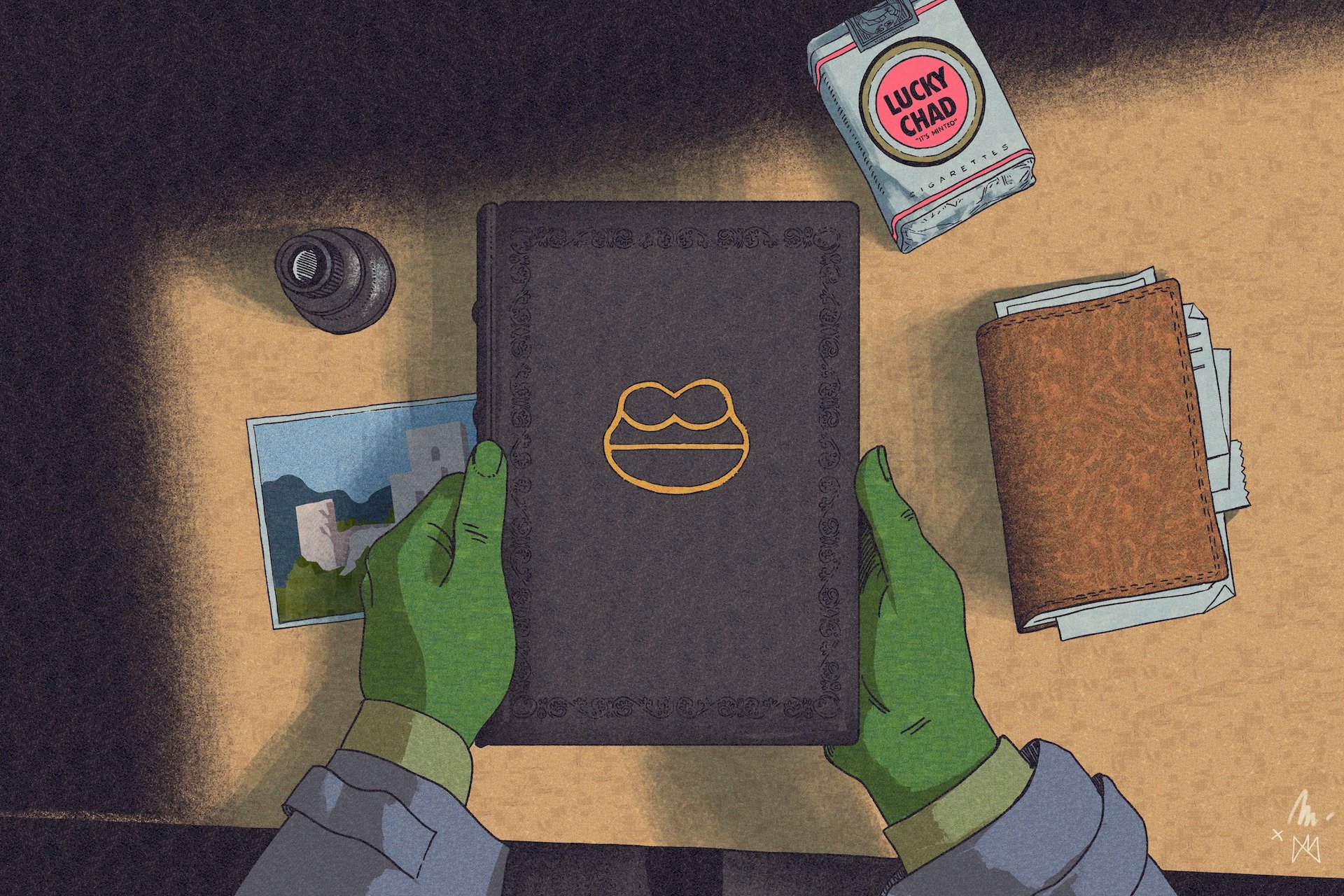
PLRL (Mannay and Anton Marrast),Memetica, 2023. Courtesy of the artistsMemecoins are stories traded as assets, where value is a by-product of collective belief.
Memes are not static images or jokes: they are cultural genes that mutate and propagate through human interaction. Dawkins’s 1976 analogy of a virus frames memes as “selfish replicators” vying for dominance in the attention economy.³ Memecoins like DOGE or PEPE multiply according to this logic:
- A meme (e.g. Doge) mutates into a token, gaining financial utility while retaining its cultural DNA.
- Communities act as ecosystems, amplifying memes that resonate with shared values such as humor, rebellion, and nostalgia.
- Blockchain infrastructure turbocharges replication, enabling more than 40,000 memecoins daily.
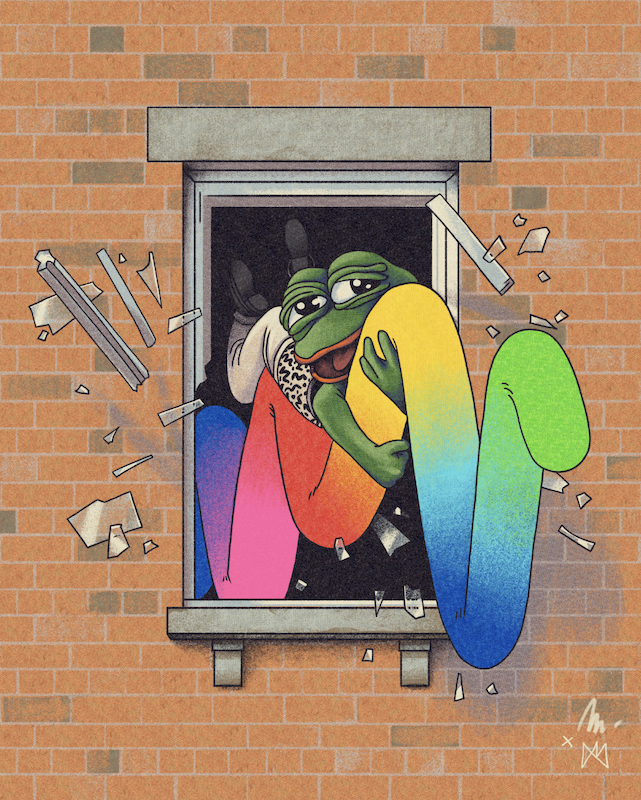
PLRL (Mannay and Anton Marrast), My Chromie does Jiggle Jiggle, 2022. Courtesy of the artistsUnlike shitcoins, which lack cultural fitness, memecoins thrive by embedding themselves in collective memory. They also bridge two eras of internet culture: Web2 and Web3.
In Web2, memes were centralized commodities. Platforms such as Reddit and Twitter distributed and monetized viral content through ads, but creators rarely benefited financially. Instead, the monetization was siloed with ad revenue going to the platforms rather than to the creators. The rise of Dogecoin exemplified this: its community funded charitable causes but lacked ownership over the meme’s financial value.
Web3 transforms memes into self-sovereign assets, while communities monetize their cultural labor. In this revolution, memes are sublimated from ephemeral content into durable cultural capital. A case in point is PEPE, which has reclaimed the Pepe meme co-opted in Web2, while enabling holders to “own” a fragment of internet history. This shift has transformed memes from online ephemera into cultural equity governed by decentralized communities rather than corporate algorithms. Genuine memecoins follow a quasi-Darwinian trajectory:
- Birth: A meme is tokenized, often as satire.
- Growth: Communities weaponize humor and nostalgia to build social capital.
- Maturity: Successful memecoins develop parasocial utility, with holders investing not just for profit, but for identity.
- Legacy: Memecoins either fade, as in most cases, or evolve into cultural symbols and folklore. Dogecoin’s endurance, for example, stems from its philanthropic mythos.
Shitcoins bypass this life cycle. Devoid of narrative, they are financial zombies — replicating only through predatory tactics and pump-and-dump schemes. Their lack of cultural scaffolding ensures their ephemerality. By contrast, memecoins inscribe internet subcultures into the blockchain, archiving 21st-century folklore. Shitcoins lack the same emotional resonance and cannot generate communal loyalty. They exploit trends without contributing to cultural narratives, divorcing crypto from its countercultural roots. There’s a difference between memes and memetic parasites. The real challenge right now is to preserve cultural integrity.
The conflation of memecoins and shitcoins threatens crypto’s cultural potential by eroding trust through exploitative tokens, while also stifling innovation and diluting creativity through low-effort clones. Volatility and scams also invite heavy-handed regulation while threatening creative freedom.

Dogecoin (DOGE) official logo, 2013
Established by Billy Markus and Jackson Palmer in 2013, Dogecoin began as a parody of Bitcoin and a nod to the Doge meme. The entire project was laced with self-deprecating humor. Yet that very satire helped it stand out amid an increasingly serious and competitive crypto landscape. Within months, a devoted community sprang up — call it a cult if you will — sponsoring causes including the Jamaican bobsleigh team at the 2014 Winter Olympics while raising money for clean water initiatives. These early philanthropic ventures reflect a communal ethos that extends beyond speculation.
According to Susan Blackmore’s The Meme Machine (1999), the success of a meme depends largely on its ability to resonate with shared cultural contexts. Memecoins accomplish this by using humor as a Trojan horse — people rally around a comedic premise, but they stay for the sense of belonging. Whether it’s tweeting absurd memes or raising funds for offbeat causes, these communities convert attention economies into tangible economic value, spinning up countless memes, retweets, and Discord channels, thus amplifying cultural momentum. Digital cross-pollination happens so fast that a memecoin’s value often spikes not because of its inherent utility but due to its relentless humor-fueled hype. Over time, if a meme resonates broadly enough (as Doge did), the coin can outgrow its initial status as a joke to become a cultural symbol in its own right.
By comparison, shitcoins lack any meaningful cultural foundation. They exist purely as speculative vehicles whose creators exploit viral marketing and FOMO without contributing anything meaningful to the broader cultural ecosystem. A memecoin’s value isemotional; a shitcoin’s istransactional.
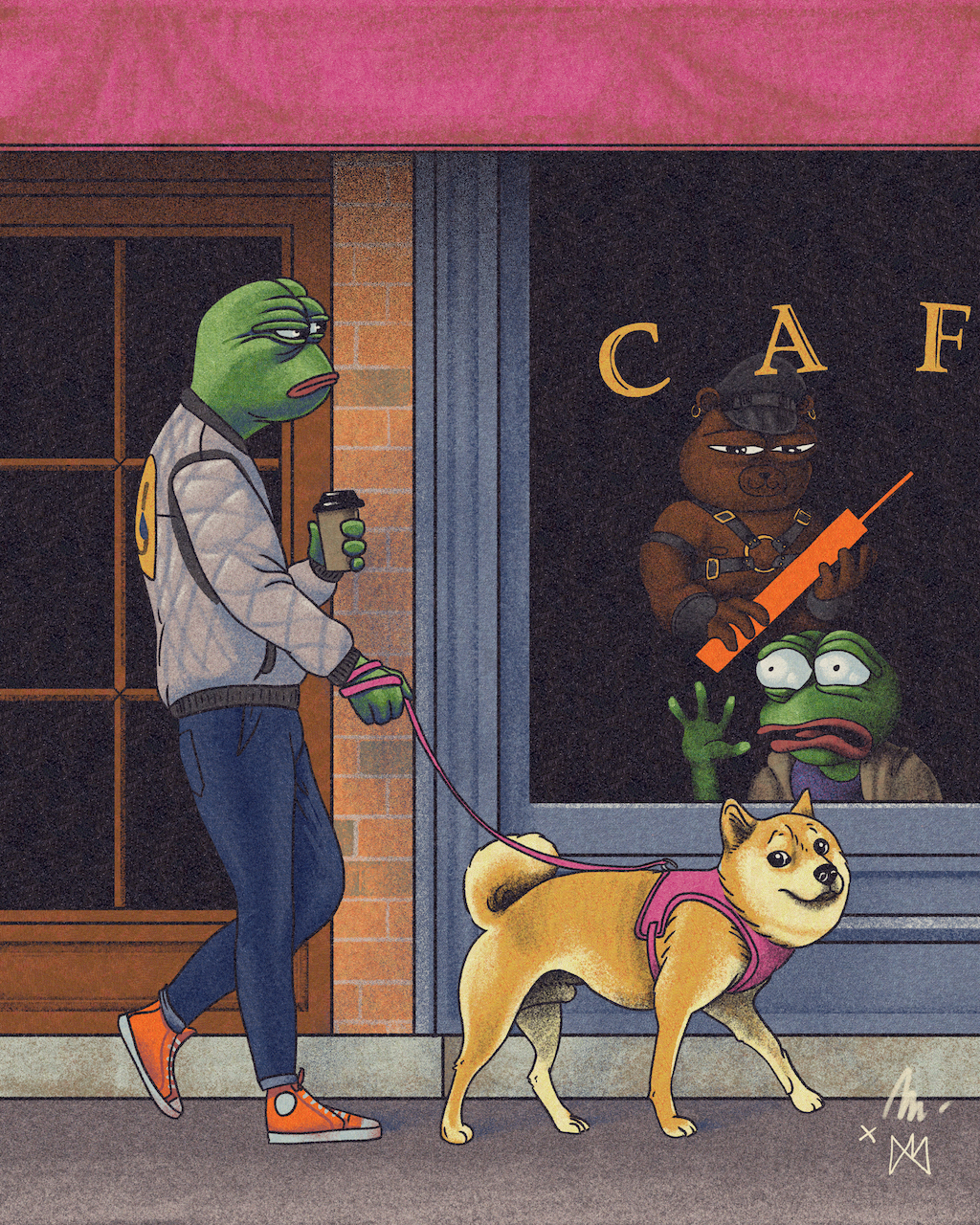
PLRL (Mannay and Anton Marrast), Dodgy style, 2022. Courtesy of the artists
The crypto market — particularly on chains with fast and inexpensive transactions like Solana — can get flooded with tokens like mushrooms after a rainstorm on platforms like Pump. But not all fungi are edible. Angel Versetti, whose company created a new dogecoin back in 2021, described the project as “a copy of a copy of a copy.” In his view, “There is absolutely nothing valuable in the code itself. It exists purely due to its community, not for any technological reasons.”
Shitcoins lack narrative depth, offering no comedic spark nor collective participation beyond speculation. The wave of so-called PolitiFi tokens from last year, including $MAGA, $BODEN, or $KAMA exemplifies how shitcoins latch onto culturally divisive topics (in these cases political) to accelerate speculation. Rather than bridging communities, such tokens weaponize political fervor for quick profit. Instead of celebrating a shared in-joke, they become chips for online gambling in a casino overshadowed by orchestrated pump-and-dump events.
A coin’s virality does not inherently grant it the status of a memecoin. Memecoins leverage cultural references or collective nostalgia. Shitcoins parasitize the same viral mechanics while lacking any deeper story. As a result, they burn out quickly.
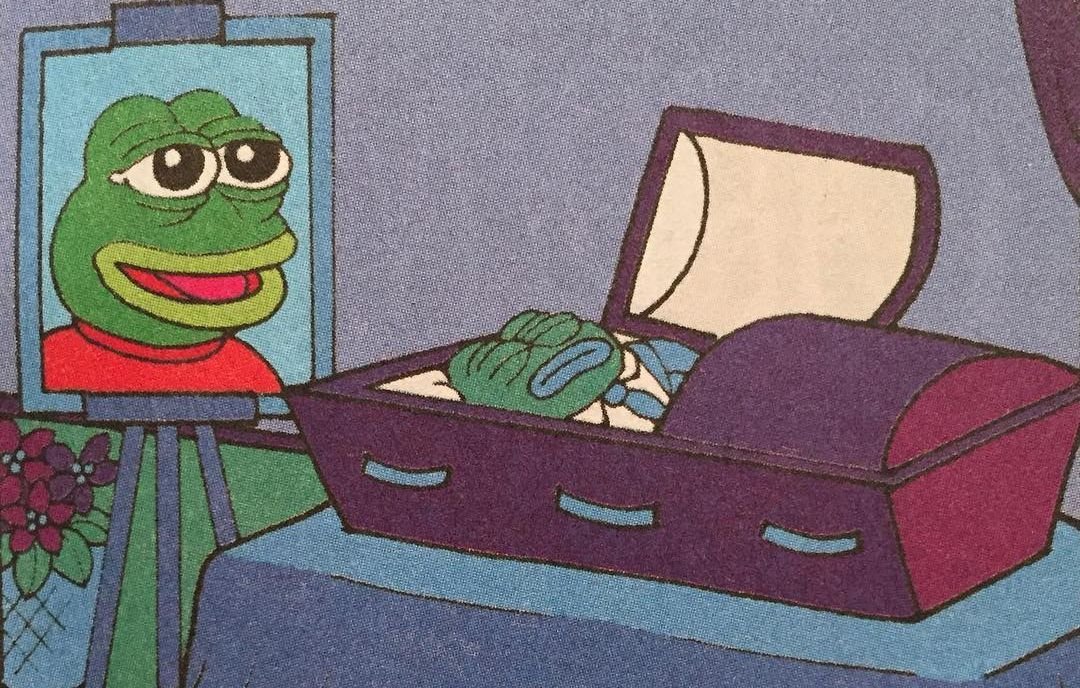
Matt Furie, Rest in Peace, Pepe, 2017. Courtesy of the artist
Historically, memecoins have served as an accessible gateway for newcomers who might be intimidated by more complex financial instruments. The conflation of memecoins with shitcoins therefore poses a real threat to the legitimacy and artistic flair of genuine memecoins. When audiences encounter a cryptosphere diluted by exploitative tokens with no cultural soul, it risks eroding trust and enthusiasm. Memecoins also mirror the collective psyche of internet subcultures — Reddit threads, Twitter memes, and Discord channels — while shitcoins hollow out the concept of a meme, reducing it to sheer virality. The result is a marketplace cluttered with digital trash, overshadowing projects that add meaning to the creative tapestry.
True memecoins animate internet culture, forging emotional resonance among global communities.
DOGE initially found success because it was fun and inclusive, reflecting the lighthearted core of internet humor. Coins such as SHIB continue that lineage, while shitcoins lack the same communal magic — the product of individuals capitalizing on brand recognition (or memetic references) they barely understand. Such actors do not “belong” to communities, they exploit them.
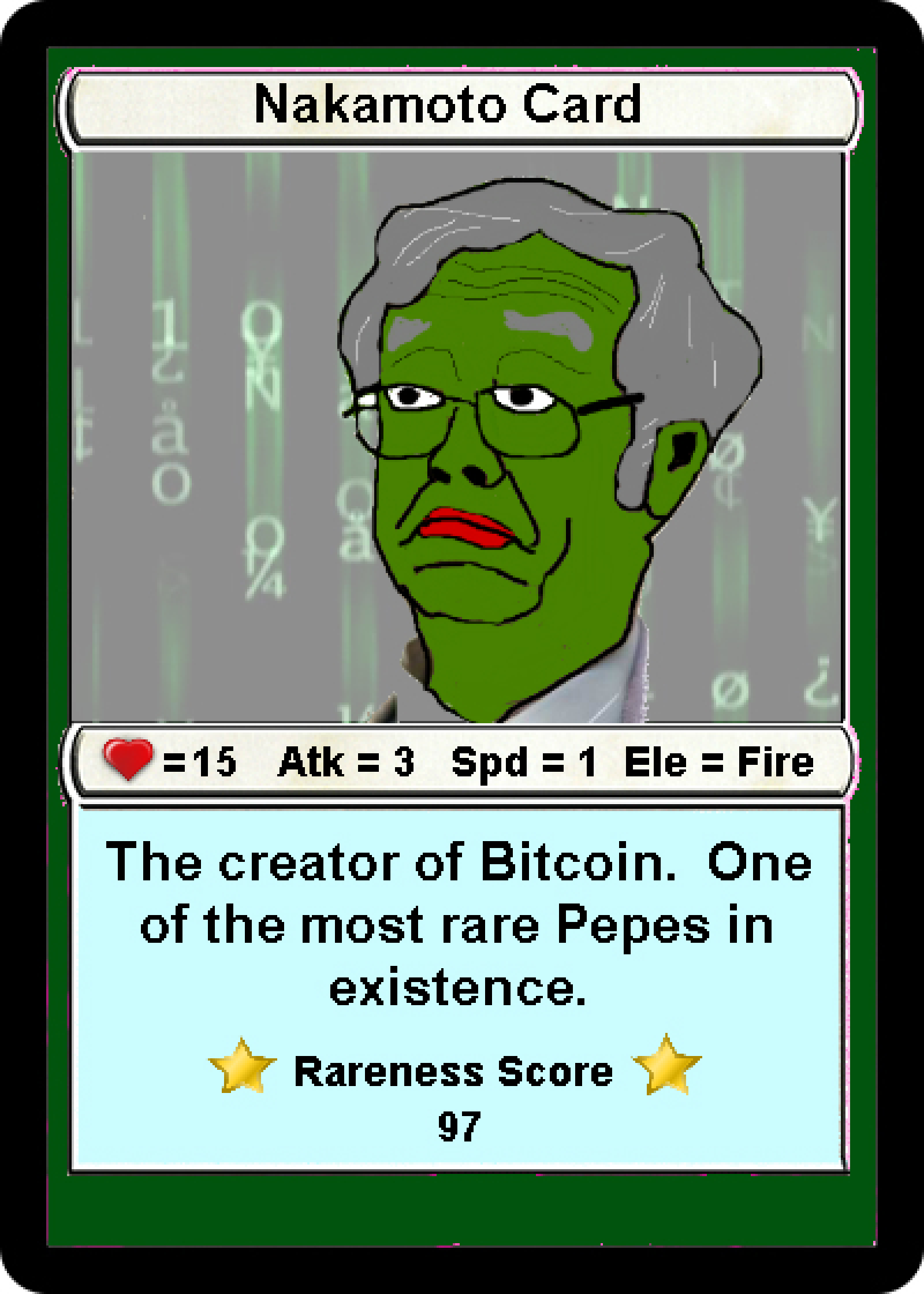
Mike,Nakamoto Card (RAREPEPE), 2016. Courtesy of the Rare Pepe Foundation
NFT projects like Rare Pepe Wallet also spring from meme culture; but where Pepe instantiates digital art as a commodity, with cultural value tied to the ownership of discrete artifacts, memecoins commodify culture as currency — they are dynamic. Though both involve community participation, the fungibility of memecoins anchors their lore in an evolving communal interaction. By contrast, the value of Rare Pepe is indelibly tied to its non-fungible substrate.
On the blockchain, what matters is how culture is encoded, whether it islivedin the case of memecoins orpreservedin the case of Rare Pepe.
Yet if we leave aside the technical differences between Pepe’s curated museum or memecoins’ living lore, both nonetheless exist in the same space of token-based culture, a world apart from the land of exploitative clones. Which is why calling shitters “memecoins” is like calling a billboard slogan art — their superficial resemblance masks a gulf in authenticity and purpose.
But memecoins are more than jokes. They are mirrors that reveal the id of internet culture. Shitcoins, by contrast, are funhouse distortions — surface without substance. To conflate the two is to misunderstand both and puncture culture in the process. Instead, let’s honor Dawkins’s definition of memes as “units of cultural transmission” and remember why we ventured into crypto in the first place: not simply to earn, but to belong.
🎴🎴🎴Protect your NFT collection and discover new artists with ClubNFTGet Started
Mannay is a multidisciplinary artist who engages with the digital and physical realms to explore themes of time, memory, and the human condition. His work spans various mediums, including digital art, with an openness to incorporating traditional forms, reflecting a commitment to exploring the interplay between different artistic expressions. Through his art, Mannay examines the transient nature of memory and the passage of time, drawing parallels between the fleeting digital world and our tangible reality. Whether encountered in a gallery or online, Mannay’s art provokes questions about how we connect with the world and each other in an age where digital and physical spaces increasingly intersect.
This article is adapted from an earlier version titled “The Cultural Soul of Memecoins.”


All Comments