


— A Comprehensive Analysis of Compute Assetization, POP Ecosystem Synergy, and SORA’s Deflationary Mechanism
I. DeFi 3.0 and the Emergence of Compute-Finance
If we look back at the past few market cycles, the criteria for “successful” Web3 projects have been strikingly uniform: high yields, rapid growth curves, and compelling narratives. These metrics tend to work well during bull markets, when abundant liquidity and strong sentiment can temporarily mask structural weaknesses. Once markets enter periods of consolidation or decline, however, those same standards quickly lose relevance.
What ultimately determines whether a protocol survives is not how fast it grows at the peak, but what remains once new capital inflows slow and sentiment fades.
The shortcomings of DeFi 1.0 have already been thoroughly validated. The “mine–sell–exit” pattern was not primarily a user problem, but a structural one—the system itself allowed and even encouraged such behavior. DeFi 2.0 attempted to extend protocol lifecycles through protocol-owned liquidity, yet without assets capable of retaining long-term value, many of these systems merely refined capital circulation without addressing its core inefficiency.
Luma International takes a fundamentally different approach. Rather than continuing to compete on headline yields, it chooses to redefine the problem entirely. From the outset, Luma focuses on three less appealing but far more critical questions:
Do returns come from real, sustainable sources?
Can value remain within the system instead of quickly leaking out?
Do participants have incentives to stay long term rather than exit after short-term gains?
Because it is designed to answer these questions, Luma International is not positioned as a yield product. It is built as a financial structure intended to remain viable over extended time horizons—measured not in days or weeks, but in hundreds of days and beyond.
II. Core Mechanism Design of Luma International
Many DeFi projects fail not because users are overly speculative, but because systems implicitly assume users will not be. Luma International operates on the opposite assumption: users will sell, will calculate, and will exit when incentives no longer align.
Rather than attempting to educate users through slogans about long-termism, Luma directly alters the cost-benefit profile of short-term behavior through its mechanism design.
Option Staking: Shutting Off the Source of Sell Pressure
All structural elements of Luma International begin with option staking. When users stake POP, they do not later receive a freely circulating POP asset. Instead, the protocol automatically generates POP/LUMA liquidity pairs, which are permanently locked into liquidity pools.
This design may appear aggressive, but its logic is straightforward: as long as POP can return to open markets, sell pressure will always exist; as long as sell pressure can concentrate, the system remains unstable.
Option staking creates a continuous, irreversible contraction on the supply side. POP transitions from a short-term trading asset into a foundational ecosystem asset. This irreversibility provides POP with a long-term value anchor that does not rely on market sentiment.
Rebase and Single-Asset Staking: Changing Behavior, Not Maximizing Yield
On the demand side, Luma International does not attempt to compete via higher headline APYs. Instead, it employs a Rebase-based auto-compounding mechanism that embeds time directly into the return structure.
Rewards are no longer distributed in lump sums but are continuously compounded. Each withdrawal carries an explicit cost, making frequent interactions mathematically inefficient. As a result, short-term arbitrage loses appeal naturally.
The significance of Rebase lies not in the size of the compounded figures but in its behavioral impact. When returns are tightly coupled with time, long-term participation becomes the optimal strategy rather than a forced choice. LUMA single-asset staking complements this structure as a demand-side stabilizer, balancing the supply-side contraction created by option staking.
Sell Pressure as a Variable to Be Absorbed
Luma International does not assume users will refrain from selling. Instead, it treats selling as inevitable and manages it institutionally rather than emotionally.
Linear release schedules prevent concentrated sell-offs, early withdrawals incur burn costs, and these fees are not retained as protocol revenue but are systematically redirected toward buybacks. As a result, sell pressure is no longer a systemic risk—it becomes a functional input.
The more frequently the protocol is used, the stronger the buyback activity becomes. This demand does not depend on market sentiment but on protocol utilization itself.
III. Luma International’s Role Within the POP Ecosystem
No financial structure can exist independently of its environment. One of Luma International’s core strengths is that it is not deployed in isolation but operates within the broader POP ecosystem.
Within this ecosystem, responsibilities are clearly delineated:
POP Chain provides settlement, security, and scalability;
PopSwap serves as the primary liquidity infrastructure;
Nivex connects broader trading demand and external capital;
PunkVerse, PopGame, and PopMe deliver real application scenarios;
Pop X accelerates capital expansion and ecosystem growth.
In this system, Luma functions not as a discrete feature but as the financial execution layer. It converts incoming capital into long-term structure, transforms short-term behavior into absorbable processes, and turns application growth into reusable financial infrastructure.
As the POP ecosystem expands, new applications do not need to build financial systems from scratch—they inherit the structure already established by Luma. The result resembles a flywheel: each component reinforces the others, amplifying overall growth rather than diluting value.
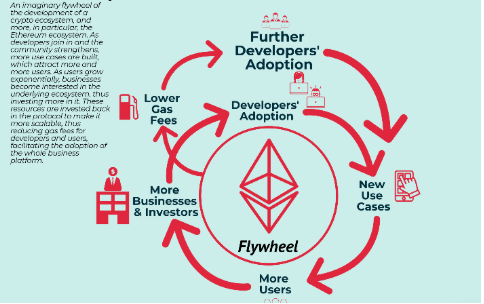
This is why Luma’s value scales with ecosystem expansion rather than being diluted by it.
IV. The Economic Model and Price Logic of SORA
Viewed purely through price action, SORA can easily be mistaken for “another fast-rising token.” Structurally, however, its role within Luma International is clearly defined. SORA is not an incentive token designed to attract participation; it functions as a value-absorption and deflationary adjustment layer.
This positioning explains why SORA’s design diverges sharply from traditional speculative token models. Its total supply is fixed at 210 million tokens, all initially injected into liquidity pools. The system enforces continuous automatic burning, and every market sell order triggers immediate destruction. Direct purchases are not supported—users can only obtain SORA through ecosystem participation, sharply limiting speculative inflows.
Most importantly, SORA is tightly bound to LUMA’s reward release mechanism. A substantial portion of burn fees generated during LUMA withdrawals is systematically used to repurchase and destroy SORA. As long as the protocol operates and rewards are generated, buy pressure for SORA persists. This demand does not arise from sentiment but from protocol usage.
The outcome is structurally clear: SORA’s buy pressure is continuous and systemic, while sell pressure is one-off and irreversible. As participation and reward volume increase, SORA’s burn rate accelerates naturally, with deflation driven internally rather than by narrative momentum.
Empirical data reflects this design. Since Luma International’s launch on December 14, SORA has burned approximately 161,076,068.906 tokens—about 76.7% of its total supply—leaving only 48,923,931.094 tokens (23.3%) in circulation, with deflation ongoing. Over the same period, SORA’s price rose from roughly $0.00025 to approximately $0.03, representing a nearly 120× increase, with upward momentum still continuing.
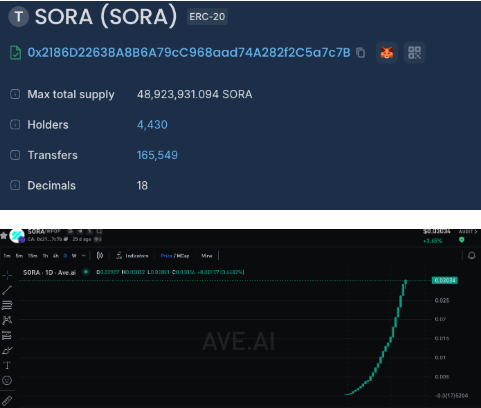
This price movement should not be interpreted as a short-term emotional surge. It is the structural result of rapid supply compression. At a higher level, POP, LUMA, and SORA form an interdependent system: POP is transformed into long-term locked assets via option staking, LUMA carries yield and compounding functions, and SORA absorbs excess value generated by system operations. Together, they complete the financial network Luma International is designed to build.
V. Luma International’s Long-Term Direction
No project is guaranteed to succeed. However, Luma International significantly reduces failure probability across several key dimensions: sustained supply contraction, institutionalized management of sell pressure, internally generated buy demand, behavior aligned toward long-term participation, and an ecosystem environment that amplifies rather than constrains growth.
It makes no promises of explosive price action or guaranteed outcomes. Instead, it focuses on something more difficult and ultimately more important: constructing a system that is far less likely to collapse under its own incentives.


All Comments