Cointime

Download App
iOS & Android

DeepSeek is Paving the Way for Web3 AI

Cointime Official

From veradiverdict by Paul Veradittakit

DeepSeek started as a side project from the hedge fund High-Flyer, boot-strapped by a few thousand Nvidia GPUs. They shocked the world when DeepSeek R1, which took over a billion dollars, 2,000 Nvidia H800 GPUs, and over 55 days, beat benchmarks held by OpenAI’s o1 model which required hundreds of billions of dollars to develop along with over 16,000 advanced GPUs.

DeepSeek R1 has 671 billion parameters while GPT-4 has 1.76 trillion parameters. OpenAI’s large models likely require thousands of GPUs for training and high-end clusters for inference while DeepSeek 7B & 67B can be run on consumer-grade hardware (a few A100 or H100).
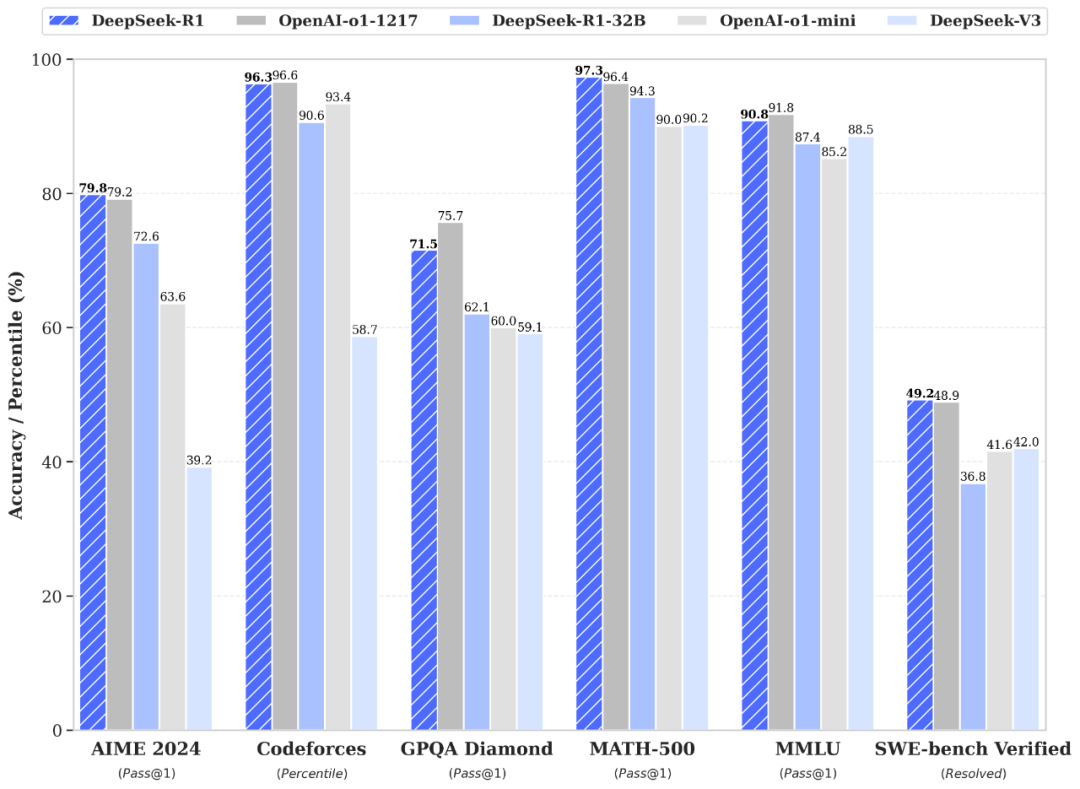
DeepSeek-R1 Versus the Competition

As a response, Nvidia’s stock price dropped 18% (loss of $600 billion in market value). The idea that AI models must be closed-source and have loss-leading computational costs to succeed is crumbling.

The Existing Decentralized AI Narrative
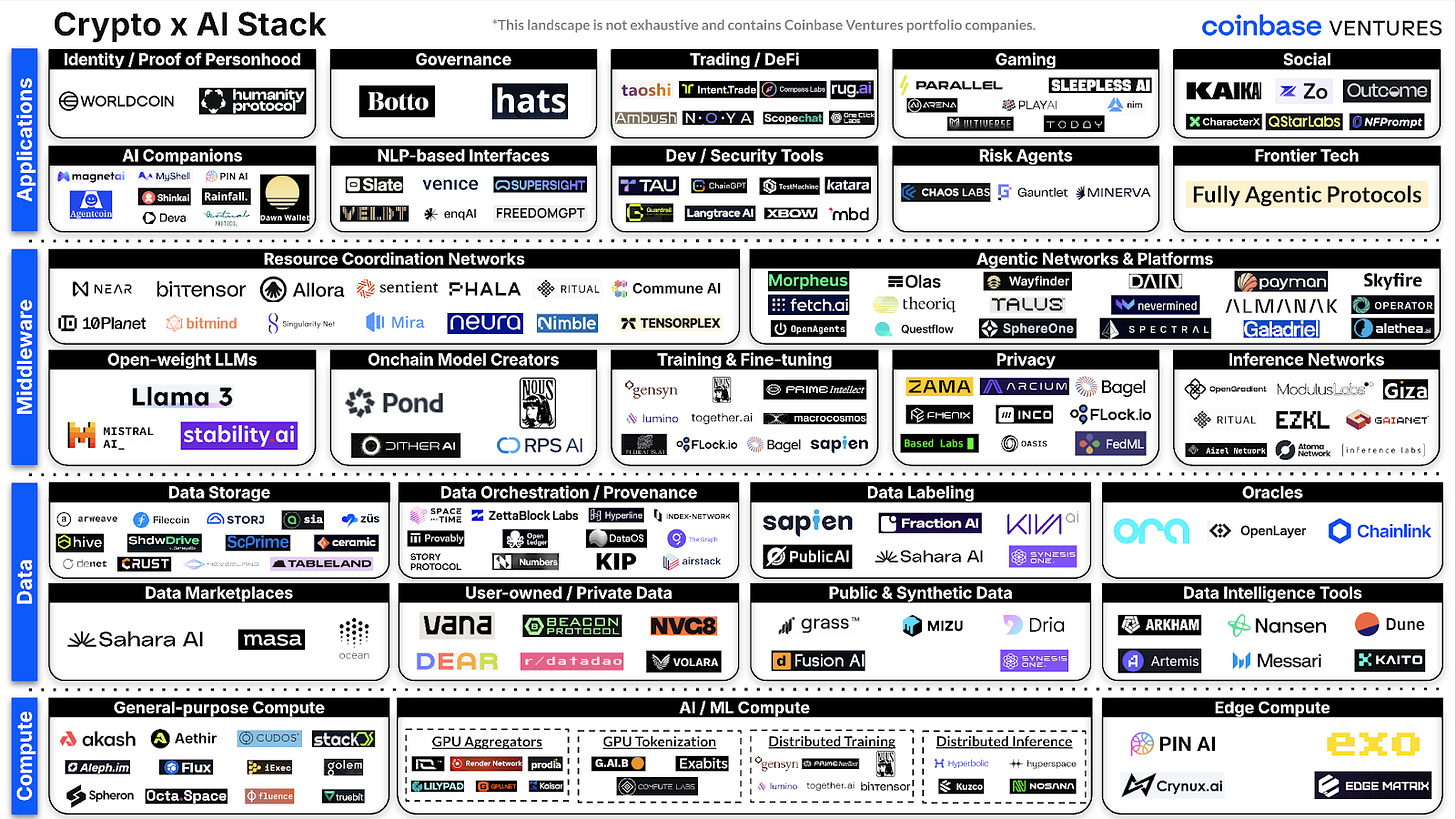
Demystifying the Crypto x AI stack

AI x Crypto projects believed that crowdsourced, public, decentralized AI would eventually create better models than their centralized counterparts.

This had thus far not been true, as the highest-performing models had come from closed-source companies like OpenAI and Anthropic. Crypto x AI companies have adapted to this by specializing in infrastructure rather than model-building.

For example, GPU marketplaces like Akash, Render, IoNet, and Exabits have developed sustainable revenues. Companies that allow users to share their network bandwidth like Grass and Gradient have found their niche in supplying services, like distributed web scraping, to web2 clients. Storage networks like Arweave, Filecoin, and Ocean have also done well by being the platforms on which these projects are built. Supply networks have flourished because of their ability to tailor their cheaper and more scalable services to off-chain customers.
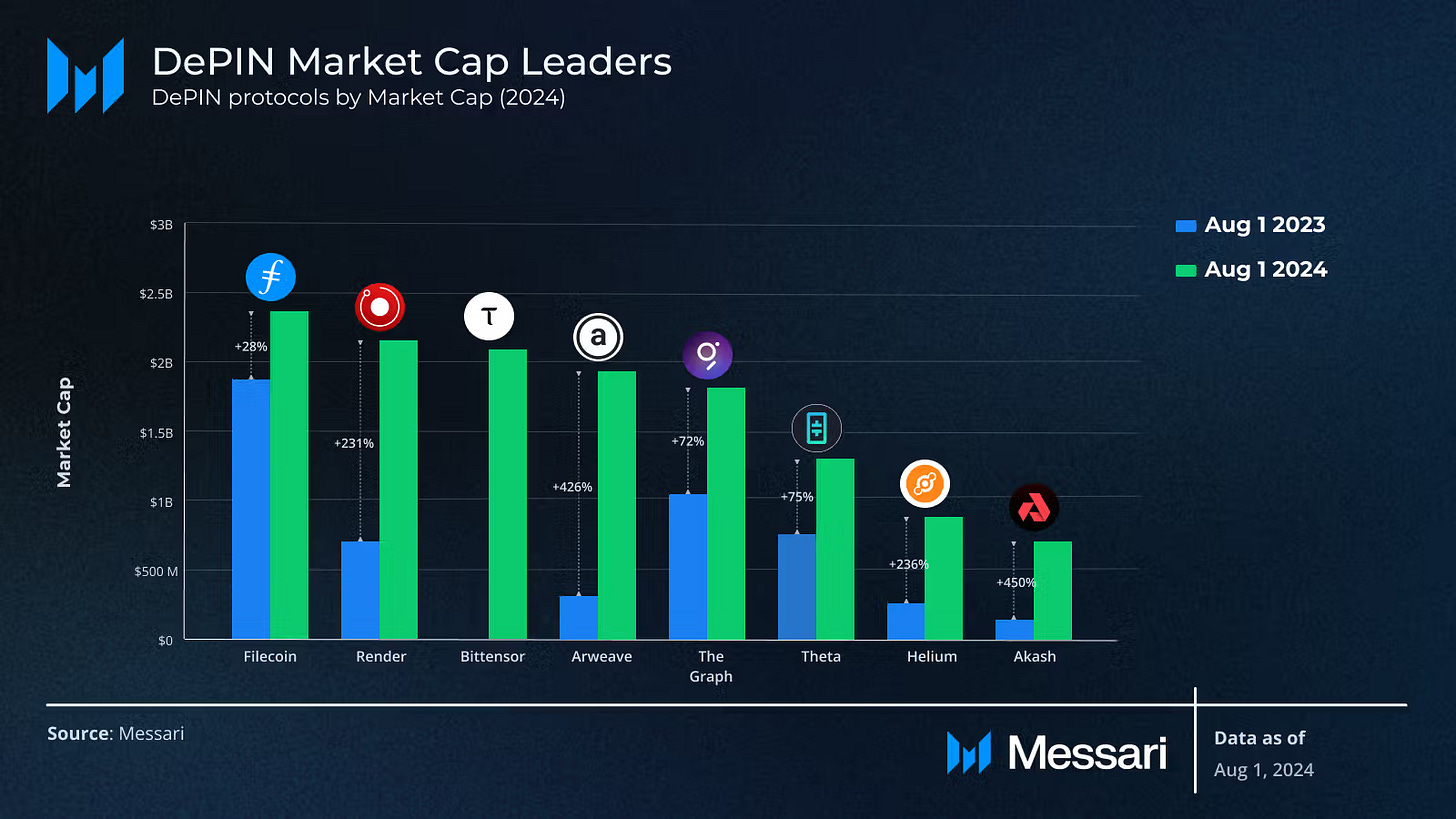
Messari Report on DePin and AI x Crypto

Now that GPU and financial resources are no longer limitations to creating quality AI models, web3 AI companies can focus on replicating DeepSeek’s effectiveness while offering new benefits like modality, user ownership, censorship resistance, privacy, and more.

Pantera has funded companies like SaharaAI and Sentient that believe they could match or exceed the performance of traditional AI companies while being competitive by offering other services.

Sahara AI, for example, is building a platform where anyone can monetize AI models, data sets, and applications in a collaborative space. Users can permissionlessly train models manually, provide training data, and create tailored AI models with no-code tools. They are only able to cater to all these stakeholders (AI developers, users, resource providers) because everything is tied to their native Sahara blockchain. I wrote more about why we invested in them in a previous blog post here.

The Future of AI will be built with Web3 Infrastructure

DeepSeek has shown that performant AI models do not have to be built closed source with loss-leading computational costs. I am excited to see AI models developed with the full web3 AI stack in the coming year.

I believe that supply-side projects will continue to grow, while consumer-facing projects can begin competing with web2 competitors by taking advantage of their ability to build networks that invite community involvement. For example, users willingly sign up to train web3 models and actively experiment with them through hackathons and grant programs. Sahara AI and Sentient have begun setting up systems for users to train models based on the users’ expertise. These platforms will allow users to pick and choose the data and integrations to whatever they are applying the model towards. Sahara already has over 780,000 users on their waitlist while Sentient has over 1 million interactions.

In the near future, I believe that the most performant AI models will be built on-chain.

- Paul Veradittakit

Comments

All Comments

Recommended for you

  • US Spot Bitcoin ETF Sees $89.7 Million Net Outflow Yesterday

    On April 29, according to monitoring data from Farside Investors, the US spot Bitcoin ETF experienced a net outflow of $89.7 million yesterday.

  • US Spot Ethereum ETF Sees Net Outflow of $21.8 Million Yesterday

    On April 29, according to monitoring data from Farside Investors, the US spot Ethereum ETF experienced a net outflow of $21.8 million yesterday.

  • BTC Surpasses $77,000

    Market data shows that BTC has surpassed $77,000, currently priced at $77,003.63, with a 24-hour increase of 0.23%. The market is highly volatile, so please ensure proper risk management.

  • ETH Surpasses $2300

    Market data shows that ETH has surpassed $2300, currently priced at $2300.38, with a 24-hour increase of 0.67%. The market is experiencing significant volatility, so please ensure proper risk management.

  • NVIDIA Executive to Discuss Physical AI Collaboration with Samsung and SK Hynix

    On April 29, according to Yonhap News Agency citing industry sources, a key executive from NVIDIA (NVDA.US) will meet with counterparts from Samsung Electronics and SK Hynix on Wednesday to discuss collaboration in the field of physical artificial intelligence. Madison Huang, Senior Director of Product and Technology Marketing for NVIDIA's Physical AI platform, is visiting South Korea to expand partnerships in this area. Her team is responsible for NVIDIA's Omniverse development platform aimed at physical and industrial AI simulation applications, as well as supporting the company's initiatives in industrial digitalization and physical AI strategies through its robotics platform. Samsung Electronics and SK Hynix are major suppliers of memory chips used in NVIDIA's AI chips. NVIDIA is also collaborating with these South Korean chip manufacturers to deploy large-scale GPU clusters to strengthen South Korea's national AI infrastructure and promote the application of AI in robotics, factories, and industrial platforms. (Dongxin News Agency)

  • A-shares Trading Volume Exceeds 1 Trillion Yuan

    On April 29, the trading volume of the Shanghai and Shenzhen stock exchanges surpassed 1 trillion yuan, a decrease of nearly 120 billion yuan compared to the same time the previous day. (Dongxin News Agency)

  • China's Token Call Volume Expected to Reach 211 Trillion by 2025, Exhibiting Exponential Growth

    On April 29, the 'National Data Resource Survey Report (2025)' was released at the 9th Digital China Construction Summit. The report indicates that China's data resources are increasingly empowering the innovative development of artificial intelligence. A 'token' is the smallest unit of information obtained by splitting data for efficient processing by large AI models. By the end of 2025, the national average daily token call volume is expected to grow from over 1 trillion at the beginning of the year to 100 trillion by the end of the year, demonstrating exponential growth; the total token call volume for the year is projected to reach approximately 211 trillion. (Dongxin News Agency)

  • Goldman Sachs Reportedly Bans Hong Kong Employees from Using Anthropic Claude Model

    On April 29, the Financial Times reported, citing informed sources, that Goldman Sachs has prohibited its bankers in Hong Kong from using Anthropic's AI model, Claude. Goldman Sachs employees in Hong Kong have been unable to access the model through the internal AI platform for several weeks. An Anthropic spokesperson stated that its Claude model has never received official 'support' in Hong Kong, but did not provide further comments. It is understood that after negotiating with Anthropic, Goldman Sachs concluded, based on a strict interpretation of its contract, that employees in Hong Kong are not allowed to use any products from Anthropic. However, this does not include contracts with other AI providers such as OpenAI.

  • White House Plans to Restore Cooperation with Anthropic

    According to AXIOS, the White House plans to restore cooperation with Anthropic.