


April 15 (Cointime) - Bitrue, a cryptocurrency exchange based in Singapore, revealed via Twitter that it has fallen victim to a security breach. This incident enabled hackers to access one of its hot wallets and steal multiple crypto assets worth an estimated $23 million.
The company said that the attacker managed to steal a total of $23 million in Ethereum (ETH), Shiba Inu (SHIB), Quatn (QNT), Polygon (MATIC), GALA, and Holo (HOT).
1/4: We have identified a brief exploit in one of our hot wallets on 07:18 (UTC), 14 April 2023. We were able to address this matter quickly and prevented the further exploit of funds. We take this matter seriously and are currently investigating the situation. pic.twitter.com/QioPHSB2DM
— Bitrue (@BitrueOfficial) April 14, 2023
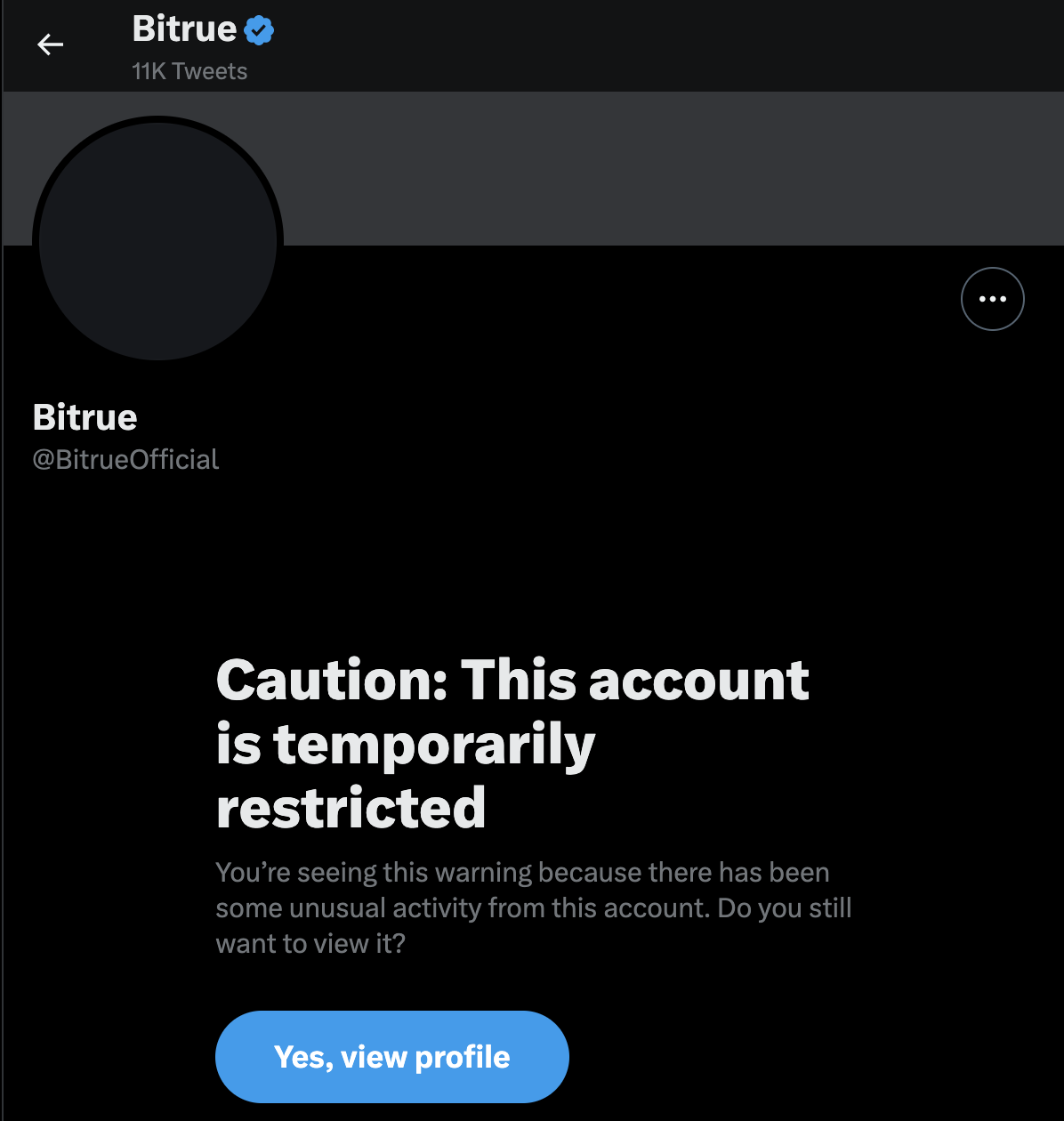
Furthermore, Bitrue's Twitter account has been restricted for reasons that remain unclear. As of the time of reporting, the account has not yet been restored.
Blockchain security and analytics firm PeckShield estimates that the hacker exchanged 173,000 QNT, 22.55 billion SHIB, 46.4 million GALA, and 310,000 MATIC for approximately 8,540 ETH, before transferring the ill-gotten gains to this Ethereum wallet.
#PeckShieldAlert $QNT has dropped -11% within 3 hours
— PeckShieldAlert (@PeckShieldAlert) April 14, 2023
Bitrue Drainer-labeled address swapped 173K $QNT, 22.55B $SHIB, 46.4M $GALA and 310K $MATIC for ~8,540 $ETH
Bitrue Drainer received ~$22M worth of cryptos (~320 $ETH, 173K $QNT, 172.55B $SHIB, 46.4M $GALA, 756.15M $HOT and… pic.twitter.com/BLTCL5Kvz8
A hot wallet is a cryptocurrency wallet that is connected to the internet, allowing for easy access and real-time transactions. These wallets are used by individuals and businesses, such as cryptocurrency exchanges, to store and manage their digital assets.
Despite their convenience, hot wallets are more vulnerable to attacks compared to cold wallets, which are offline storage solutions. Since hot wallets are connected to the internet, they are exposed to potential threats, such as:
- Hacking: Cybercriminals may exploit vulnerabilities in the wallet's software or the user's device, gaining unauthorized access to the wallet and its funds.
- Phishing: Scammers can trick users into revealing their wallet credentials through deceptive websites, emails, or messages.
- Malware: Malicious software can be installed on the user's device, compromising the wallet's security and enabling attackers to steal funds.



All Comments