

Token generation events (TGEs) are increasingly criticized as exit ramps for crypto founders, leaving behind blockchains with little real activity.
Projects often debut with thin circulating supply and inflated valuations, giving genuine supporters little chance to see sustainable returns. Industry sources argued that low floats and automated market makers (AMMs) help sustain prices temporarily, but once vesting unlocks begin, sell pressure typically overwhelms the market.
Some tokens spike at launch on hype and scarcity, but most slide steadily as supply enters circulation.
“It’s a never-ending cycle,” Brian Huang, co-founder of crypto management platform Glider, told Cointelegraph. “A new chain becomes irrelevant, talent leaves, and people left behind are stuck with a chain kept afloat by market makers and AMMs.”
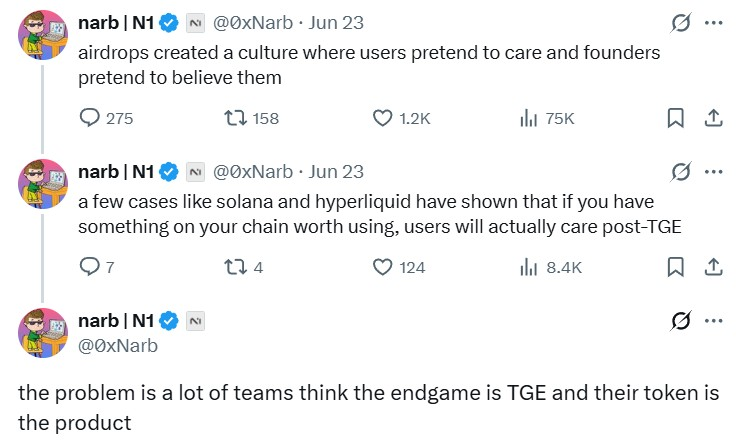
The rising number of orphan chains post-TGE
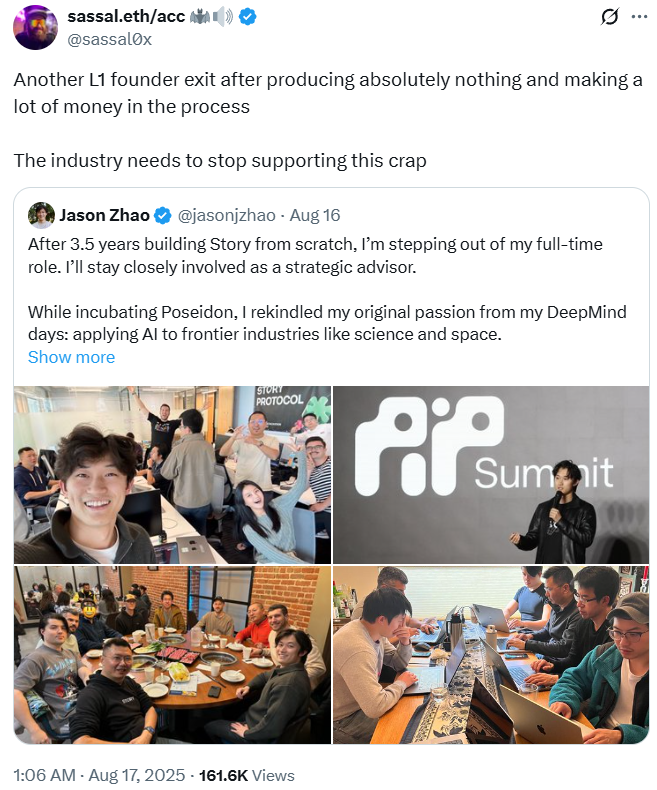
In the past year, several founders have faced backlash for leaving their projects soon after token launches.
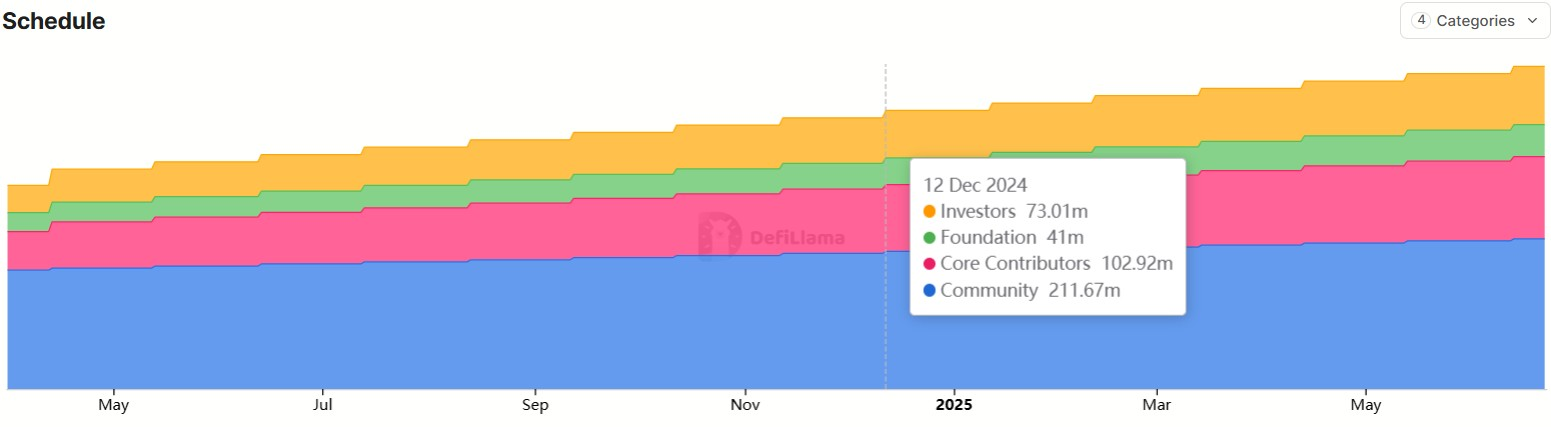
Jason Zhao, founder of Story Protocol, stepped away from his full-time role roughly six months after the token went live. Early reports suggested his exit coincided with a half-year vesting cliff, though Story denied this, noting that core contributors are subject to a one-year cliff within a four-year vesting schedule.
“In reality, the token launch is supposed to be the start of the project,” Huang said, questioning the intent behind such early departures.
Aptos founder Mo Shaikh also resigned on Dec. 19, more than two years after the Aptos token and mainnet launch. While his exit was not as immediate as Zhao’s, critics noted that it came soon after a major vesting milestone.
Sterling Campbell, an investor at Blockchain Capital, acknowledged that some founders treat token launches as cash grabs but argued the issue is broader.
“There’s also founder fatigue, misaligned incentives and, in some cases, the brutal realization that product-market fit isn’t there,” Campbell told Cointelegraph.
“The dynamic feels less about individual malice and more about a system that makes it easy to exit early.”
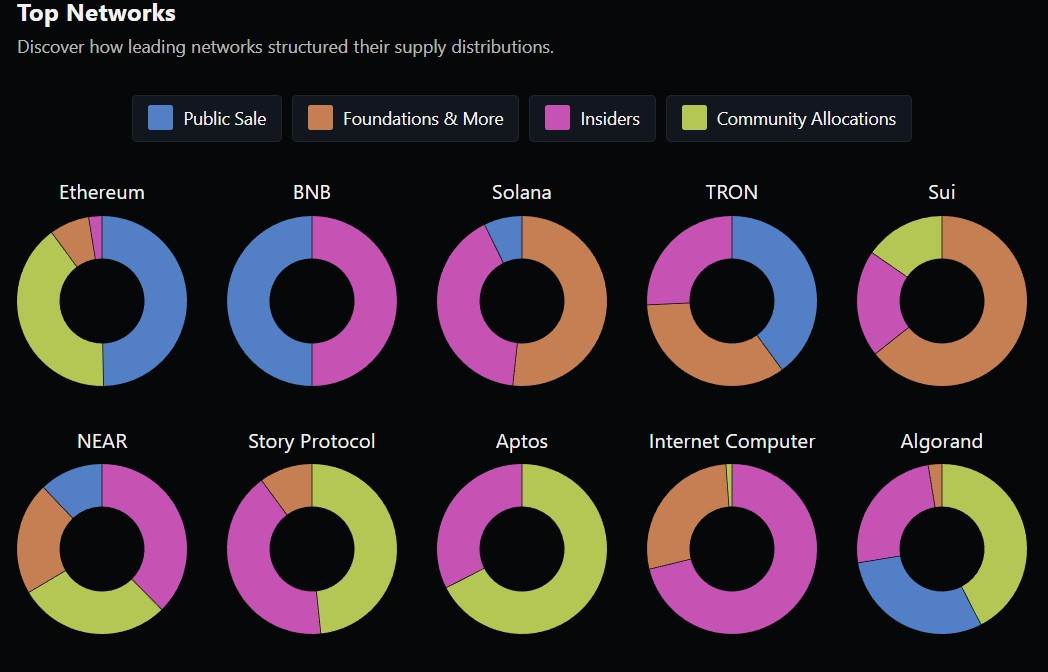
Researchers at Messari reported that token vesting matters for a token’s performance. An analysis of 150 major tokens found that tokens with higher insider allocations performed worse in 2024.
Do post-TGE exits show there are too many blockchains?
The flood of token generation events has raised a broader question about whether the industry needs more blockchains at all. What was once the launchpad for ambitious new networks is now criticized as the end goal in itself, while the blockchain it’s supposed to support fades into the background.
In a recent interview with Cointelegraph, Altius Labs co-founder Annabelle Huang (no relation to Brian Huang) said that the industry does not need more general-purpose blockchains like Ethereum or Solana. However, she added that there is room for new networks built for specific use cases.
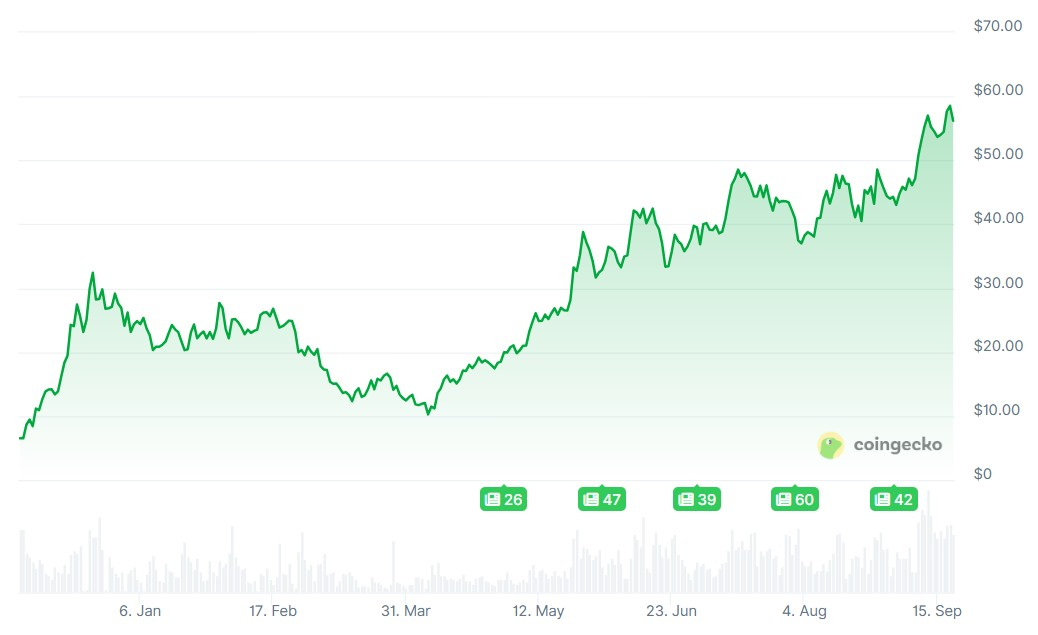
Some projects highlight this shift. Hyperliquid, for instance, gained traction not by promising a new general-purpose chain but by building a derivatives exchange, then verticalizing into its own chain. By contrast, many new layer 1s and layer 2s launch with no breakout app to justify their existence at TGE.
“We’re seeing a lot of investment flow into Hyperliquid apps and other projects that already have real usage. By contrast, many of the new L1s and L2s are in a wait-and-see phase,” said Brian Huang of Glider.
Why new chains continue to draw venture capital is less clear. Solana once justified its launch with a speed advantage over Ethereum, but most newer blockchains now perform at a similar level. As a result, investors may gravitate toward networks with established distribution. At the same time, competition is intensifying as corporate-led chains from companies like Stripe and Robinhood enter the market already equipped with massive user bases.
“They accelerate distribution and normalize crypto for mainstream users, [but] they risk diluting the ethos of permissionless networks,” Campbell said.
“There is a very real risk that Robinhood leverages the open-source network we’ve built over the past 10 years and eats everyone’s lunch.”
TGE and vesting schedules weigh on long-term supporters
The optics are especially fraught when a founder exits a multimillion-dollar project soon after a TGE, even if tokens are subject to vesting schedules designed to stagger insider sales.
Some in the community note that vesting terms are public and that investors should know the risks before buying in.
The vesting terms also create an uphill battle for the genuine supporters of many modern chains. A May 2024 Binance Research report estimated that $155 billion worth of tokens are scheduled to unlock by 2030. Without sufficient demand to absorb them, the steady release of supply risks adding persistent selling pressure to the market.
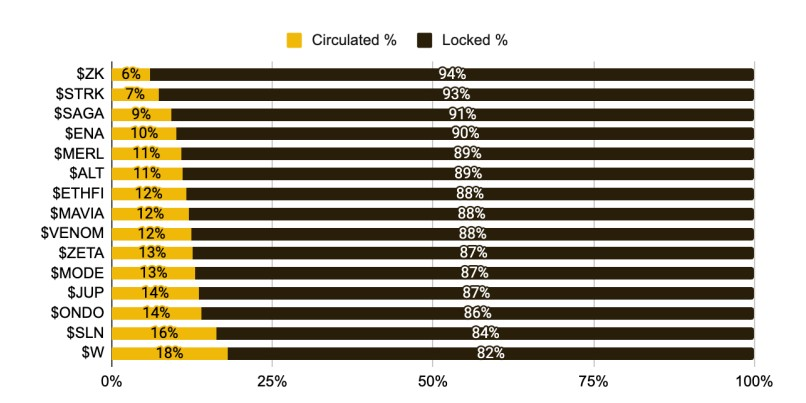
That tension points to a deeper problem with TGEs themselves. Designed as fundraising mechanisms, they increasingly function as liquidity events that reward insiders while leaving ecosystems without their founding stewards.
Unless projects can demonstrate durable usage beyond their launch, the pattern of inflated valuations, early exits and fading blockchains is likely to continue.


All Comments