

Cointime

Download App
iOS & Android

$18.6B in Bitcoin options expire Friday: Should traders prepare for $75K BTC?

Key takeaways:

  • Over 90% of Bitcoin call options may expire worthless if the price fails to break above $71,000 by Friday.
  • Traders fear rising inflation and worsening credit conditions as the US and Israel-Iran war continues.

Bitcoin  has been stuck in a narrow range between $67,700 and $71,600 over the past week, closely following how the US stock markets reacted to the US and Israel-Iran war. Traders have high hopes that the upcoming $18.6 billion Bitcoin monthly options expiry on Friday could provide the bullish momentum needed to break above the $75,000 level.
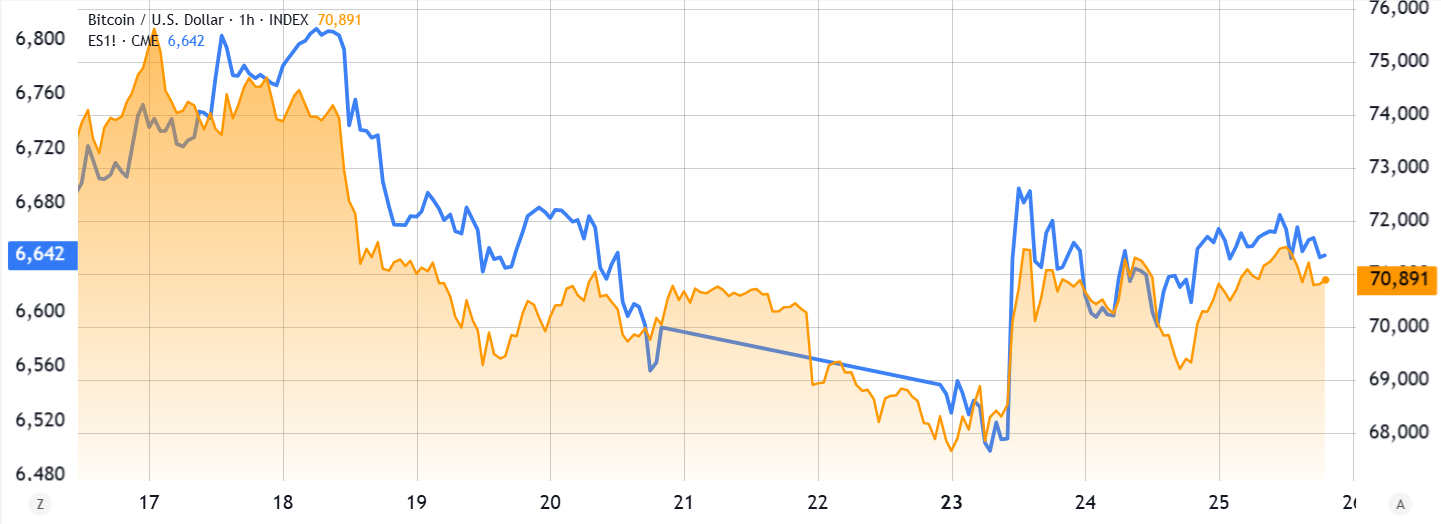
  S&P 500 futures (left) vs. Bitcoin/USD (right). Source: TradingView


The Bitcoin call (buy) options dominate March’s total open interest, totaling $11.2 billion, while put (sell) instruments stood 34% lower at $7.4 billion. However, this advantage means little given that Bitcoin has failed to sustain levels above $74,000 for the past seven weeks. Investors fear that inflation will remain a concern as WTI oil prices sustained levels above $90.

Economic uncertainty helps bears dominate the quarterly Bitcoin options expiry

Initial signs of cracks in the US economy emerged after private credit funds limited redemptions amid concerns of deteriorating loan quality. The $3 trillion sector has been under scrutiny after asset managers Ares Management, Apollo Global Management, Blue Owl Capital, and Cliffwater were forced to halt or restrict withdrawals in recent weeks, according to CNBC.

Broader macroeconomic uncertainty might be precisely what bears need for Bitcoin's quarterly expiry. To better assess the forces driving Bitcoin’s price ahead of Friday’s event at 8:00 am UTC, analysts are looking at what prices the call and put options were placed.

Deribit holds a clear lead with a 76% market share with $14.1 billion in open interest, followed by OKX with 7.1% and CME at 6.6%. Despite the greater demand for call options, Bitcoin bulls at Deribit were overconfident, placing the majority of their bets on $90,000 and higher levels.
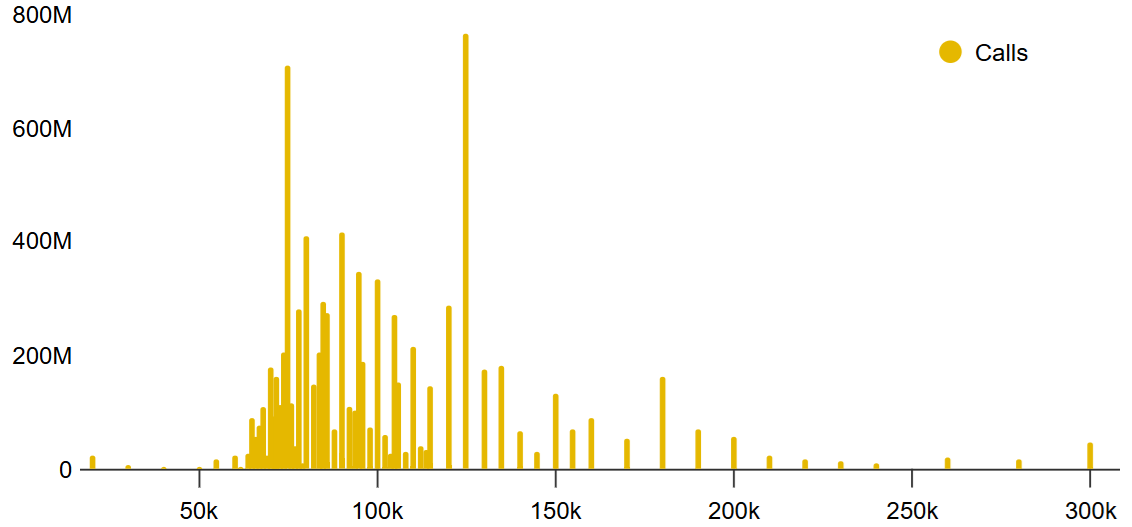
Open interest for March 27 Bitcoin call options at Deribit, USD. Source: Deribit


Only $2 billion of the call options at Deribit were placed below $78,000, meaning 77% of those instruments will likely become worthless on Friday. This suggests that Bitcoin bulls did not anticipate a quarterly expiry at $71,000, a price that would invalidate 92% of the call options open interest.

Part of those positions might have been placed before February, when Bitcoin was trading above $86,000, which explains the heavy positions far above current price levels.
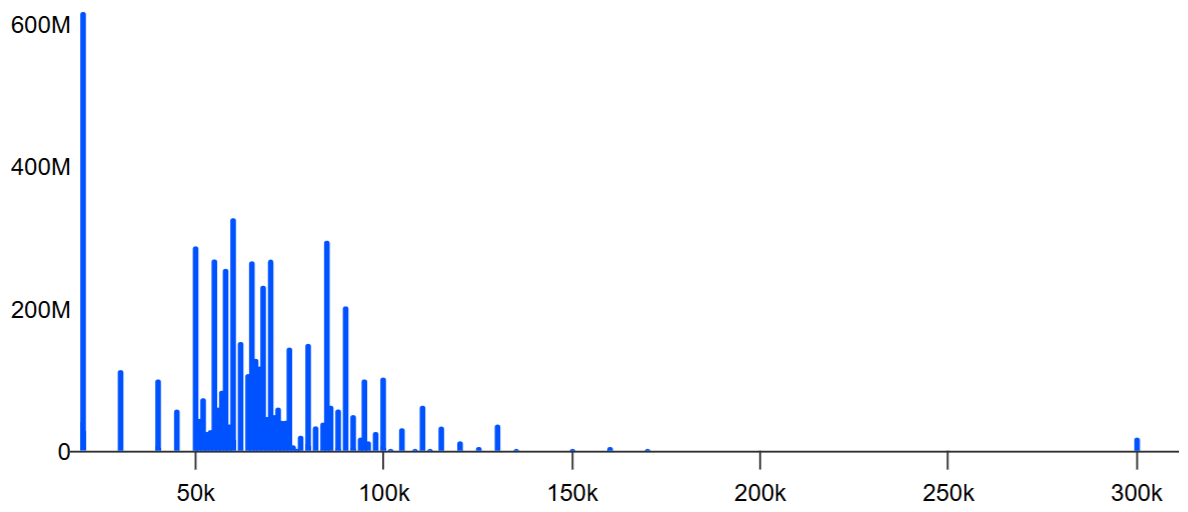
Open interest for March 27 Bitcoin put options at Deribit, USD. Source: Deribit


The put options open interest at $66,000 or higher stood at $2.2 billion at Deribit, meaning 40% of those instruments remain in play for Friday’s expiry. Therefore, at first sight, there is a slight advantage for the put options, but a more granular view is required to understand at what level the situation might change.

Below are four probable outcomes for Friday’s BTC options expiry at Deribit based on current price trends:

  • Between $65,000 and $69,000: The net result favors the put (sell) instruments by $1.8 billion.
  • Between $69,001 and $72,000: The net result favors the put (sell) instruments by $950 million.
  • Between $72,001 and $75,000: The net result favors the put (sell) instruments by $430 million.
  • Between $75,001 and $78,000: The net result favors the call (buy) instruments by $790 million.

Ultimately, Bitcoin bulls need a 6% rally from the present $70,900 level to shift the outcome of the March options expiry in their favor.

Comments

All Comments

Recommended for you

  • Trump Urges Iran to 'Get Serious' Before It's 'Too Late'

    March 26th News: U.S. President Trump stated that Iran should "get serious" as soon as possible, before it is "too late." (Jinshe)

  • Sailor Injured Aboard USS Lincoln During Operations in Arabian Sea

    March 26th news: The U.S. Navy's Fifth Fleet announced today that a U.S. Navy sailor was injured on March 25th while the aircraft carrier USS Lincoln was conducting flight operations in the Arabian Sea. The injury is non-combat related and not life-threatening. The sailor has been transferred ashore for further medical care and is in stable condition. The specific circumstances of the incident are under investigation. The USS Lincoln Carrier Strike Group continues to conduct strike missions in support of Operation Epic Fury. (Jins10)

  • European Parliament Approves EU-US Trade Deal

    On March 26, the European Parliament held a plenary vote on the EU-US trade agreement, which was ultimately passed. On March 19, the European Parliament's Committee on International Trade voted 29 in favor to resume the legislative approval process for the EU-US trade agreement. The EU and the US reached a trade agreement in July 2025. In exchange for the US imposing a 15% tariff on most EU goods exported to the US, the EU needs to abolish tariffs on industrial products from the US and provide preferential market access for American seafood and agricultural products. (CCTV News)

  • Trump: NATO Has Done Nothing on Iran

    On March 26, U.S. President Trump stated: "NATO countries have done absolutely nothing regarding this crazy country, Iran, which is now militarily destroyed. The United States does not need any help from NATO, but 'never forget' this very important moment!" (Jins10)

  • OECD: Fed Expected to Keep Interest Rates Unchanged in 2026 and 2027

    OECD: The Federal Reserve is expected to maintain interest rates unchanged in 2026 and 2027. (Jin Shi)

  • CAS Launches Next-Gen Open-Source Chip and System R&D

    Beijing, March 26th – At the RISC-V Ecosystem Technology Forum, part of the Zhongguancun Forum Annual Conference, the Chinese Academy of Sciences (CAS) officially announced a series of significant achievements in key RISC-V technologies, industry-academia collaboration, and talent cultivation. The academy unveiled two major breakthroughs: the "Xiangshan" open-source processor and the "Ruyi" native operating system. Furthermore, CAS formally launched the joint research and development initiative for next-generation chips and operating systems. (Xinhua News Agency)

  • China Advises Citizens to Avoid Travel to Japan Amid Safety Concerns

    March 26th News: Recently, Japan has experienced deteriorating public security, with a surge in criminal cases targeting Chinese citizens, leading to a continuously worsening security environment for Chinese nationals in Japan. On March 24th, a serving officer of the Japan Self-Defense Forces scaled a wall and forcibly entered the Chinese Embassy in Japan with a knife, seriously threatening the personal safety of Chinese diplomatic personnel and the security of diplomatic facilities. The nature and impact of this incident are extremely severe. The Ministry of Foreign Affairs and Chinese diplomatic missions in Japan solemnly remind Chinese citizens to avoid traveling to Japan in the near future. Those already in Japan are urged to closely monitor the local security situation, enhance their safety awareness, and strengthen self-protection. In case of emergencies, please report to the police promptly and contact the Chinese Embassy and consulates in Japan for assistance. (Xinhua News Agency)

  • ETH Falls Below $2100

    Market data shows that ETH has fallen below $2100, currently priced at $2095.16, with a 24-hour decline of 3.96%. The market is experiencing significant volatility, so please ensure proper risk management.

  • US Officials: Pentagon Prepares for 'Decisive Battle' Against Iran

    According to US media outlet AXIOS, two American officials and two knowledgeable sources revealed that the Department of Defense is developing military plans for a 'lethal strike' against Iran, which may include the use of ground troops and large-scale bombing operations. Officials familiar with internal discussions described four main 'lethal strike' options that Trump could choose from: 1) Invading or blockading Khark Island. 2) Invading Larak Island, which helps Iran strengthen its control over the Strait of Hormuz. 3) Occupying strategically significant Abu Musa Island and two smaller islands located near the western entrance of the Strait. 4) Intercepting or seizing Iranian oil tankers at the eastern exit of the Strait of Hormuz. The US military is also preparing plans for ground operations deep into Iranian territory, aimed at controlling enriched uranium buried within nuclear facilities. To avoid executing such complex and high-risk operations, the US may opt for large-scale airstrikes on these facilities to prevent Iran from acquiring these materials. Trump has not yet decided whether to execute any of the aforementioned options, but sources say he is prepared to escalate the situation if negotiations with Iran do not yield substantial results soon.

  • Court rejects dev’s bid to shield software from money transmitter laws

    Pharos developer Michael Lewellen said his lawyers are exploring all options for a path forward after a Texas judge dismissed the case without prejudice.
