


From paragraph by profkaterina.eth
This post is taking part in the Devconflict x Kiwi writing contest. You can watch the debate here
Do the benefits of liquid staking outweigh the risks? I watched the debate, but still do not know. The tapestry of the debate was colorful, swinging between the ethos of Ethereum, decentralization, the desire to cut out all middlemen and the reality that not everyone has 32 ETH lying around to create a node and become a solo staker.
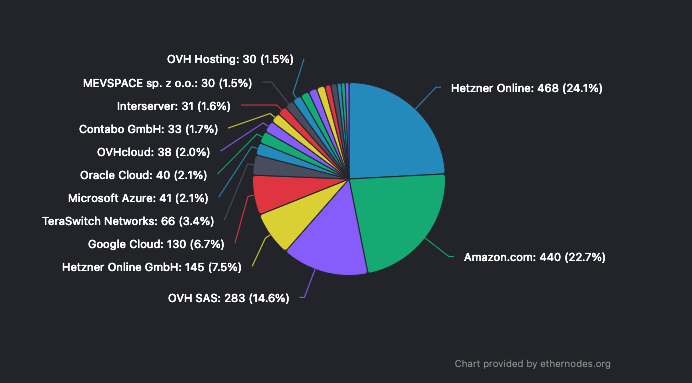
And this is the crux of the matter: Running a full validator node requires 32 ETH [1]. Of those who do have the financial capital, an even smaller group has the technical know-how to run a staking node. And of those, an even smaller group has the willingness to run it at home instead of a server. Because here lies another centralization risk of vanilla staking: How many nodes are run on a AWS server? The answer is 22.7%
Two years ago I had this burning desire to do more than buy coins and contribute to DAOs. Leaving ETHBarcelona to escape into the wilderness retracing the path of fleeing French catholics I researched how I could play my part in the ecosystem. Only stopping to glance at the passing landscape giving my stomach a moment to rest.
The technical challenge enticed me. The satisfaction of saying I'm running an ETH node from home sounded like honey to my ears. But where ever I turned, a door was closed: My little precious raspberry pi 4 would run into memory issues. The solution would be to buy a dappnode. I could even go the lazy way and get the full set-up. It was already in my cart when I realized "I need 32 ETH to run a node".
It was the time Decentralized Validator Technology became popular. A true decentralization of the staking layer as now your key is split between different operators. I was one step closer to my goal of becoming a solo staker. But also here, I needed to run a node. Disappointed, I half-hearted scanned for other solutions. Diva staking and Obol crossed my timeline. The tabs open for ages waiting patiently for me to read them. But I never did. SheFi had two workshops on DVT sponsored by Obol. I registered. But didn't attend.
I briefly looked into the idea of making running a node into my business, maybe I can lower my taxes. But past experience crushed my hopes. What's the point? I never pursued the leads I got. Solo staking was not for me. Not for a lack of willingness. Not for a desire to learn the required technical skills. But for a lack of financial capital.
Fast forward six months and I took the lazy approach: Whatever I can stake on my "not your keys, not your wallet" wallet, is staked. It was convenient. Also getting yields from the crumbs of BTC I have. Again: It was easy, convenient. Even a constantly multi-tasking parent whose trying to secure their pension can do it.
Now as a holder of stETH, do you write it like that, I should participate in the governance of Lido. A DAO. A decentralized entity. Another thorn, another of its shortcoming. This time not for the code that it's written in its smart contracts but for the generally messy way DAOs are governed. And the strong voter apathy. Nobody votes. Nobody votes in any DAO proposals, not just Lido. It's a problem pervasive in the industry, but, hey, let's focus on creating another infra solution for DeFI degens.
I'm digressing. Forgive me.
During the debate at Devconflict, Lido's dual governance system, not yet effective, is mentioned as a solution. A bashed for "not yet being reality". Not yet perfect. Not yet making the utopia we are all contributing towards a reality.
The debate wasn't a debate about the risks or benefits of liquid vs vanilla staking. It was a debate about how to follow your ideals of decentralization within the constraints of humanity. It had a flair of "chasing yields" is bad.
There is no denying that those of us who use liquid staking are driven by other incentives. We have other priorities than people who overcome all barriers and solo stake. We're looking for an easy solution to get some extra yield. Interests from the banks aren't gonna feed me in 20 years.
But using a liquid staking protocol doesn't make you a money-hungry economic agent. It highlights what's important for you. Who is the bad boy in this scenario? The actor driving this bad use case forward? Is it the liquid staking protocols, with Lido at the front, pushing crypto towards centralization while touting decentralized values? Is it DeFi degens looking only to make money?
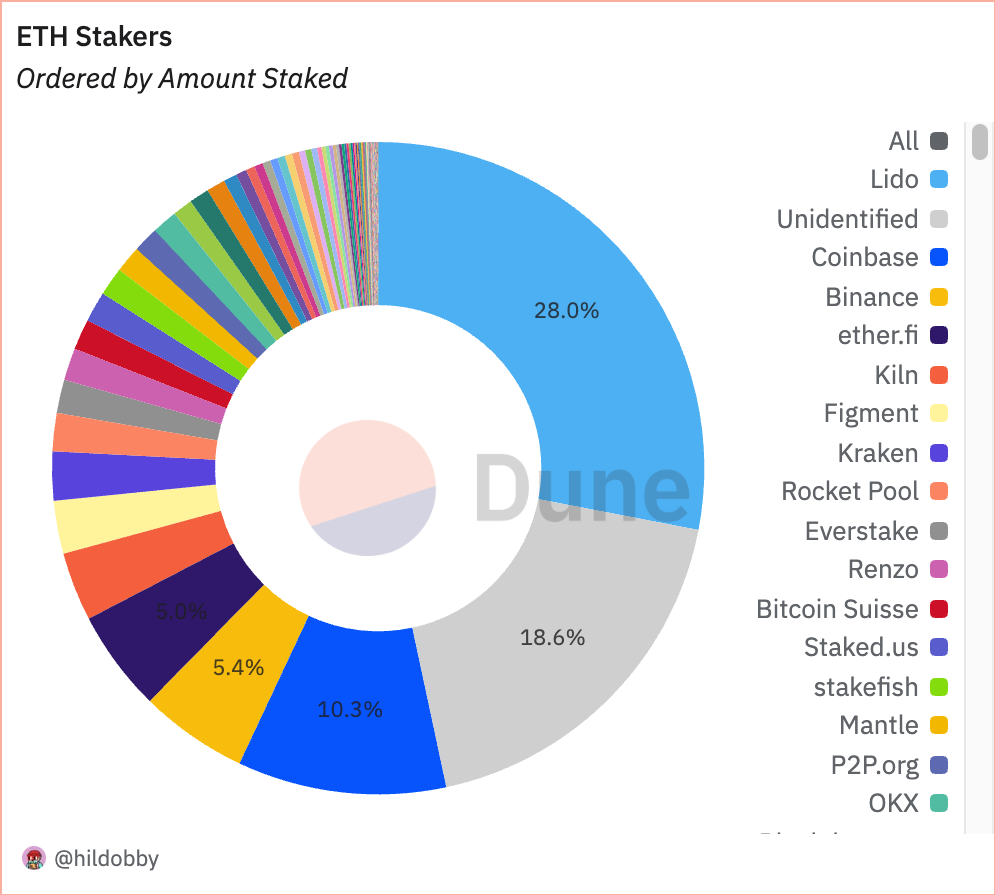
The debate left me empty. Ideals are good to have. Without them, we'll perish being swayed to and from like a captain-less ship on sea. But the benefits were brushed under the table. If we eliminate liquid staking, how would the security of the base layer look like? Would we reduce the required ETH for staking to increase the pool of node operators? Would we have solutions that move us away from centralized servers for staking? How would it impact the security of Ethereum? Is liquid staking a way to onboard new people - another one's of crypto's fav higher goals.
And while I write this, I'm wondering: Could I borrow 32 ETH to then run a node? Will the math be mathing? If I loose money every second, the satisfaction of having achieved a goal will be short-lived. Or I could descend further into the cesspool of DeFi and use my stETH as collateral for a loan and then restake those and then...
Notes
[1] You can run a full node without making the deposit. In this way you'll contribute to the health of the ecosystem by checking transactions and you can broadcast your own transaction. But you will not be able to propose blocks and forgo any financial reward. The only incentive to do so is self-signaling.


All Comments