

On May 28, Iran's Supreme Leader Mujtaba Khamenei stated in a declaration that the United States and Israel are waging war against Iran, applying economic pressure, conducting propaganda campaigns, and politically besieging the country, with the aim of 'creating divisions, undermining Iran to compensate for military failures, and making the nation submit.' (Xinhua)
Welcome Back
Click “Sign in” to agree to Cointime’s Terms of Service and acknowledge that Cointime’s Privacy Policy applies to you.
Join CoinTime
Already have an account?
Click “page.Sign up” to agree to Cointime’s <a class="underline" href="#term-of-service">Terms of Service</a> and acknowledge that Cointime’s a class="underline" href="#privacy-policy">Privacy Policy</a> applies to you.
Sign in with email
Sign up with email
Your email
Check your inbox
Click the link we sent to to sign in.
Click the link we sent to to sign up.
Iran's Supreme Leader: US and Israel Attempting to Make Iran 'Submit'
-
Wechat scan to share
Recommended for you
-
Benson: Iran's Economy and Currency in Free Fall
On May 28, U.S. Treasury Secretary Benson stated that the U.S. Treasury continues to carry out economic strikes against the Iranian regime. The Iranian military is not being paid, police are not on duty, and Hark Island has been closed. Iran's economy and currency are in free fall. Sanctions have been imposed on the Iranian Strait of Hormuz Authority. -
-
SEC Commissioner Calls for Support of Privacy Technology, Emphasizing Security is Not Opposed
U.S. SEC Commissioner Hester Peirce stated in an article that Privacy-Enhancing Technologies (PETs) are crucial for the digital finance era, and regulators should not base the direction of technological development on expanding regulatory frameworks. Peirce pointed out that protecting financial privacy is not in opposition to security; encryption technology can help ordinary users guard against data breaches, theft, and malicious activities. Current regulatory requirements mandate that securities transfer agents record the names and addresses of holders, but the public address mechanism of blockchain can verify asset ownership without exposing personal identity information, thereby reducing the risk of sensitive data breaches for investors. -
BlackRock Transfers 3,900 BTC and 31,702 ETH to Coinbase
According to Onchain Lens monitoring, BlackRock has transferred 3,900 BTC and 31,702 ETH to Coinbase, with values reaching $285.85 million and $63 million, respectively. -
US Military Confirms Interception of 5 Iranian Drones
On May 28, according to CCTV, the US Central Command stated that on the 27th, Iran launched five one-way attack drones near the Port of Abbas, which posed a significant threat to the Strait of Hormuz and its surrounding areas. All of these drones were successfully intercepted by the US military. The US also prevented Iran from launching a sixth drone from a ground control site at the Port of Abbas. -
U.S. Stock Index Futures Decline, Nasdaq Futures Down 0.53%
On May 28, Dow Jones index futures fell by 0.18%, S&P 500 index futures decreased by 0.26%, and Nasdaq 100 index futures dropped by 0.53%. -
Hong Kong Banks Tighten Account Opening; Gray Intermediaries Promote 'Last Window Period'
On May 28, according to Yicai, since late May, multiple banks in Hong Kong have required clients to visit branches to sign 'cross-border disclosure statements' and have repeatedly inquired about details such as the source of funds and transaction records. Some banks have even politely refused to activate investment account features. Meanwhile, banks and brokers have begun investigations into existing accounts. Behind the tightening of regulations lies a long-standing gray industry chain. Previous investigations found that some intermediaries assisted mainland residents in bypassing regulations to open accounts with Hong Kong brokers by creating false investment proof and providing 'invitation codes.' Now, in light of policy adjustments, these intermediaries are promoting the 'last window period,' continuing to attract clients under the guise of 'internal channels' and 'account opening secrets,' but the links they provide mostly lead to small and medium-sized brokers in Hong Kong, and the methods have become more covert. -
Two Departments Collaborate on Systematic Development of Artificial Intelligence Measurement Capabilities
On May 28, it was reported that the State Administration for Market Regulation and the National Development and Reform Commission jointly issued the "Guidelines for the Construction of Artificial Intelligence Measurement Systems and Capabilities (2026 Edition)", systematically laying out the development of artificial intelligence measurement capabilities. The guidelines focus on six major areas: foundational support, general technologies, core technologies, measurement technical standards, measurement service industries, and intelligent-enabled measurement, aiming to bridge the "last mile" between laboratory innovation and industry application. They address the issue of measurement uncertainty to enhance the trustworthiness of artificial intelligence. To tackle challenges such as algorithmic "black boxes" and poor decision explainability, the guidelines deploy key technological breakthroughs in internal state monitoring and characterization of AI systems, promoting the establishment of reliable, safe, and trustworthy measurement standards for artificial intelligence, ensuring that AI technology performance is "measurable, comparable, and traceable." (CCTV News) -
Hong Kong SAR Government: Net Gold Exports to Mainland China in April Totaled 86.715 Tons
On May 28, the Hong Kong SAR Government announced that the net gold exports to Mainland China in April amounted to 86.715 tons, up from 47.866 tons previously. The total gold exports to Mainland China in April were 99.327 tons, compared to 79.576 tons previously. -
Fed Official Goolsbee: Expectations of Productivity Gains May Trigger Inflation, Requiring Rate Hikes
On May 28, Goolsbee, President of the Chicago Federal Reserve, reiterated that if market expectations for significant future productivity gains lead to increased investment and spending, it could trigger inflation, necessitating an increase in interest rates by the Federal Reserve. In a prepared speech at a Bank of Japan meeting in Tokyo on Thursday morning, he stated, "The expectation of income growth, much like the increase in wealth today, can drive up spending and potentially overheat the economy even before the actual productivity boom arrives. In such a case, interest rates may need to rise. The stronger the speculation about future productivity, the more likely it is that rates will need to be adjusted upward to prevent economic overheating." Goolsbee also mentioned that supply shocks could exacerbate the inflation driven by expectations of future productivity growth.
Daily Must-Read
-
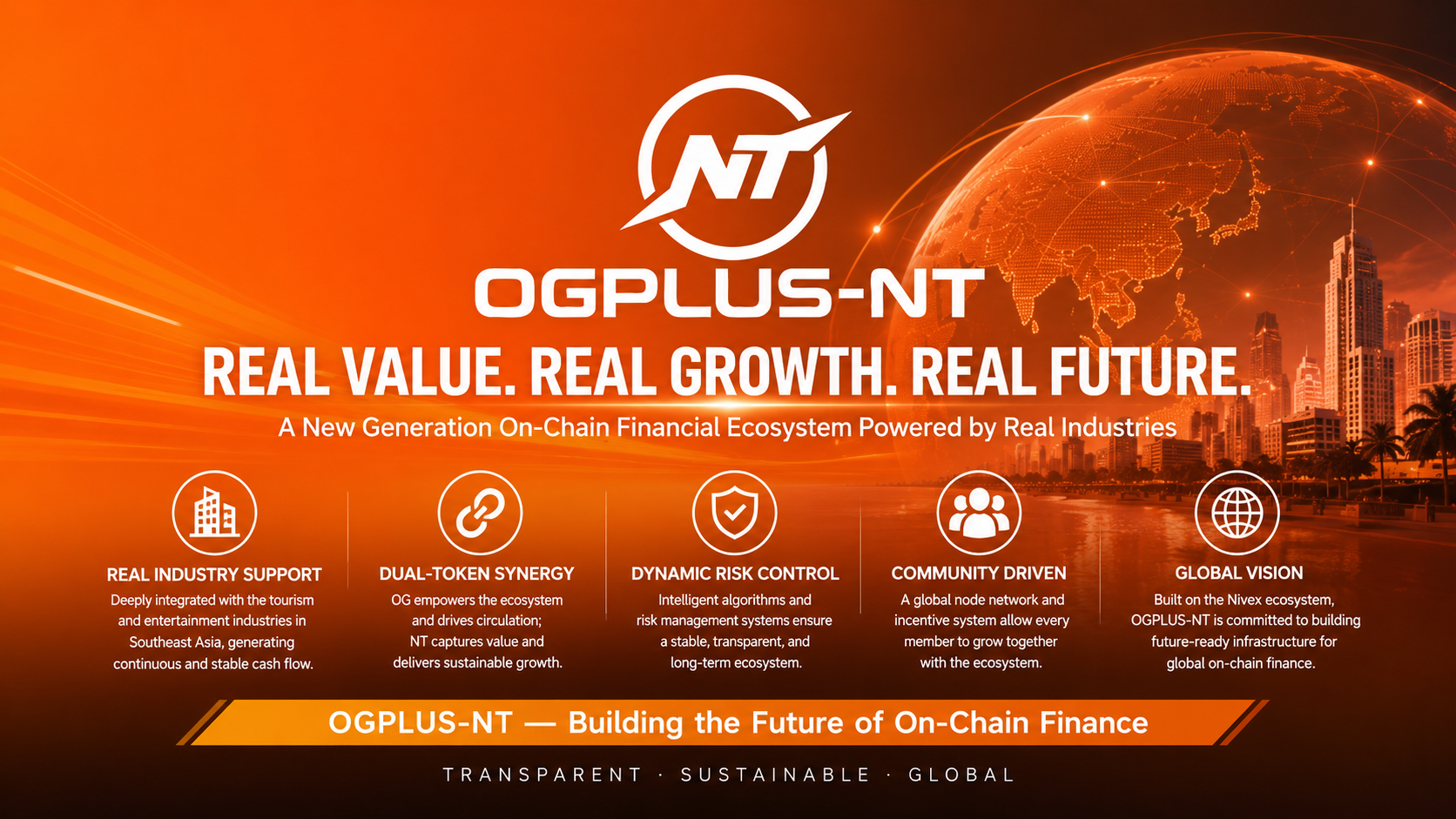
OGPLUS-NT: The Value Engine of a New Era in Global On-Chain Finance
-
Hyperliquid: Disrupting the paradigm of trading and reshaping the new landscape of DeFi financial infrastructure
-
Ethereum's' Chinese Concept Shareization ': Mid life Dilemma of Faith Decline, Power and Responsibility Loss, and Narrative Gap
-
CARDPIE — A Global USDT Card Aggregation Platform Making Cross-Border Payments Seamless
-
Ethereum is in a development dilemma: its fate is approaching that of Chinese concept stocks, its former glory is gradually fading, and its future urgently needs to be found
-
Double the monthly increase! NEAR's strong breakthrough: privacy, sharding AI、 Four fold narrative resonance of institutional funds


All Comments