

According to monitoring by 1M AI News, AI inference infrastructure company Fireworks AI has released a preview of Fireworks Training, expanding from a pure inference platform to an integrated platform for training and deployment. Fireworks AI was founded by Lin Qiao, a former Meta engineer involved in building PyTorch, and is currently valued at $4 billion, processing 15 trillion tokens daily. The platform offers three tiers: 1. Training Agent: Designed for product teams without ML infrastructure, allowing them to describe tasks and upload data to complete the entire process from training to deployment, currently supporting only LoRA; 2. Managed Training: Aimed at ML engineers, supporting SFT, DPO, and reinforcement learning fine-tuning, including full parameter training; 3. Training API: Targeted at research teams, allowing customization of loss functions and training loops, supporting algorithms such as GRPO and DAPO with full parameter training scales ranging from single-node Qwen3 8B to Kimi K2.5 (trillion parameters) on 64 NVIDIA B200s. Fireworks AI's production inference clients, AI programming tools Cursor, Vercel, and Genspark, have completed cutting-edge reinforcement learning training on this platform. Vercel trained an automatic error correction model for its code generation product v0, achieving a 93% error-free code generation rate, compared to only 62% with Sonnet 3.5, and improved end-to-end latency by 40 times compared to the previously used closed-source model. Genspark fine-tuned the trillion-parameter open-source model Kimi K2 with reinforcement learning to build a deep research agent, increasing tool usage by 33% and reducing costs by 50%. Cursor completed distributed reinforcement learning training for Composer 2 across 3 to 4 clusters globally (currently ranked first on CursorBench), sharing the same GPU pool for training and production inference. Fireworks AI emphasizes its core technological differentiation in numerical consistency between training and inference. MoE (Mixture of Experts) models are numerically more fragile than dense models, where minor changes in hidden states can flip expert routing and amplify cascading effects. Fireworks has published the KL divergence values between training and inference for all supported models, all below 0.01.
Welcome Back
Click “Sign in” to agree to Cointime’s Terms of Service and acknowledge that Cointime’s Privacy Policy applies to you.
Join CoinTime
Already have an account?
Click “page.Sign up” to agree to Cointime’s <a class="underline" href="#term-of-service">Terms of Service</a> and acknowledge that Cointime’s a class="underline" href="#privacy-policy">Privacy Policy</a> applies to you.
Sign in with email
Sign up with email
Your email
Check your inbox
Click the link we sent to to sign in.
Click the link we sent to to sign up.
Fireworks AI Launches Preview of Training Platform Supporting Trillion-Parameter Full Training
-
Wechat scan to share
Recommended for you
-
Nvidia Stock Hits Record High with Market Capitalization Reaching $5.5 Trillion
On May 13, during early trading in the U.S. stock market, Nvidia's stock price rose by 2.85%, reaching $227.08 per share, setting a new record high, with a total market capitalization of $5.50 trillion. -
BTC Falls Below $80,000
Market data shows that BTC has fallen below $80,000, currently priced at $79,998.07, with a 24-hour decline of 1.06%. The market is experiencing significant volatility, so please ensure proper risk management. -
President Trump to Arrive in Beijing
On the evening of May 13, President Trump will arrive in Beijing aboard a special aircraft. -
-
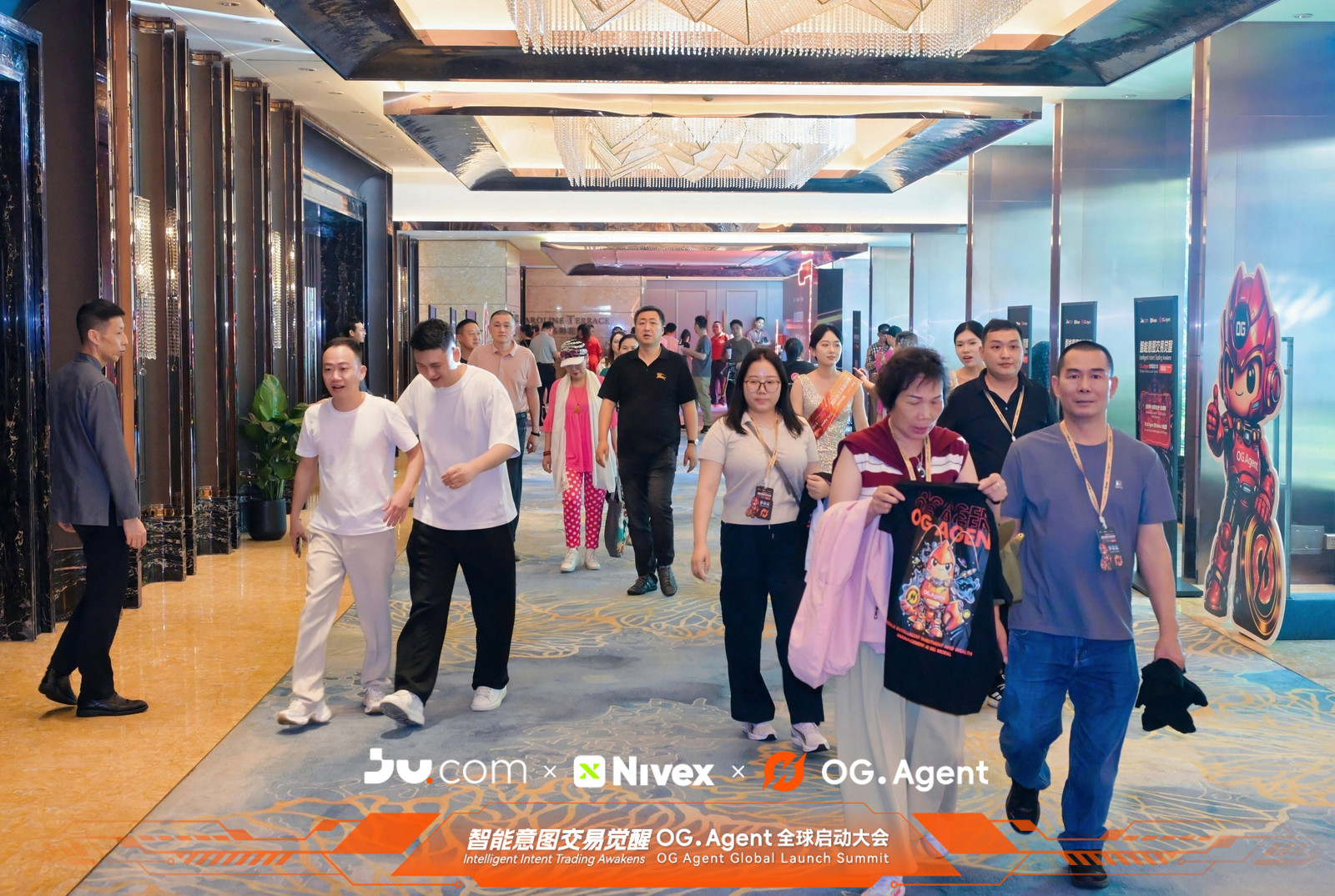
OG Agent Global Launch Conference (Shenzhen Station) Successfully Concludes: The Intelligent Computing Era Officially Begins
On May 13, 2026, the AI intent-driven engine “Intelligent Trading Intent Awakening: OG Agent Global Launch Conference”, co-hosted by Ju.com and Nivex, successfully concluded simultaneously in Hangzhou, Chongqing, and Shenzhen. This grand event brought together global blockchain elites and ecosystem leaders to jointly witness a milestone moment in AI trading in the Web 4.0 era. -
OG Agent Global Launch Conference Holds Roundtable Forum, Discussing “Web 4.0 Era: Foundations, Challenges, and Future Directions of AI Intent Trading”
On May 13, 2026, the AI intent-driven engine “Intelligent Trading Intent Awakening: OG Agent Global Launch Conference”, co-hosted by Ju.com and Nivex, was simultaneously held in Hangzhou, Chongqing, and Shenzhen. This three-city linkage marks that the tremendous AI momentum embedded in OG Agent is highly favored by users. -
Advanced Web4.0 Intelligent Intent AI Large Model OG Agent Officially Completes Global Launch and Ecosystem Activation
On May 13, 2026, the AI intent-driven engine “Intelligent Trading Intent Awakening: OG Agent Global Launch Conference”, co-hosted by Ju.com and Nivex, was simultaneously held in Hangzhou, Chongqing, and Shenzhen. This three-city linkage marks that the tremendous AI momentum embedded in OG Agent is highly favored by users. -
SEC: NYSE Tokenized Securities Proposal Officially Effective
On May 12, the U.S. SEC released a document detailing the rule amendment proposal for tokenized securities previously submitted by the NYSE, stating that the NYSE's tokenized securities proposal has automatically become officially effective. The NYSE submitted this rule change application on May 1, 2026, and the announcement was made by the U.S. SEC on May 12. According to SEC regulations, proposed rule changes automatically take effect 30 days after submission (or a shorter time specified by the SEC) as long as they do not significantly affect investor protection or the public interest and do not impose any significant burden on competition. -
Zheng Xiaojun, Chief Scientist of the World Artificial Intelligence Organization: For Ordinary People in the AI Era, the Most Important Thing Is to Seize AI Opportunities and Gain Profi
On May 13, 2026, the AI intent-driven engine “Intelligent Trading Intent Awakening: OG Agent Global Launch Conference”, co-hosted by Ju.com and Nivex, was simultaneously held in Hangzhou, Chongqing, and Shenzhen. This three-city linkage marks that the tremendous AI momentum embedded in OG Agent is highly favored by users. -
Blockchain Business Blogger Michael: The Trillion-Level Secondary Market Capital Is a Vast Blue Ocean for AI Intelligent Agent Trading
May 13, 2026 – Co-hosted by Ju.com and Nivex, the AI intent-driven engine “Intelligent Trading Intent Awakens: OG Agent Global Launch” officially opened today simultaneously in Hangzhou, Chongqing, and Shenzhen. This three-city linkage highlights that the massive AI momentum embedded in OG Agent has been highly favored by users.
Daily Must-Read
-
Intelligent Computing Awakens, Igniting Globally | OG Agent Global Launch Conference (Shenzhen Station) Successfully Concludes, Ushering in a New Era of AI Intent Trading
-
$OG Officially Explodes After Launch: OG Agent Global AI Compute Ecosystem Fully Activated, Ushering in the Era of AI Intent Trading
-
Arthur Hayes' in-depth analysis: Amidst the hype of the AI foam, lies the greatest opportunity for the crypto market
-
After the surge in memory, where are the sectors in the AI industry chain that are truly worth betting on for the long term?
-
CRCL bucked the trend and surged, despite Circle's financial report falling short of expectations, as it unveiled two game-changing weapons to break the deadlock
-
Capital investment drives the stock market higher, rendering the "economic recession" talk irrelevant


All Comments