


In 2025, China’s National Development and Reform Commission repeatedly emphasized one key term in major policy documents: expanding domestic demand. This is not a short-term stimulus, but a medium- to long-term strategic choice tied to economic restructuring, growth model transformation, and the foundations of high-quality development.
Against this backdrop, a critical question emerges: When consumption is elevated to a national strategic priority, are existing consumption and payment systems truly prepared to carry this mission?
1. Viewing Consumption from a Macro Perspective: Not Just “Spending More,” but Building “New Mechanisms”
Traditionally, expanding domestic demand has often been simplified as “stimulating consumption.” Under the new policy context, however, consumption is no longer merely a matter of volume—it is a question of structure, momentum, and mechanisms.
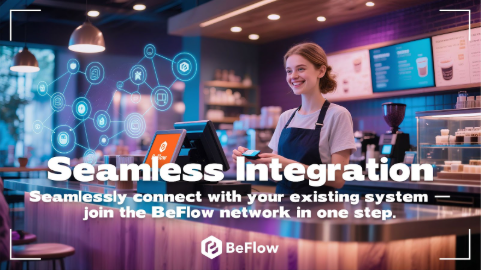
On one hand, consumer willingness must be activated. On the other, consumption behavior itself must form a sustainable economic loop, rather than a one-off release of demand.
This implies that the consumption system needs new infrastructure—one that not only completes transactions, but also accumulates trust, retains data, connects supply and demand, and supports long-term circulation.
2. Structural Limitations of Traditional Payment Systems Are Constraining Domestic Demand
In reality, traditional payment systems are extremely efficient at completing transactions, but show clear bottlenecks when it comes to activating consumption momentum.
Once a payment is completed, consumer behavior is effectively “reset to zero.” The act of consumption itself rarely accumulates long-term value or sustained engagement.
Merchants, meanwhile, face persistent challenges: high commissions, long settlement cycles, and opaque platform rules. These pressures increase operational costs and continuously compress supply-side vitality.
Under such systems, consumption becomes a passive act—rather than a self-reinforcing economic engine.
3. The Emergence of PayFi: Making Consumption the Starting Point of the Cycle Again
It is within this context that PayFi (Payment + DeFi) has entered the spotlight as a new model integrating payments and finance.
What BeFlow is doing is not simply adding features to traditional payments, but redefining the role of consumption in the economic system from the ground up.

In BeFlow’s PayFi framework, payment is no longer just the transfer of funds. It is a behavior that is recorded, verified, and incorporated into system rules.
Every act of consumption leaves a traceable on-chain record and enters an ecosystem driven by rules and consensus. Consumption is no longer the endpoint—it becomes the starting point of participation.
4. Promoting Healthy Supply–Demand Interaction: Letting Real Consumption Drive Real Supply
While emphasizing domestic demand expansion, policymakers have also repeatedly highlighted the need for healthy interaction between supply and demand.
Demand does not exist in isolation. It must feed back into the supply side, forming a positive loop where demand guides supply and supply creates demand.
BeFlow’s PayFi mechanism is built around this logic: On-chain consumption behavior forms a foundation of real, verifiable data; Merchants benefit from disintermediated settlement and rule-based incentives that reduce friction; Consumption feedback directly influences the supply side, driving service quality and scenario innovation.
In this process, BeFlow does not act as a traditional intermediary platform, but rather as a mechanism coordination layer between consumption and supply.
5. From One-Time Spending to Long-Term Momentum: Rebuilding the “Endogenous Mechanism” of Domestic Demand
The real challenge of expanding domestic demand lies not in releasing consumption once, but in forming continuous, stable, self-reinforcing momentum.
BeFlow’s design logic centers on long-term participation: Consumption behavior is systematically recorded rather than instantly depleted; Participation relationships accumulate rather than remain one-off games; Users, merchants, and the ecosystem form cooperative relationships instead of zero-sum interactions.
When consumption is no longer just “spending money,” but a process of participation, connection, and accumulation, domestic demand gains a truly endogenous foundation for growth.
6. A Long-Term Positioning: Infrastructure, Not a Short-Term Trend
As expanding domestic demand becomes a long-term national strategy, BeFlow is not a project chasing short-lived trends.
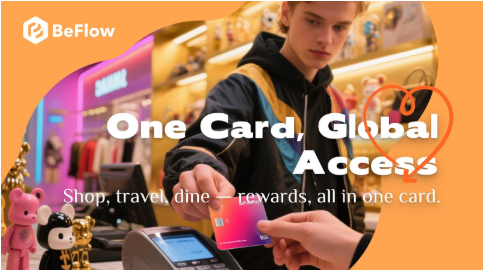
Instead, it is building counter-cyclical, long-cycle consumption financial infrastructure: Using technology to serve real consumption, Using mechanism design to activate long-term momentum, And using open systems to connect multiple participants.
Whether in payments, consumption, or future credit and governance, BeFlow is laying the foundational support for the next stage of the consumption system.
Redefining Consumption to Unlock the True Potential of Domestic Demand
Expanding domestic demand is not a slogan—it is a deep transformation involving mechanisms, structures, and trust.
Only when consumption evolves from one-off transactions into participatory, accumulative, and circular economic activities can domestic demand sustain long-term growth.
In this process, BeFlow is exploring a long-term, real-world path through PayFi—not simply encouraging people to spend more, but restoring value and meaning to consumption itself.


All Comments