


At the cusp of a new technological age, artificial intelligence (AI) and crypto, two prominent secular megatrends, have begun to converge, setting the stage for a significant revolution in both industries. The AI sector, fueled by breakthroughs like ChatGPT, attracted a remarkable $25 billion investment in 2023 alone - a fivefold increase from the previous year. This surge not only underscores the burgeoning confidence in AI's potential but also reignites fervent discussions surrounding its synergy with cryptocurrency. Notably, Ethereum co-founder Vitalik Buterin has contributed significantly to this discourse, offering insights into the promises and challenges inherent in the integration of AI and crypto.
The recent introduction of Sora by OpenAI—an innovative text-to-video model—has mesmerized the tech community, serving as a testament to the rapid pace of AI advancements. OpenAI CEO Sam Altman's audacious proposal to raise $7 trillion for chip design and manufacturing highlights a resolute commitment to AI's evolution, prompting considerations of the immense scale of the crypto AI market.
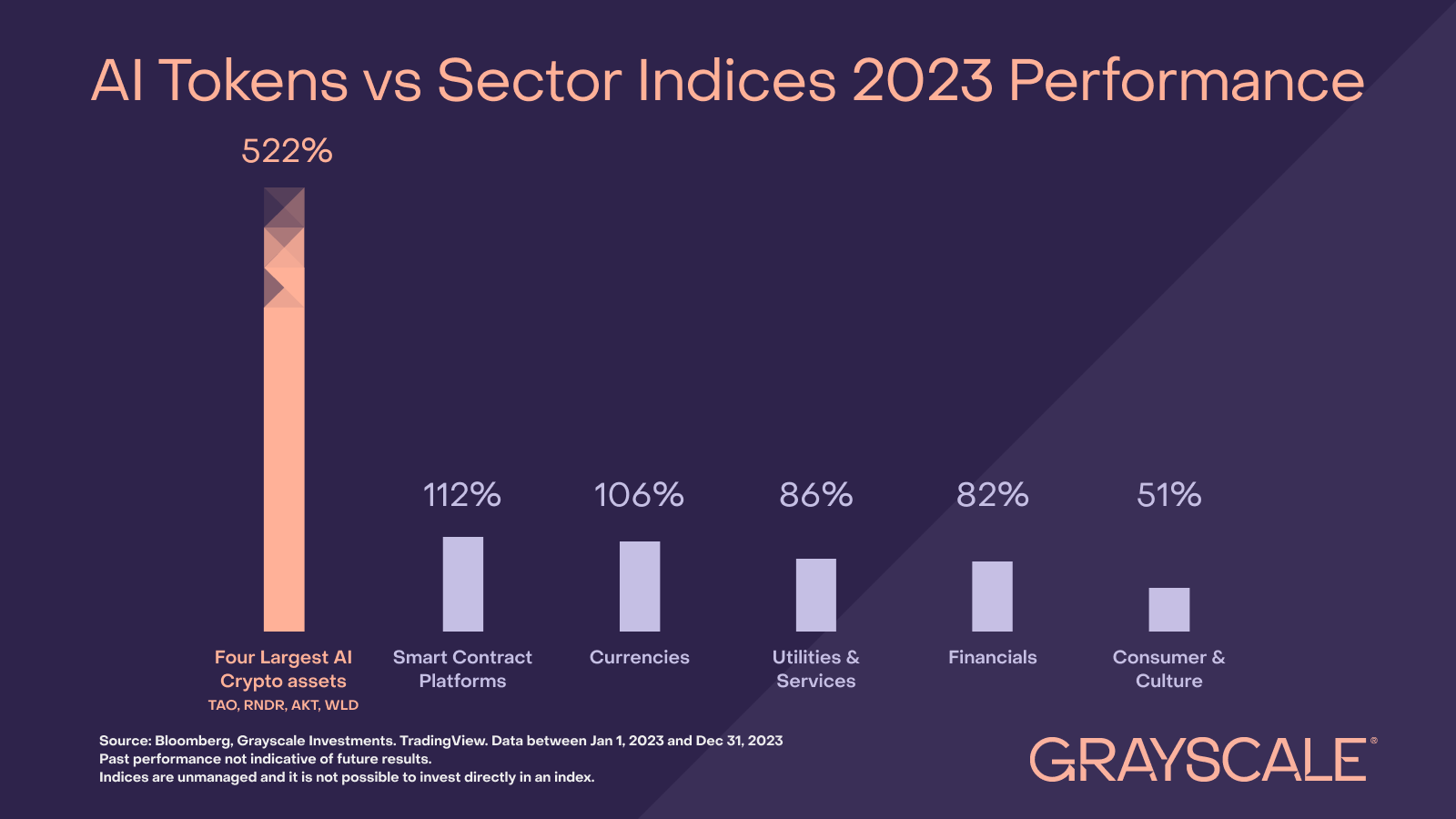
While many of these synergistic applications are still nascent, the market remains optimistic.
Diverging Philosophies, Converging Paths
Traditionally perceived as opposing forces, crypto rooted in decentralization contrasts sharply with AI's affinity for centralization, this dichotomy has been eloquently articulated by Peter Thiel and further explored by Ali Yahya of a16z Crypto. Nonetheless, recent developments suggest a surprising convergence that holds the promise of reshaping digital innovation. In examining this dynamic intersection, we uncover the potential for collaborative synergy between AI and crypto.
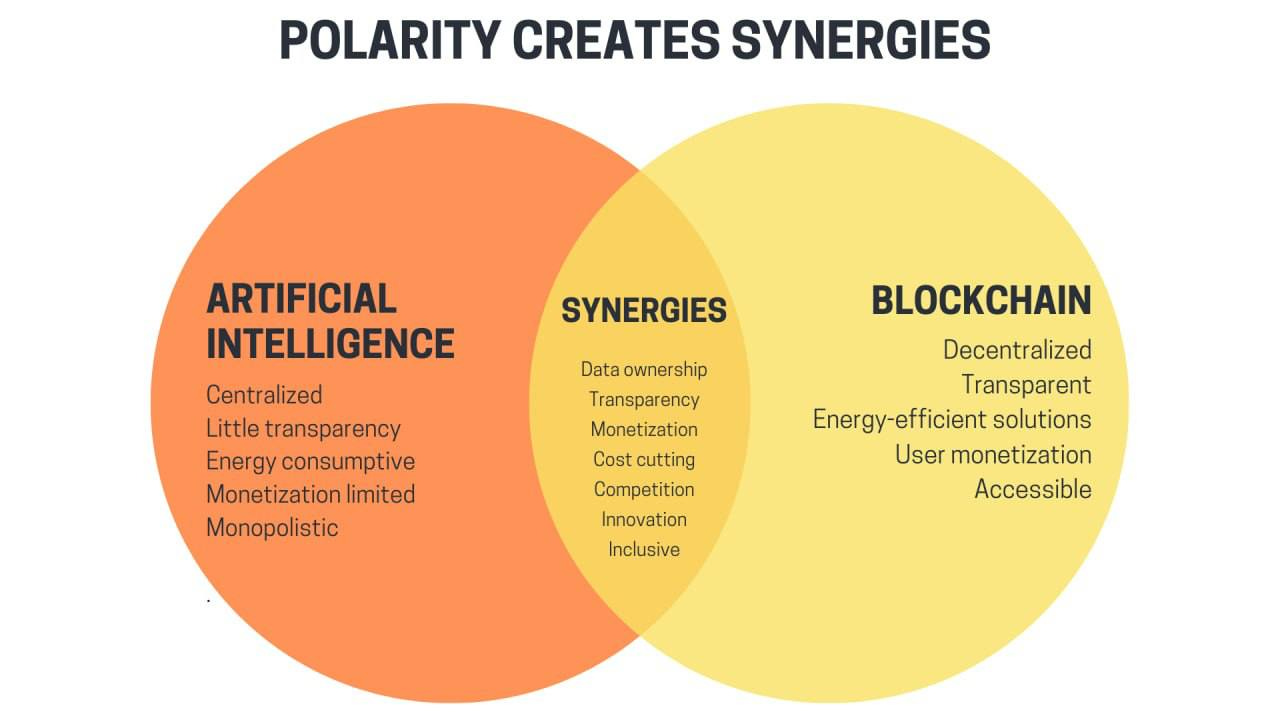
This fusion leverages crypto network's prowess in data ownership, transparency, and ethical governance, complementing AI's advanced capabilities, offering novel solutions to tackle the centralization challenges inherent in the AI industry:
- Granting Data Ownership: Through blockchain, users gain the ability to encrypt and regulate access to their data, providing them with the means to oversee its utilization by AI systems.
- Enhancing Transparency: The immutable nature of blockchain serves as a transparent ledger, facilitating the validation and authentication of data utilized in AI models.
- Enabling Direct Data Monetization: Blockchain facilitates the direct monetization of user data, offering financial incentives for data sharing while preserving individual control.
- Reducing AI's Energy Footprint: By employing energy-efficient mechanisms such as Proof-of-Stake, blockchain has the potential to minimize the energy requirements of AI training, contributing to sustainable advancements in AI development.
- Advancing Ethical AI Development: The transparency and inclusivity inherent in blockchain can promote more ethical AI practices, dismantling the secrecy often linked with AI innovations.
While modern AI's capabilities are undoubtedly impressive, they raise pressing concerns regarding user privacy, security, and autonomy. The centralized aggregation of data for AI model training poses a direct challenge to individual privacy rights, especially within monolithic tech ecosystems where users struggle to maintain control over their data.
In response, innovations guided by the decentralized ethos of crypto emerge as a promising remedy. Cryptographic techniques like zero-knowledge proofs (ZKPs) empower privacy-preserving machine learning without compromising sensitive user data. Despite the advantages, challenges persist, including issues related to compute efficiency, model accuracy, and debugging, in contrast to conventional mass data pooling practices.
Remarkable strides in zero-knowledge machine learning (zkML), led by teams such as Modulus Labs & EZKL, signify a swiftly evolving landscape. With continued advancements, the outlook for zkML is optimistic, given the ongoing enhancement of hardware acceleration technologies.
With the escalation of deep fake technology, safeguarding the authenticity and trustworthiness of digital content is of utmost importance. Blockchain technology could significantly contribute to establishing a decentralized and tamper-proof identity registry. This registry would map public keys with real-world identities, simplifying the process of building trust and holding malicious actors accountable.
A notable crypto protocol addressing this challenge is Worldcoin, co-founded by Sam Altman. Worldcoin endeavors to achieve universal registration of every individual using the Orb for biometric scans, enabling a dependable differentiation between humans and bots. The incentivization mechanism involves a dedicated blockchain token known as WLD. The Worldcoin team has made substantial progress toward this ambitious objective with over 3.8 million sign-ups across 120 countries as of the time of writing.
Another initiative combating this issue is the Digital Content Provenance Record (DCPR) standard, developed by Arweave and Irys (previously Bundlr) teams. Leveraging the Arweave blockchain, the DCPR standard timestamps and verifies digital content, furnishing reliable metadata to aid users in evaluating the credibility of digital information.
With the widespread integration of AI models into our daily lives, concerns regarding their potential biases are on the rise. For instance, AI-powered chatbot may exert influence over consumers, subtly steering their choices towards certain products or ideologies, leading to a breakdown in trust with far-reaching consequences.
Bittensor, a decentralized compute protocol, seeks to tackle AI bias by incentivizing diverse pre-trained models to compete for optimal responses. Validators reward top-performing models while eliminating underperforming and biased ones. By fostering an open and collaborative environment for AI innovation across various models and datasets, Bittensor holds the promise of advancing AI development while actively addressing the negative impacts of bias.
Although still in its early stages of development, Bittensor has made significant progress, boasting 32 specialized subnets tailored to specific use cases such as text prompting, image generation, price prediction, data scraping, storage and more.
The surge in AI and machine learning (ML) workloads has sparked a significant demand for high-performance graphics cards, such as the Nvidia A100. However, the substantial capital costs associated with compute and storage pose a threat of exclusion to many, leaving AI development largely monopolized by tech giants. To counter this, a novel market akin to an "AirBnB for graphics cards" has emerged, allowing individuals and organizations to lease their unused GPU resources to meet the needs of AI researchers and developers.
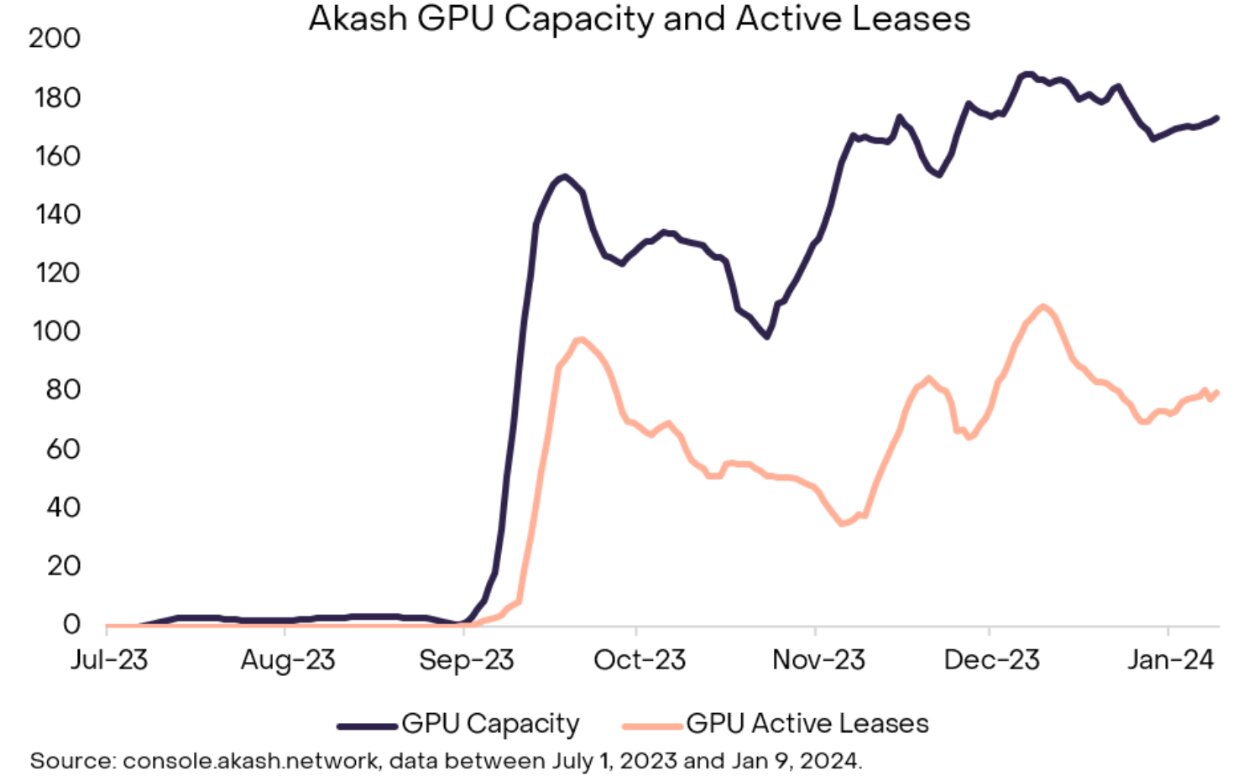
Decentralized compute marketplaces like Akash Network and Render Network have been designed to address the inefficiencies of underutilized GPU resources by connecting GPU owners with AI developers seeking computational power. By tapping into these decentralized compute platforms, a new supply of computing resources becomes accessible, empowering individuals worldwide to monetize their idle compute capacity. Simultaneously, it offers AI developers flexible access to computing resources without the constraints of centralized incumbents.
By leveraging blockchain technology to eliminate intermediaries with profit motives and overhead costs, these decentralized networks can provide services at a fraction of the cost compared to centralized counterparts, with Akash Network boasting rates around 1/5 of the traditional cost. Additionally, Render Network, specializing in GPU marketplace for 3D image rendering, witnessed a significant surge in usage throughout 2023.
The Road Ahead
In reflecting on the landscape of AI and crypto, it's evident that each holds substantial technological prowess but grapples with significant drawbacks. Crypto, despite its power, lacks mainstream sophistication for widespread adoption. Simultaneously, centralized control of AI by big tech raises concerns about monopolization of this technology.
While this synergy is in its early stages, projects at the AI-crypto intersection are constructing essential infrastructure for scalable on-chain AI interactions. This promising momentum is expected to grow through 2024 and beyond. All this is contingent on market participants perceiving these assets as a counterbalance to the potential dominance of major centralized players, such as OpenAI.
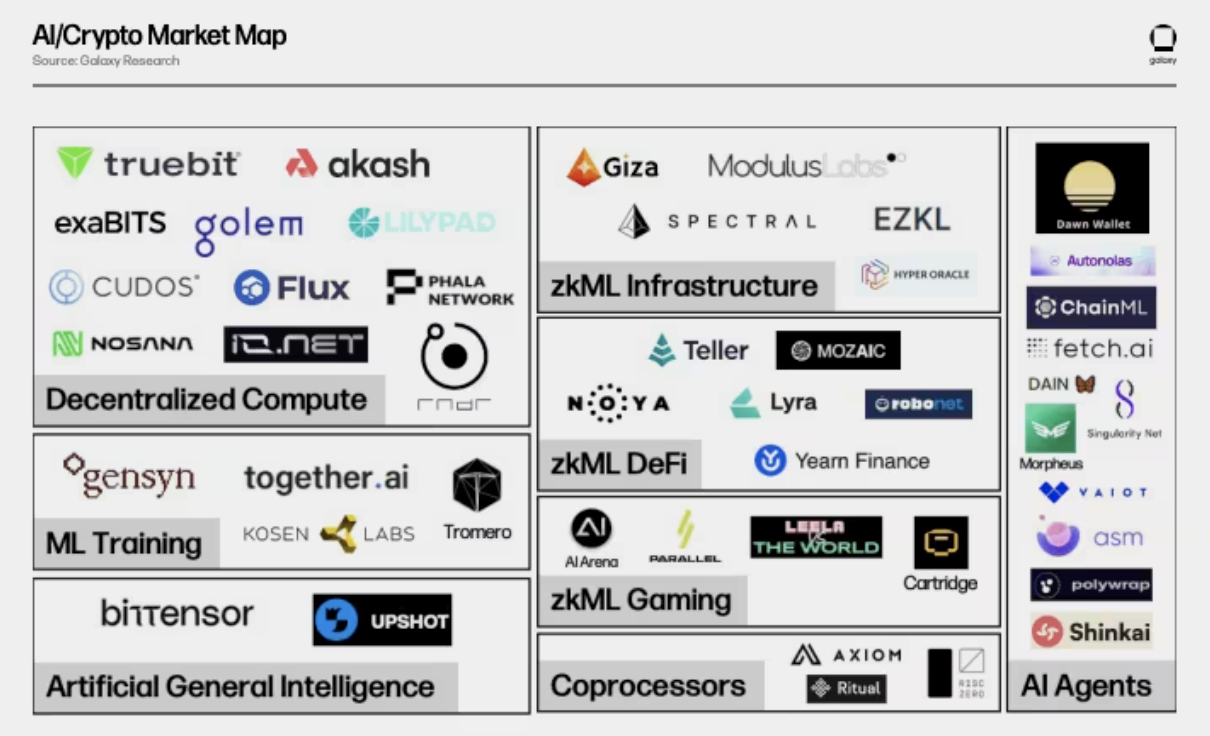
Integrating these revolutionary technologies thoughtfully opens avenues to address their respective weaknesses. This points toward a future where blockchain-enabled AI creates a paradigm that safeguards privacy and unlocks potential use cases. Developments in decentralized compute, zkML, and AI Agents look promising, laying the groundwork for a deeply interconnected future of AI and crypto. Their potential is immense, emerging organically from grassroots developer communities, promising an equitable application of technology accessible to all.


All Comments