


Crypto billionaires are threatening to leave the state of California after a prominent trade union proposed a 5% assets tax on residents worth more than $1 billion.
The Service Employees International Union-United Healthcare Workers West proposed the new tax back in November 2025. The trade union suggested that the new tax would bring in up to $100 billion from 200 state residents, more than making up for federal funding cuts to California’s state healthcare program. The measure will require 850,000 signatures before it can be put on the ballot for a popular vote in the 2026 elections in November.
Prominent investors and billionaires based in California, such as PayPal co-founder Peter Thiel and Google co-founder Larry Page, have already threatened to leave. Others have argued that a billionaire exit could remove crucial sources of tax revenue for the state.
However, the uber-rich threatening to leave due to taxes is not a new phenomenon, and past experience suggests that the threats of exodus from crypto riches may be a bluff.
Crypto billionaires “quietly discussing” whether to leave
The union filed its proposal on Nov. 26. In addition to the 5% tax, it would also impose a one-time tax of $1 billion on state residents worth over $20 billion. The levy on wealth, rather than income, would constitute a tax on unrealized gains.
Prominent members of the crypto industry, as well as the tech and venture capital sectors present in California, are now up in arms.
Jesse Powell, co-founder and chairman of cryptocurrency exchange Kraken, called the measure a “theft,” stating that the tax “will be the final straw. Billionaires will take with them all of their spending, hobbies, philanthropy and jobs.”
Bitwise CEO Hunter Horsley said, “Many who’ve made this state great are quietly discussing leaving or have decided to leave in the next 12 months.” He said that billionaires will likely follow a supposedly growing trend of “people voting their views not with the ballot box” and relocate to other jurisdictions.
Chamath Palihapitiya, a former Facebook executive and prominent venture capital investor, claimed that people with a collective net worth of $500 billion had already fled the state. “They took no risk because of the proposed asset seizure tax - introduced as a ‘Billionaire Tax.’”
He noted a common argument among detractors of the tax, namely that, while the tax may be a boon for state coffers in the short run, “the California budget deficit will only get bigger.”
Horsley said, “When billionaires leave, so does revenue. If revenue goes down, the state will need to either: (A) reduce their spending / programs / benefits (B) increase taxes on those who stay, with no increase in benefits.”
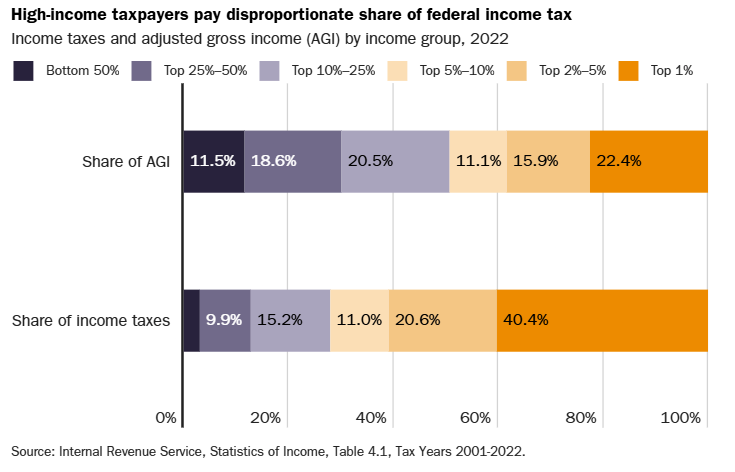
Conservative think tanks like the Cato Institute have argued in the past that the top earners pay a disproportionate share of income tax.
The crypto industry may find it especially easy to relocate in the headwinds of new taxes, according to Castle Island Ventures partner Nic Carter. He said that capital is now “more mobile than ever” and that “distributed or globalized startups are completely ordinary now, even at scale.”
What do the rich actually do after a new tax?
In 2024, the Tax Justice Network, a British advocacy group, published a working paper on the topic. It found that after wealth tax reforms were introduced in Norway, Sweden and Denmark, less than 0.01% of the richest households relocated.
The UK saw the second-highest net outflow of millionaires in 2024, with over 9,000 leaving the country. But the Tax Justice Network’s communications head, Mark Bou Mansour, noted that this was less than 1% of the some 3 million millionaires supposedly living in the country at the time.
“There is no millionaire exodus. If you look at their published migration numbers going back to 2013, millionaire migration rates have consistently stood at less than 1% every year since then, both globally and nationally. So, what their data actually shows, taken at face value, is that millionaires are highly immobile,” he said.
Another 2024 paper from the London School of Economics found that the ultra-wealthy were fairly attached to place and could not find respondents in the 1% tax bracket who would leave the UK.
Such examples presume that the wealthy were moving to another country, but even in the case of California, where the crypto-rich would risk only moving to another state, the data still doesn’t support the risk of a wealth exodus.
Inequality.org, an advocacy organization concerned with wealth distribution in the US, said that “while some tax migration is inevitable, the wealthy that move to avoid taxes represent a tiny percentage of their own social class.”
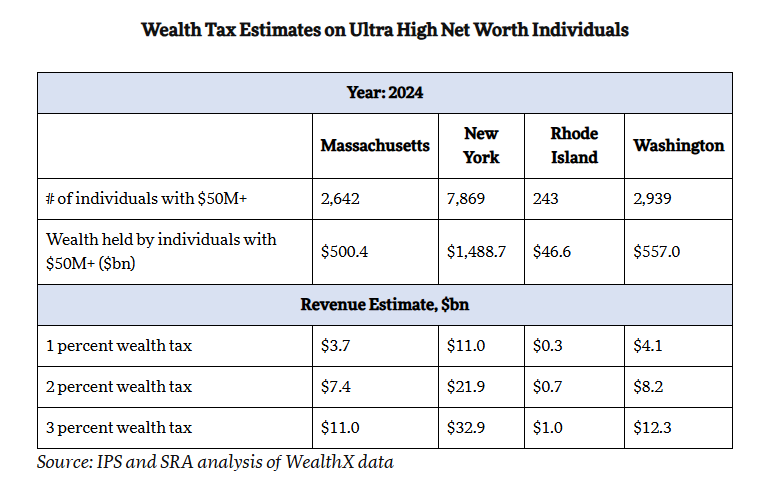
Citing data from the Institute for Policy Studies and the State Revenue Alliance, Inequality.org stated that top earners tend not to move because of family, social networks and local business knowledge.
Despite tax hikes in Washington state and Massachusetts, the number of individuals with a net worth of at least seven figures continued to expand. Furthermore, each state was able to raise considerable revenue to fund state programs.
Funding state programs seems to be the least of some of the California ultra-wealthy’s concerns. Powell said that current taxes were being thrown away over wasteful spending and fraud.
David Sacks, the White House’s crypto and AI czar and a crypto billionaire in his own right, weighed in, stating, “Why does California need a wealth tax? To fund the massive fraud. Red states like Texas and Florida don’t even have income taxes. Democrats steal everything, then blame job creators for their ‘greed.’”
Allegations of fraud in states with Democratic governors, like California and Minnesota, have lately preceded the Trump administration sending in federal policing agencies like the Federal Bureau of Investigation and Immigration and Customs Enforcement. In the case of Minnesota, local authorities have denied the unverified allegations.
The California tax proposal still hasn’t made it onto the ballot, let alone passed a vote and approval by the governor. California may lose some of its crypto-rich, but the benefits in revenue may be worth it.


All Comments